Lawyers in Kenya are raising concern over the growing involvement of non-advocates in court-annexed mediation, warning that the practice could undermine legal standards and weaken the integrity of dispute resolution processes linked to the courts.
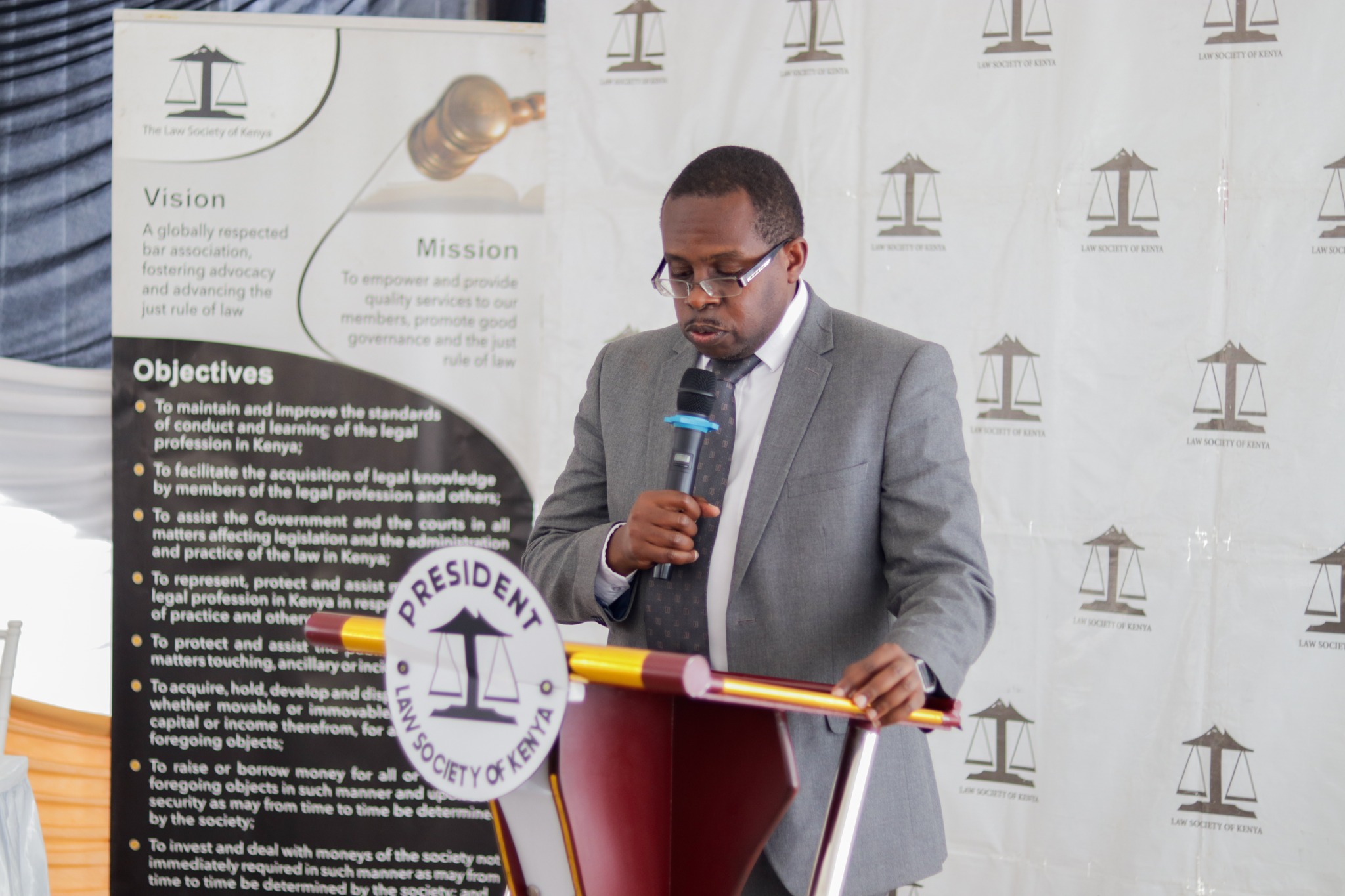
The Law Society of Kenya (LSK), under President Charles Kanjama, says mediation of matters referred by courts must remain firmly anchored within the legal profession, especially where disputes involve complex legal questions and binding settlements.


Kanjama cautioned that while Court-Annexed Mediation (CAM) was introduced to ease court backlogs and promote faster resolution of disputes, it must not evolve into a parallel system operating outside established professional safeguards.
According to him, concerns have emerged over instances where mediations proceed without lawyers present despite parties being legally represented, as well as situations where mediators allegedly issue legal guidance or influence settlement terms beyond facilitation.
He further raised alarm over reports of non-advocate mediators allegedly stepping into roles traditionally reserved for lawyers, including drafting agreements and, in some cases, soliciting clients or charging fees in ways that raise ethical questions.
“These concerns are practical and go to the core of the integrity of justice,” Kanjama said, adding that matters already before court and involving rights determination must continue to benefit from the oversight of Advocates of the High Court.
LSK maintains that allowing unqualified individuals to handle legally complex disputes amounts to unauthorized practice of law and risks compromising both accountability and professional standards.
At the same time, the Society has called for reforms rather than abolition of the mediation framework. Proposed measures include expanding accreditation for advocate-mediators, strengthening regulatory oversight with the Judiciary, and establishing structured mediation units within LSK branches.
Kanjama emphasized that CAM should remain a facilitative process and not a gateway to unregulated legal practice. He also urged stronger disciplinary action against individuals operating outside the legal framework.
“The space of advocates shall not be surrendered,” he said, insisting that the Society will push for firm safeguards to protect both the justice system and the profession.
LSK says the goal is to ensure mediation supports the courts without diluting legal accountability or professional standards.