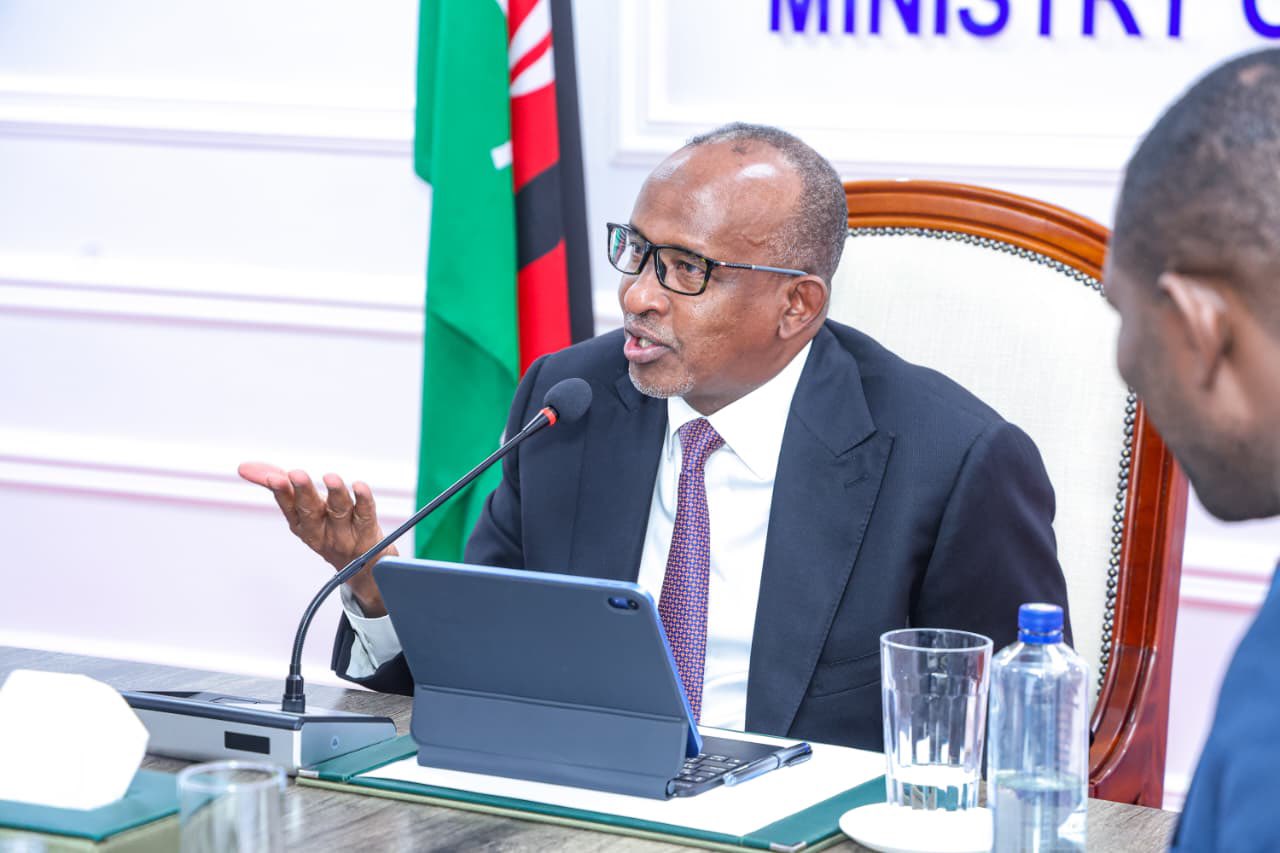
Health Cabinet Secretary Aden Duale has filed a detailed replying affidavit defending the Government’s Ebola preparedness and quarantine framework in a constitutional petition challenging the legality and scope of the country’s response measures.
In the affidavit, Duale urges the court to uphold the State’s preparedness strategy, arguing that Kenya’s response to the Ebola outbreak in neighbouring countries is anchored in international law, guidance from the World Health Organization (WHO), and regional obligations under the East African Community framework.


He states that the Ministry of Health is legally mandated to implement public health interventions, including quarantine administration and disease surveillance, pursuant to Executive Order No. 1 of 2025, which assigns the ministry responsibility for matters relating to public health and quarantine administration.
Duale confirms that the petitions before the court arise from the Ebola outbreak reported in the Democratic Republic of the Congo and Uganda. He says the Government’s response was informed by expert advice from the Director-General for Health on the epidemiological characteristics of the outbreak, its regional spread and the heightened risk of cross-border transmission into Kenya due to population movement within the region.
The Cabinet Secretary anchors the Government’s position on the International Health Regulations (IHR) 2005, which he describes as a binding international legal framework governing preparedness and response to the international spread of disease.
According to Duale, the regulations require countries to prevent, prepare for and respond to public health risks in a manner proportionate to the threat posed by disease outbreaks.
He further cites provisions of the regulations that recognize the role of the WHO in coordinating responses to public health emergencies and providing technical support to member states facing disease outbreaks. Duale tells the court that the WHO Director-General declared the Ebola outbreak affecting parts of the DRC and Uganda a Public Health Emergency of International Concern on May 16, 2026, triggering enhanced international coordination and response obligations among member states.
He adds that the Africa Centres for Disease Control and Prevention also classified the outbreak as a Public Health Emergency of Continental Security, highlighting the seriousness of the regional threat. Relying on WHO scientific guidance, Duale states that Ebola is a severe viral disease that spreads through direct contact with infected blood or bodily fluids and can often be fatal. He notes that individuals do not transmit the disease before symptoms appear and that the incubation period ranges between two and twenty-one days.
The Cabinet Secretary says early symptoms can resemble those of other infectious diseases, making laboratory testing necessary for confirmation. He explains that diagnosis requires specialized testing methods, including RT-PCR and ELISA.
Duale warns that the outbreak has already had significant consequences in the region, citing reports of more than 1,000 suspected cases and over 250 deaths in the DRC, as well as confirmed cases in Uganda linked to cross-border transmission. He also highlights infections among healthcare workers treating Ebola patients, arguing that the situation demonstrates the need for strong infection prevention and control measures.
The affidavit further invokes obligations under the East African Community Treaty, which requires partner states to cooperate in preventing, controlling and managing communicable diseases that pose regional public health threats.
Duale maintains that Kenya’s preparedness measures, including enhanced disease surveillance, strengthened laboratory capacity, infection prevention protocols, quarantine readiness and border health screening, are consistent with WHO recommendations issued following the emergency declaration. He argues that the preparedness framework is science-based, proportionate and necessary to prevent the importation of Ebola into Kenya and protect the public from local transmission.
The challenge before the court was filed by Katiba Institute and the Law Society of Kenya, who contend that the establishment and operationalisation of Ebola quarantine measures raise constitutional concerns relating to legality, proportionality and the protection of fundamental rights and freedoms.