
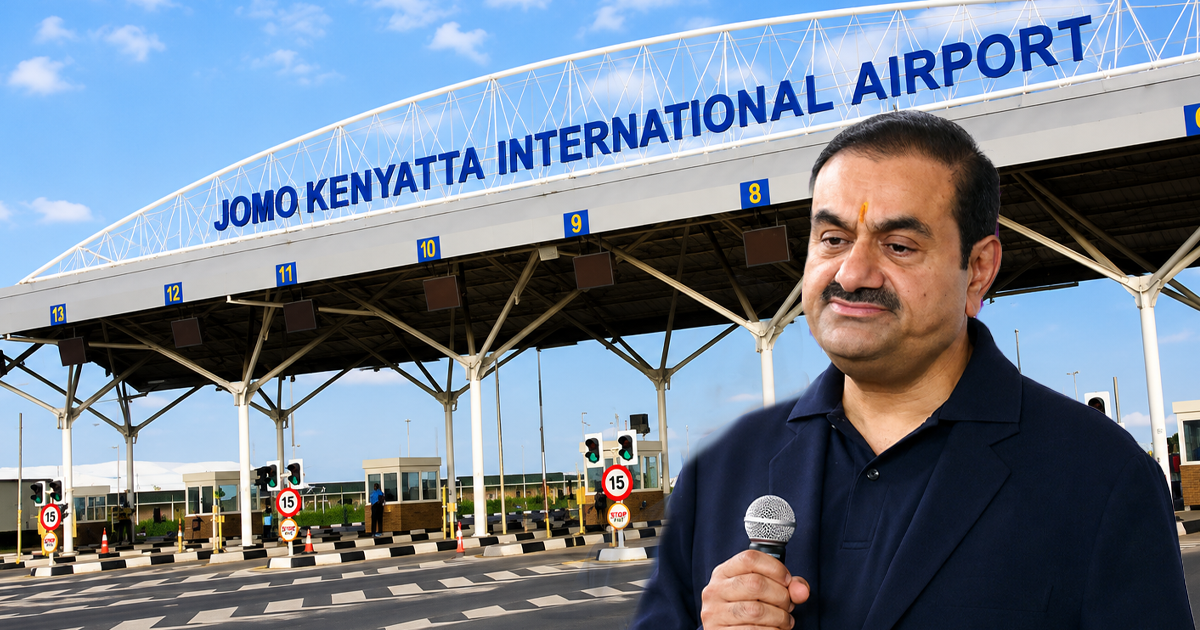
The High Court will on September 17, 2026, deliver a landmark judgment in a petition challenging the legality of the proposed partnership between the Kenya Airports Authority (KAA) and India’s Adani Group for the development and operation of Jomo Kenyatta International Airport (JKIA).
The petition, filed by Katiba Institute and argued by advocate Paul Gichana, seeks to have both the JKIA concession agreement and key provisions of the Public Private Partnership (PPP) Act, 2021 declared unconstitutional.


Appearing before Justice Patricia Nyaundi of the Constitutional and Human Rights Division at the Milimani High Court, Katiba Institute argued that the agreement was negotiated under a legal framework that weakens constitutional safeguards by excluding parliamentary approval and oversight of major public infrastructure projects.
According to Gichana, allowing the project to proceed under the current framework would unfairly lock out other investors and bidders who may have been interested in participating in the airport’s expansion and modernization.
The institute further contends that provisions governing Privately Initiated Proposals (PIPs) under the PPP Act violate Article 227 of the Constitution, which requires public procurement processes to be fair, equitable, transparent, competitive, and cost-effective. It argues that the law improperly excludes the application of the Public Procurement and Asset Disposal Act, 2015, thereby weakening accountability and oversight in the management of public assets.
Katiba Institute is also seeking orders that any declaration of unconstitutionality be applied retrospectively to ongoing projects undertaken under the disputed provisions, including the JKIA concession and projects involving the Kenya Electricity Transmission Company (KETRACO). The institute argues that unconstitutional laws and actions are void from the outset and cannot be allowed to stand.
The case comes against the backdrop of the government’s growing reliance on Public Private Partnerships to finance large-scale infrastructure projects. In its 2024 Budget Policy Statement, the government signaled its intention to significantly expand the use of PPPs and Privately Initiated Proposals as a key strategy for funding development while easing pressure on public finances.
It was under this policy framework that KAA entered negotiations with Adani Group over a long-term concession for the modernization, expansion, and operation of JKIA, Kenya’s busiest airport and a critical gateway for regional and international travel.
The proposed deal quickly sparked public debate and a series of legal challenges. Critics questioned the transparency of the process, the lack of parliamentary scrutiny, and the potential impact on competition and public accountability. Supporters, however, maintained that private sector investment was necessary to upgrade the airport’s infrastructure and improve operational efficiency without placing additional strain on the national budget.
The court’s decision is expected to have far-reaching implications for the future of Public Private Partnerships in Kenya. Beyond determining the fate of the JKIA-Adani concession, the ruling could shape the legal framework governing PPP projects and influence the validity of several major infrastructure developments undertaken under the current law.