The trial of six police officers accused in connection with the shooting death of Wycliffe Vincent Owa continued on Monday, with a government pathologist presenting detailed findings from a post-mortem examination that revealed multiple fatal gunshot wounds.
Dr. Sylvester Mahin, a government pathologist with over 17 years of experience in human pathology, told the court that he conducted the post-mortem on April 2, 2020, at the Nairobi Funeral Home. He stated that the body of the deceased, who was approximately 29 years old, was identified prior to the examination by his mother and wife.

According to Dr. Mahin, the body had been received from police officers attached to DCI Kayole, with a brief indicating that the deceased had been shot by police in the Kayole area.
The court heard that the body was preserved through refrigeration and that the deceased was dressed in a blood-soaked grey denim shirt, brown khaki trousers, and grey shorts. The shirt was torn and bore burn marks around some of the suspected bullet entry points. Dr. Mahin testified that he observed multiple external injuries, including bruises on the right side of the forehead, both wrists, and the left thigh. He further told the court that he documented eight gunshot entry wounds and eight corresponding exit wounds.
He said the entry wounds were mainly concentrated on the right side of the body, including the chest, upper abdomen, right shoulder area, and neck. The exit wounds were located on the left side of the neck, upper chest, lumbar region, and behind the left ear. Internally, the pathologist described extensive damage caused by the gunshots. He testified that ribs one to five on both sides of the chest were fractured, while the right lung and heart were punctured. He also noted injuries to the liver, small intestine, and surrounding abdominal structures.
The court further heard that the deceased suffered severe spinal trauma, including a fractured and dislocated cervical spine, with the spinal cord completely severed. In addition, there was swelling of the brain and bleeding around the occipital region and brain stem.
During cross-examination, Dr. Mahin clarified the limits of his expertise, stating that while he could distinguish between general categories of firearm injuries, such as those caused by pistols, rifles, and shotguns, he was not qualified to identify specific weapons such as an AK-47, G3, or Jericho pistol.
He also told the court that his exposure to ballistics training was limited to a one-day session at a ballistics unit, and emphasized that he was not a ballistics expert.
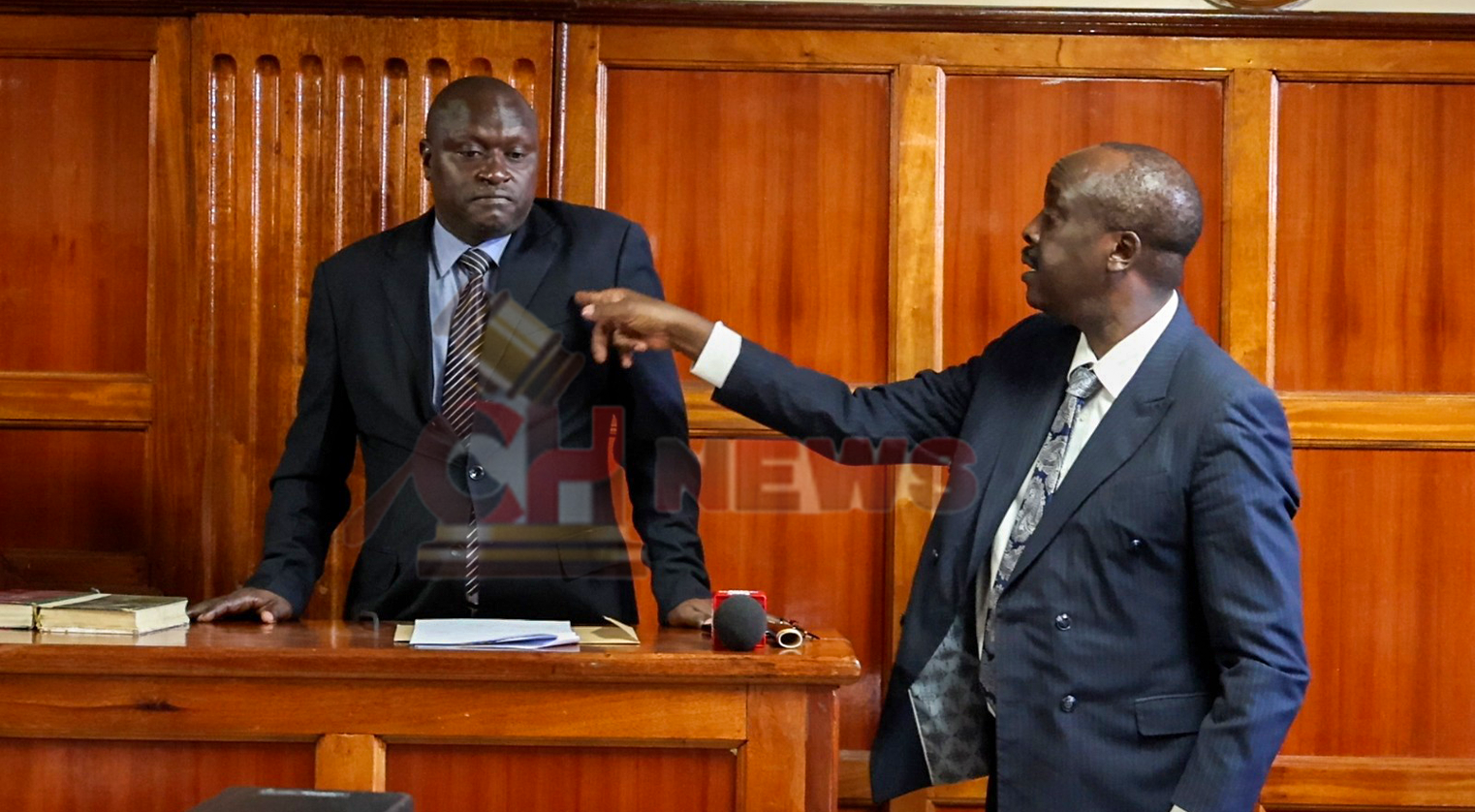
The defence Lawyer Danstan Omari questioned aspects of his interpretation, particularly regarding firearm classification and shooting dynamics. However, the witness maintained that his role was strictly to provide medical findings based on the injuries observed.
The next hearing is scheduled for next Wednesday, the 17th.