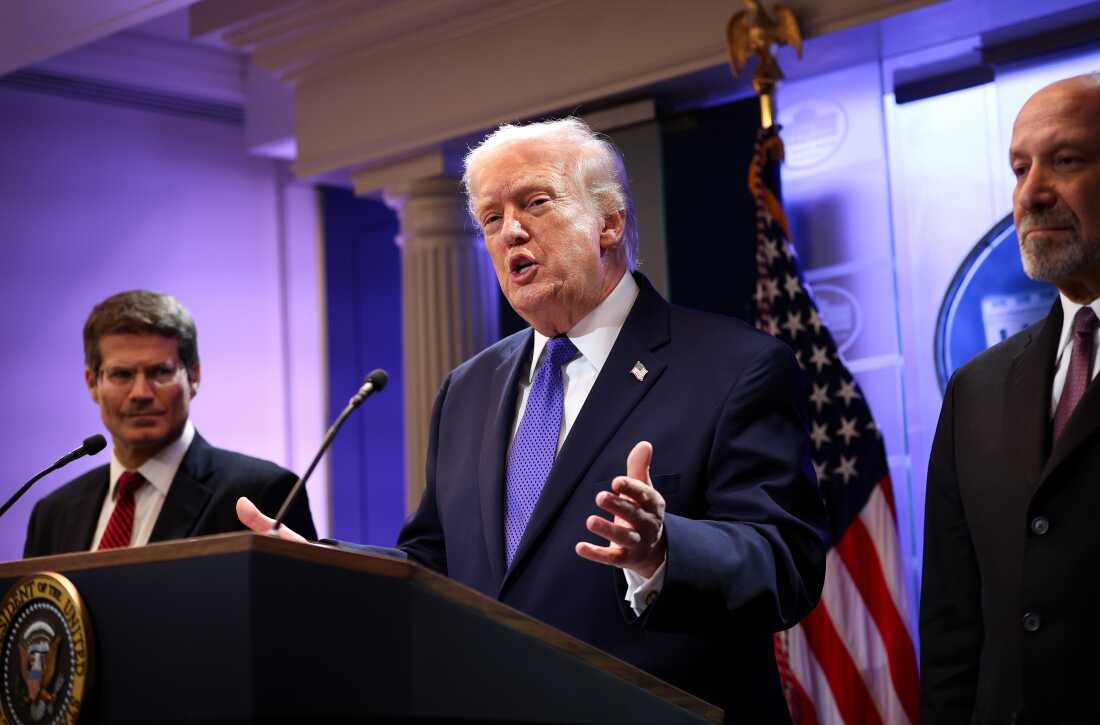
The Supreme Court of the United States is expected within the next two weeks to issue rulings on a series of major cases involving President Donald Trump, including his attempt to restrict birthright citizenship and his effort to remove a member of the Federal Reserve’s Board of Governors.
The court, which currently has a 6-3 conservative majority, has 20 cases remaining to decide before the end of its current term. The next set of rulings is expected on Thursday, with the term traditionally concluding at the end of June when the court releases some of its most consequential decisions.


Trump has already faced a significant setback at the Supreme Court this year after the justices blocked his broad tariffs on imports from around the world. The president responded by criticizing the judges who ruled against him, including two justices he appointed.
Robert Luther III, a professor at Antonin Scalia Law School at George Mason University and a former White House official during Trump’s first administration, said the president’s legal defeats were partly a result of his administration pursuing an expansive interpretation of executive authority.
“While ultimately there may be a few losses, I think the court continues to move in a pro-executive direction, a vision that is more consistent with President Trump’s view of the executive branch,” Luther said.
Trump has recently expressed concern over expectations that the court may reject his attempt to reinterpret the 14th Amendment’s birthright citizenship clause, which grants citizenship to nearly everyone born on U.S. soil. The proposed policy would deny citizenship to children born in the United States if their parents are undocumented immigrants or temporary visitors.
Trump attended the Supreme Court hearing on the matter in April, becoming the first sitting president to do so, and has since criticized predictions that the justices may rule against him.
“The United States of America cannot live with the shackles of Birthright Citizenship. It is not economically, or otherwise, sustainable,” Trump said in a recent Truth Social post.
The court also appears likely to rule against Trump’s attempt to remove Federal Reserve Governor Lisa Cook. The justices previously rejected his request to immediately suspend Cook from office last year. Trump sought Cook’s removal based on allegations of mortgage fraud, which she denies. The Federal Reserve has traditionally operated independently, although Trump has openly pushed for greater influence over the institution. He recently appointed Kevin Warsh as the new chair of the Federal Reserve.
However, the Supreme Court may deliver a victory to Trump in a separate case involving his broader effort to expand presidential control over the government. The justices are considering whether presidents can remove officials from independent agencies without providing a reason. The case involves the dismissal of Federal Trade Commission member Rebecca Kelly Slaughter. The court allowed Slaughter’s removal to proceed in September and has shown openness toward expanding presidential authority over independent agencies.
The justices are also reviewing Trump administration efforts to end protections for thousands of Haitian and Syrian immigrants under Temporary Protected Status. The outcome could determine whether the administration can quickly cancel similar protections for migrants from other countries.
Beyond Trump-related matters, the Supreme Court is expected to decide several high-profile cases involving state restrictions on transgender participation in women’s and girls’ sports, election law, and gun rights.
As the court’s term nears its conclusion, the Trump administration’s results may be mixed. Liberal advocates have warned against giving the conservative majority, led by Chief Justice John Roberts, excessive credit if it rules against Trump on birthright citizenship, arguing that the court has still expanded executive power in other areas.