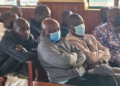

A protected prosecution witness on Tuesday told the High Court that only the officer assigned as the cell sentry had authority to control access to the holding cells at Nairobi’s Central Police Station on the night Albert Ojwang died in custody.
The witness, a police constable with 10 years of service in the National Police Service, testified before Justice Diana Kavedza as the murder trial over the death of blogger and teacher Albert Ojwang continued in Kibera.
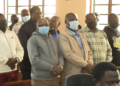
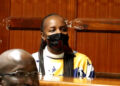
Explaining the command structure, the witness told the court that once suspects are booked and escorted to the holding cells, responsibility for them shifts entirely to the cell sentry. She said the officer manning the cell sentry is the one who controls entry into the detention area.
“The cell sentry takes charge,” the witness told the court.
The witness further testified that the cell sentry assumes responsibility for suspects immediately they are placed inside the holding cells. She said no other officer takes over that responsibility unless authorised under the station’s procedures.
“When suspects are taken to the holding cells, the cell sentry is responsible,” she testified.
According to the witness, access to the holding cells is strictly restricted to a limited number of authorised persons. She told the court that only those with specific duties are permitted to enter the detention area.
“Outside the cell sentry personnel, the investigating officer and those who supply food are allowed in,” she said.
She further testified that even police officers cannot freely access the holding cells without the approval of the officer serving as the cell sentry. According to her evidence, the authority to admit or deny entry rests solely with the sentry on duty.
“For a police officer to have access, the cell sentry has the power to allow or stop the officer from entering the cells,” she stated.
During cross-examination, defence lawyers sought to establish whether senior officers, including the Officer Commanding Station (OCS), could bypass the established procedures. The witness, however, maintained that the rules applied equally to every officer regardless of rank. She testified that even the OCS could not access the holding cells without complying with the prescribed protocol.
The witness also outlined the security measures governing the detention facility. She explained that strict procedures exist to prevent unauthorised access through the misuse of cell keys.
“If keys are in the wrong hands, it’s reported to the OCS, and immediately the padlocks are changed,” she testified.
She further explained that police officers work in two shifts comprising the morning and night shifts. According to the witness, formal handovers are conducted whenever one shift ends and another begins to ensure continuity of operations. The court also heard that the duty officer remains on duty for 24 hours and is expected to regularly inspect the holding cells. The witness said these inspections form part of the officer’s responsibility while on duty.
“The duty officer should make rounds at the cell several times,” she told the court.
According to the witness, Police Constable Peter Kimani was the designated cell sentry on the night Albert Ojwang died in custody. She further testified that co-accused Police Constable James Mukhwana was not assigned to that role on the material night. The evidence was presented as the prosecution continued to lay out the chain of responsibility within the station.
Albert Ojwang, a blogger and teacher, died while in police custody at Nairobi’s Central Police Station following his arrest, triggering nationwide outrage and demands for accountability. Several police officers have since been charged with his murder and are standing trial before the High Court. The prosecution alleges that Ojwang was unlawfully assaulted while in custody and that there were subsequent attempts to conceal the circumstances surrounding his death, including the alleged destruction of CCTV footage from the station.
The trial has featured testimony from protected witnesses, forensic experts and police officers as the prosecution seeks to establish who was responsible for Albert Ojwang’s death. Prosecutors also allege there was a coordinated effort to obstruct investigations into the incident. Tuesday’s testimony focused on who had lawful access to the holding cells, an issue expected to play a central role in determining responsibility for what transpired on the night Ojwang died.