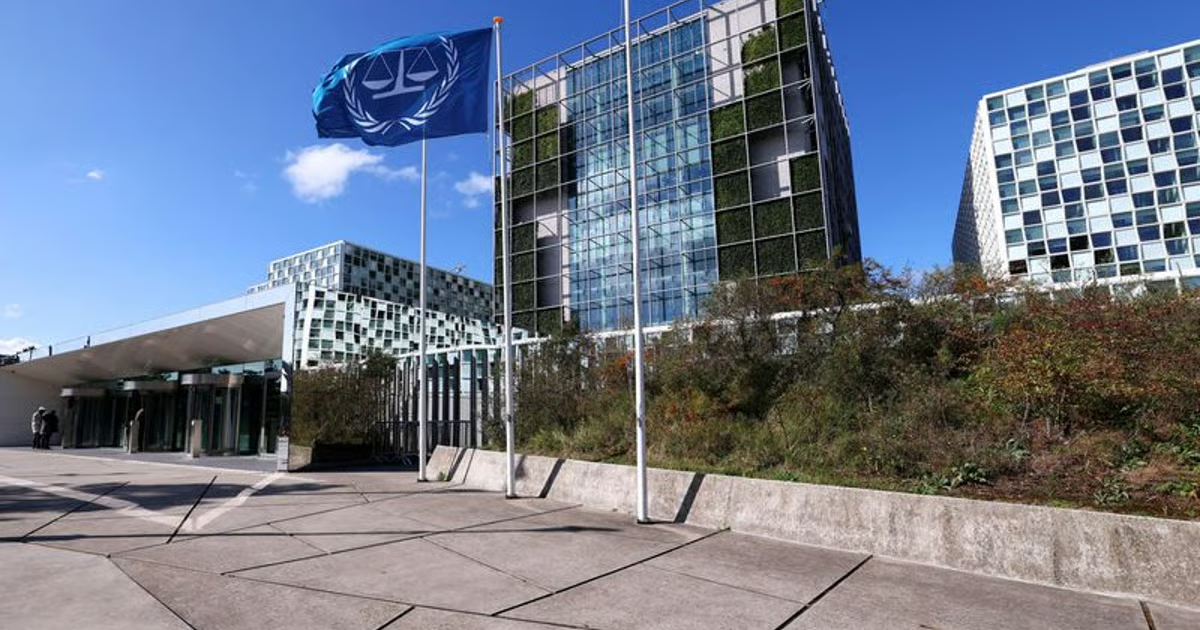
The United States has announced sweeping sanctions against the International Criminal Court (ICC), escalating tensions between the Trump administration and the international tribunal over its authority to prosecute alleged international crimes.
US Secretary of State Marco Rubio says the measures are intended to protect American sovereignty, accusing the court of threatening US nationals through its investigations and prosecutions.

The sanctions prohibit US entities from conducting transactions with the ICC, potentially cutting off access to essential services, including banking and software. Washington has also provided a six month grace period before some restrictions take effect, allowing time for negotiations with ICC member states.
The court has strongly opposed the decision, describing it as an assault on the rule of law and the foundations of the international legal system. It says the sanctions are designed to disrupt its operations and intimidate those who cooperate with it, adding that it will not be deterred from carrying out its mandate.
UN Secretary General Antonio Guterres has criticised the move, warning that it deals a serious blow to international criminal justice, with the ICC playing a central role in efforts to hold perpetrators of grave crimes accountable.
The United Kingdom, Canada, Denmark, Germany, France, Italy, Japan and the Netherlands have also reaffirmed their support for the court, expressing disagreement with Washington’s decision and commending its work in pursuing justice for victims.
The latest measures mark an escalation of the US campaign against the ICC, which has already seen 17 of its judges and officials sanctioned. The administration’s opposition stems partly from the court’s investigation into alleged crimes involving US military personnel in Afghanistan, as well as arrest warrants issued against Israeli officials, including Prime Minister Benjamin Netanyahu.
Rubio has maintained that President Donald Trump will not allow the court to prosecute Americans, warning that Washington could move to dismantle the institution if its concerns are not addressed.
The sanctions have raised concerns about the ICC’s ability to operate, particularly because the court relies on international cooperation and access to financial and technological services. Legal expert Professor Ryan Goodman has warned that severe disruptions could prevent the tribunal from conducting trials, potentially affecting detainees awaiting proceedings or judgments.
Among those awaiting trial in The Hague is former Philippine President Rodrigo Duterte, who faces allegations linked to thousands of killings during his administration’s war on drugs between 2011 and 2019. Former officials facing proceedings or pending appeals in cases involving Libya, Sudan and the Central African Republic could also be affected by any disruption.
Founded in 2002, the ICC prosecutes individuals accused of genocide, war crimes and crimes against humanity. It has 125 member states, although major powers, including the United States, Russia, China, India and Israel, are not parties to the court’s founding treaty.
The confrontation presents a major challenge to the tribunal’s operations and raises broader questions about international cooperation in prosecuting serious crimes.