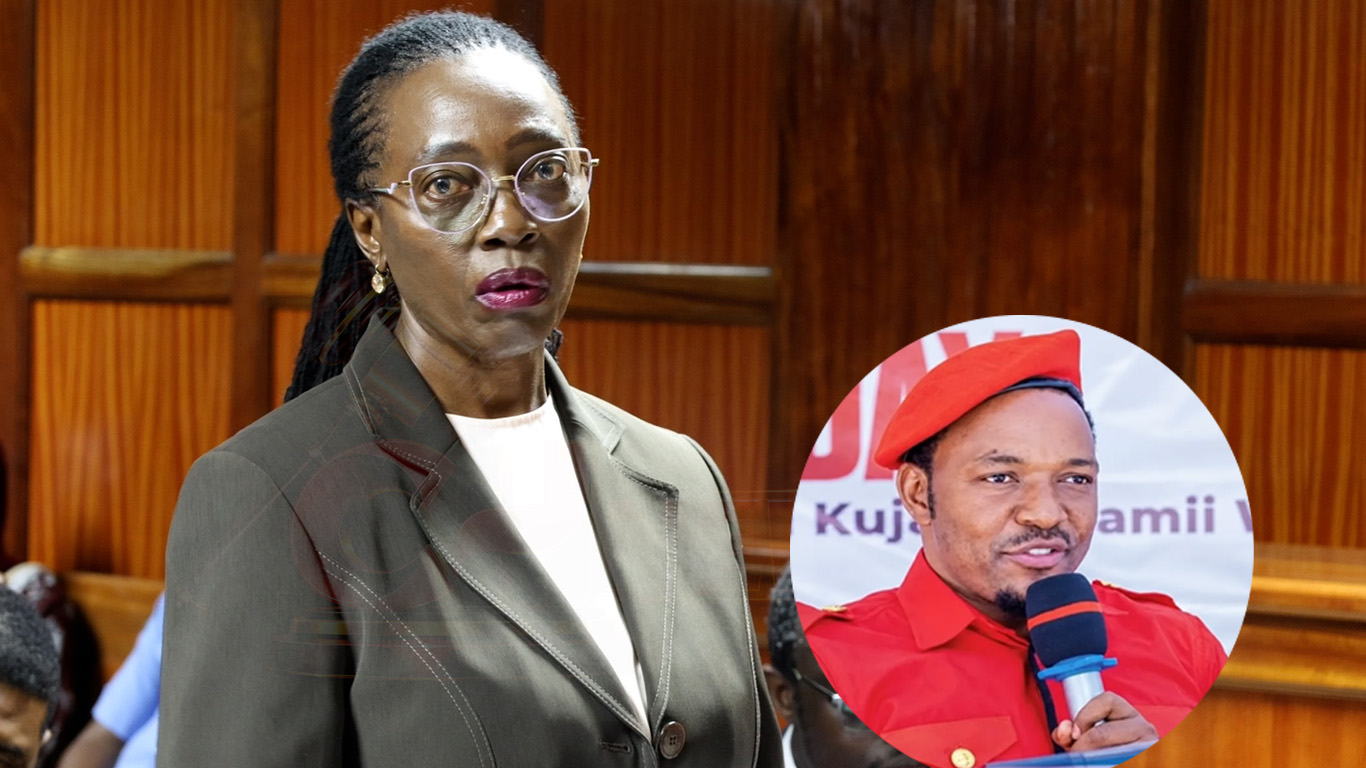
Senior Counsel Martha Karua has asked the High Court to compel Inspector General of Police Douglas Kanja and DCI Director Mohamed Amin to personally appear before court and explain the whereabouts of missing Tanzanian activist Twaha Mwaipaya, arguing that the police have failed to act with the urgency the case demands.
Appearing before Justice Muteti at the Milimani Law Courts, Karua, representing Vocal Africa, told the court that police were aware of Mwaipaya’s disappearance from Sunday, October 25, 2026, and should not use the subsequent formal service of court orders to justify delays in investigations. She questioned why the State said investigations commenced on October 26 despite the earlier reports of his disappearance.


“It is the business of the police to secure the well-being of Kenyans. Having been notified on Sunday, they cannot say that they only began investigating on Friday unless they are telling the court that they have abandoned the duty we pay them for,” Karua submitted.
The Senior Counsel maintained that the attendance of representatives from the National Police Service and the Directorate of Criminal Investigations was not enough, insisting that the two heads of the security agencies should personally account for the missing activist.
“We are urging this court to give orders that the IG and the DCI come in person and tell the court that they are unable to perform their duties,” she told the court.
Karua warned that Mwaipaya’s disappearance should be treated with urgency, citing previous cases in which missing persons were later found dead or never traced. She also questioned investigators’ reliance on responses from Safaricom and Airtel, arguing that police had previously demonstrated their ability to obtain mobile phone data and track suspects without waiting for formal responses from telecommunications companies. She cited investigations into the murder of Kasipul MP Charles Were as an example.
“Unless there is something that the police are hiding,” Karua said. She further accused the respondents of failing to comply with the second court order, which required them to produce Mwaipaya or his body before the court. “They are already in contempt of order number two. We don’t have Mwaipaya here or his body. Let them come before you and answer to Kenyans, Tanzanians and Ugandans,” she submitted.
However, State Counsel Marwa, representing the Inspector General and the DCI Director, maintained that investigations were actively ongoing and opposed the demand for the two police bosses to appear personally. Marwa told Justice Muteti that Commissioner of Police Kittony and a senior legal officer from the DCI had attended court on behalf of the DCI Director, while Mr Otiende, Deputy Director of Legal Affairs at National Police Headquarters, was representing the Inspector General.
He said investigators had written to Safaricom, Airtel and Bolt seeking information that could assist in locating Mwaipaya. Witnesses had also recorded statements, including James Gatunyi, who had hosted the missing activist.
The State was, however, yet to receive responses from Safaricom and Airtel. Marwa said investigators intended to send reminders and would seek additional time to file a substantive affidavit responding to the application.
“We are yet to get any form of response from Airtel and Safaricom. We intend to do a reminder and we will be requesting for a day to file a substantive affidavit in response to the Notice of Motion,” he told the court.
Marwa further maintained that Mwaipaya was not in the custody of any of his clients. “The subject is not in any of my clients’ custody,” he submitted.
He also argued that the petitioners were shifting their focus from the primary directive requiring the production of the missing activist to the demand for the personal attendance of the two police chiefs.
“They have abandoned the primary order for compliance, which is order number two, the production of the missing person,” Marwa said.
Lawyer Abner Mango, also representing the petitioner, backed Karua’s position, telling the court that the case concerned allegations of unlawful arrest, detention and continued holding of Mwaipaya incommunicado. Mango invoked Article 156(6) of the Constitution, arguing that the Attorney General’s office had an obligation to act in a manner that serves public interest and promotes public confidence.
He said the activist’s disappearance had raised serious questions among Kenyans and citizens of neighbouring countries, which required answers from the country’s security leadership.