Isaac Lenaola has issued a strong call to journalists to embrace responsible reporting, warning that the media will play a defining role in shaping Kenya’s stability as the country approaches a new electoral cycle.
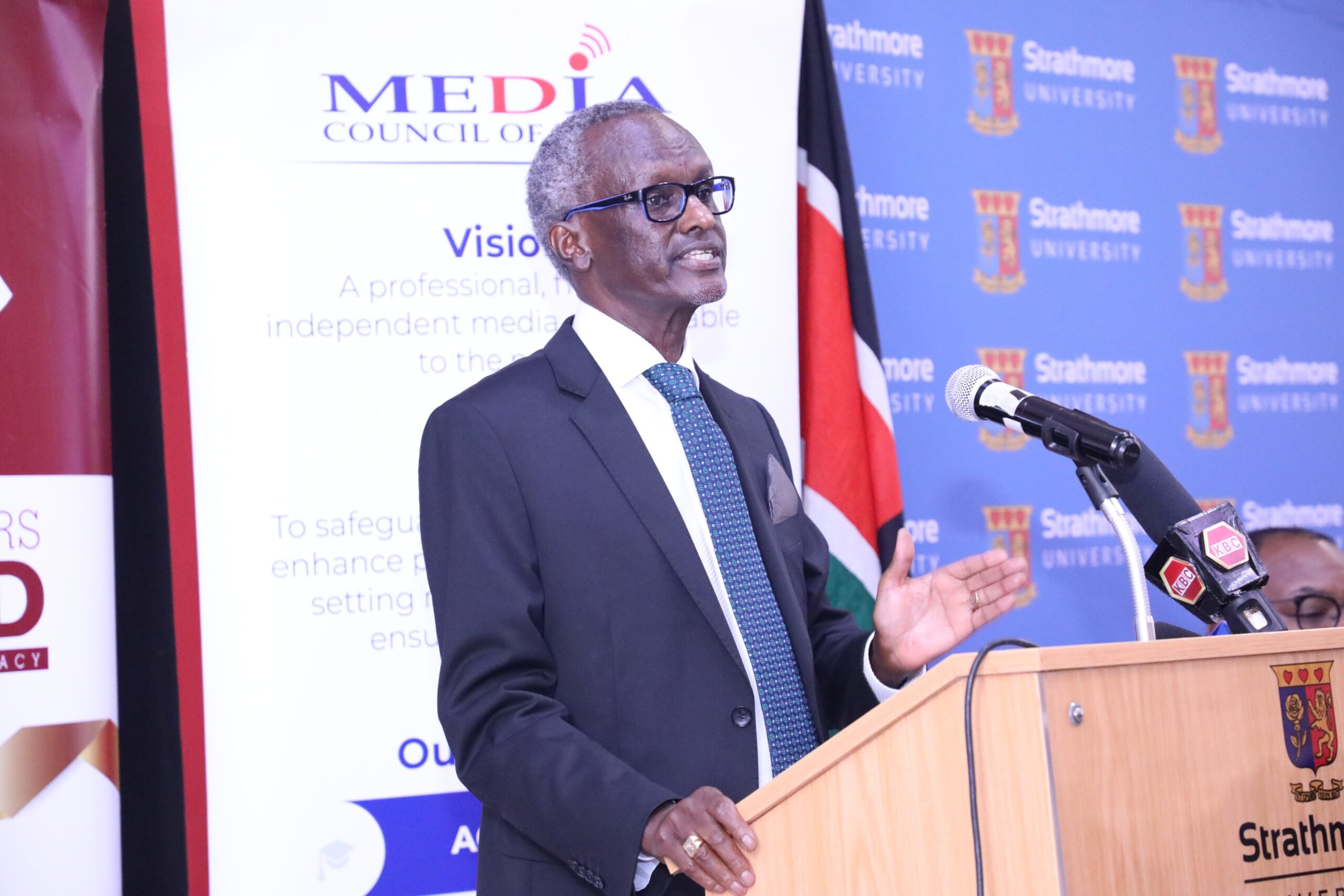
Speaking at Strathmore University during the World Press Freedom Day 2026 celebrations, the Supreme Court judge described the media as a powerful force capable of influencing public perception and national cohesion. He stressed that in today’s fast-moving digital environment, every headline carries weight.

“You are the heartbeat of the nation. Every headline, every breaking news alert shapes public perception,” Lenaola said, urging journalists to prioritize accuracy and restraint, especially in politically sensitive moments.
The judge raised concern over the rapid spread of misinformation, noting that the rise of social media and emerging technologies has made it easier for false narratives to circulate widely and quickly. He cautioned that unchecked reporting could inflame tensions, particularly during election periods, and called for a deliberate shift toward peace-sensitive journalism.
“Misinformation spreads just as fast as information, sometimes even faster. The responsibility lies with you to ensure accuracy without inflaming tensions,” he stated, adding that the country must remain anchored in truth rather than fear.
Beyond cautioning the media, Lenaola emphasized the need for stronger collaboration between the press and the Judiciary. He noted that both institutions share a responsibility to ensure that information reaching the public is not only timely, but also accurate and properly contextualized.
“Fair and responsible journalism strengthens public confidence in the courts and helps citizens better understand judicial processes,” he said.
To bridge the gap between complex legal processes and public understanding, Lenaola revealed that the Judiciary is working on introducing simplified summaries of court decisions. The move is expected to make rulings, especially in high-profile and politically sensitive cases more accessible to both journalists and the public, reducing misinterpretation and unnecessary tension. He further challenged journalists to recognize their role beyond reporting, describing them as active participants in nation-building. According to Lenaola, the choices media practitioners make, what to highlight, when to publish, and how to frame issues, directly shape the country’s narrative.
“You influence how stories are told, what is highlighted, when it is told, and why it matters. That influence must be exercised with responsibility,” he said.
Addressing the broader theme, “Shaping a Future at Peace,” Lenaola underscored that Kenya’s stability will depend on how institutions, including the media and the Judiciary, uphold truth and accountability.
He also pointed to the growing influence of artificial intelligence and digital tools in news production, urging journalists to adopt innovation cautiously and ethically. Technology, he noted, should be used to advance truth, not distort it.
In his closing remarks, Lenaola called for collective responsibility among all stakeholders, expressing optimism that stronger institutional cooperation can foster both freedom and peace.
“If we work together, the media, the Judiciary and all stakeholders, we can build a Kenya where freedom and peace reinforce each other,” he said.