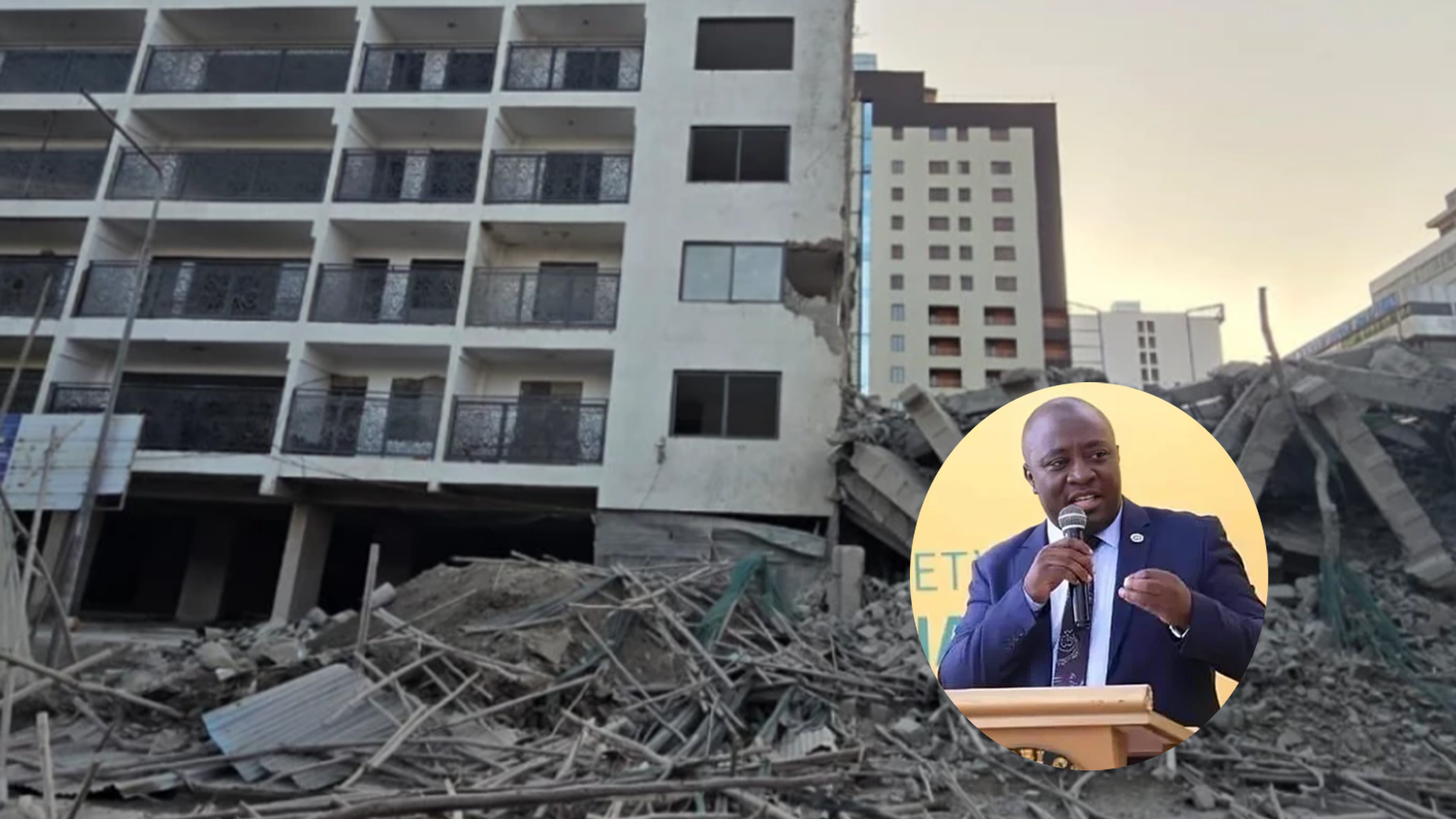
The Office of the Director of Public Prosecutions (ODPP) has approved criminal charges against suspended Nairobi City County Chief Officer for Urban Development and Planning, Patrick Analo Akivaga, alongside dozens of public officials, developers, engineers and architects over the collapse of Manzil Towers in Nairobi’s South C estate.
The decision follows an independent review of investigations conducted by the Directorate of Criminal Investigations (DCI) into the January 2, 2026 tragedy, which claimed two lives and triggered widespread concern over construction safety and regulatory oversight in the capital.


In a statement issued on Friday, the ODPP said it had established sufficient evidence to prosecute several individuals linked to the planning, approval, supervision and execution of the ill-fated project.
“The Director of Public Prosecutions (DPP) has determined that there is sufficient evidence and a realistic prospect of conviction to warrant the prosecution of several suspects connected to the incident,” the statement read.
Akivaga is set to face charges of Abuse of Office contrary to Section 101(1) as read with Section 102A of the Penal Code, and Neglect of Official Duty contrary to Section 128 of the Penal Code. Prosecutors allege that he was among county officials who failed to discharge their regulatory and oversight responsibilities before the building collapsed.
His prosecution comes at a time when he is already at the centre of a separate corruption probe by the Ethics and Anti-Corruption Commission (EACC). Just days before the ODPP’s announcement, EACC detectives raided Akivaga’s residence in Syokimau and recovered approximately KSh 65.3 million in cash, including KSh 51.3 million and about USD 113,000, allegedly concealed in the house and a vehicle. Investigators also seized title deeds, motor vehicle logbooks and electronic devices.
The anti-graft agency says it is investigating allegations of conflict of interest, abuse of office, bribery and possession of unexplained assets against the county official. Following the raid, Nairobi Governor Johnson Sakaja suspended Akivaga from office pending the outcome of investigations.
“The Commission is investigating allegations of conflict of interest, abuse of office, bribery, and possession of unexplained assets against Mr. Patrick Analo Akivaga,” the EACC stated.
The Manzil Towers building, a multi-storey structure under construction in South C, collapsed in what investigators described as a catastrophic pancake-style failure. The tragedy left two people dead and intensified scrutiny of Nairobi’s building approval and enforcement systems amid allegations of regulatory lapses and non-compliance with approved construction standards.
Among those facing the most serious accusations are Eng. Daniel Alphonse Odhiambo, Arch. Gideon Chege Mwangi, Abdishakur Muse Mohamed and Yussuf Mohamed Yussuf, who have been approved for prosecution on manslaughter charges contrary to Sections 202 and 205 of the Penal Code.
The four are also accused of commencing construction without obtaining the required Environmental Impact Assessment (EIA) licence, contrary to the Environmental Management and Co-ordination Act (EMCA).
The ODPP has further approved charges against numerous county officials, regulatory officers and construction professionals associated with the planning, approval and implementation of the project. The offences range from abuse of office and neglect of official duty to making and uttering false documents.
Architect Gideon Chege Mwangi, alongside Abdishakur Muse Mohamed and Yussuf Mohamed Yussuf, is expected to face charges relating to the alleged preparation of false documents, while Mohamed and Yussuf will also face additional counts of uttering false documents.
The prosecution authority emphasized that its decision was reached after a comprehensive assessment of the evidence and in accordance with Article 157 of the Constitution, the Office of the Director of Public Prosecutions Act and the Decision to Charge Guidelines. Additionally, they maintain that the determination was based solely on the evidence gathered during investigations and the existence of a realistic prospect of conviction.
The accused persons are expected to be arraigned in court to answer to the charges.