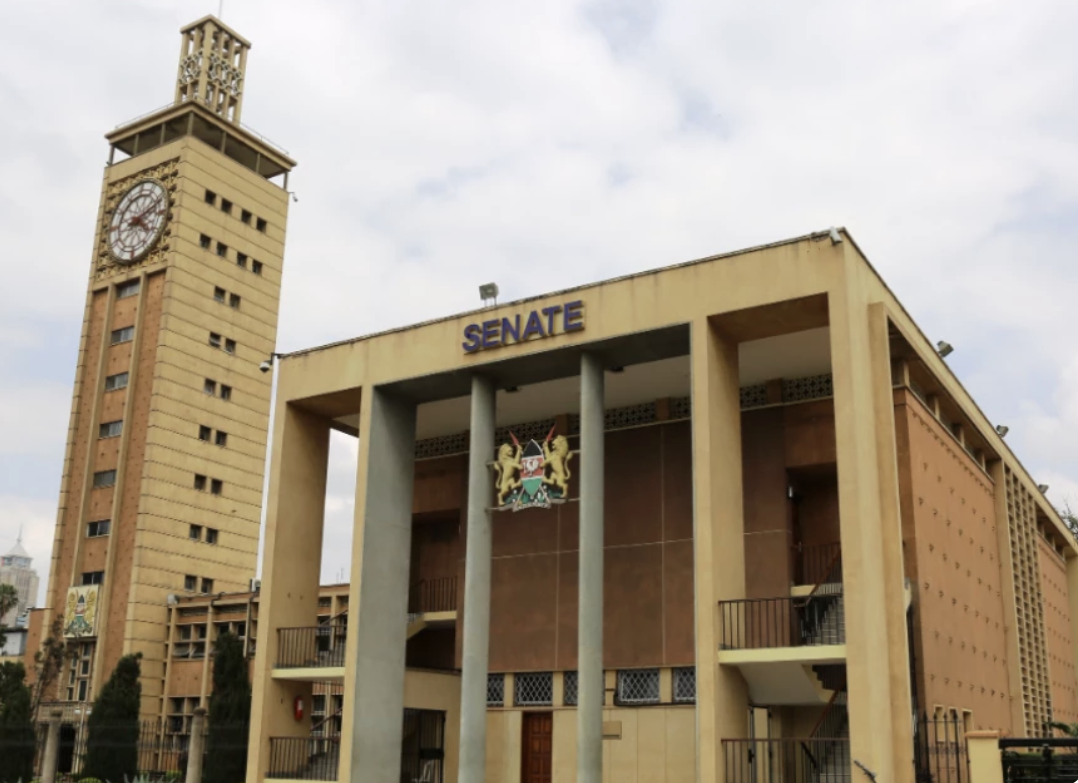
The Senate has urged the High Court to dismiss a petition filed by public interest litigant Sheria Mtaani and advocate Shadrack Wambui seeking to stop Parliament from considering a motion that could lead to a review of former President Uhuru Kenyatta’s retirement benefits.
The petition, filed under certificate of urgency, seeks conservatory orders barring Parliament from debating a motion introduced by Nandi Senator Kiprotich Cherargei and reportedly backed by the Jubilee Party. The motion proposes to review, audit, vary, reduce or withdraw retirement benefits enjoyed by the former Head of State under the Presidential Retirement Benefits Act, 2003.


In its grounds of opposition dated June 8, 2026, the Senate argues that the case is premature, speculative, and fails to meet the constitutional threshold for intervention.
“This petition is premature, speculative, and a direct assault on parliamentary privilege and the separation of powers,” the Senate states.
The Senate maintains that no parliamentary process has yet commenced, arguing that the motion has not been tabled or admitted for debate and is still undergoing procedural scrutiny before the Speaker.
According to the House, this means there is no legislative action in existence capable of being restrained by the court.
The Senate relies on Article 117 of the Constitution, which protects parliamentary proceedings, and Article 124(1), which grants each House autonomy to regulate its internal affairs through Standing Orders. It further cites Senate Standing Order 60, which vests the Speaker with authority to determine admissibility of motions before they reach the floor.
On this basis, the Senate argues that court intervention would amount to unconstitutional interference in internal parliamentary processes.
“The purported motion dated 4th May 2026 has not been tabled before the Senate for its consideration,” the filing states.
The Senate also invokes the doctrine of separation of powers, citing the Supreme Court decision in Mati & another v Wambora & another (2017), arguing that courts must exercise restraint and only intervene where constitutional violations are clear and imminent.
“Each arm of government must recognize the independence of the others and courts must only intervene in requisite instances,” the Senate argues.
The House further contends that even if Parliament eventually passes any resolution affecting the retirement benefits, the High Court retains jurisdiction under Article 165(3)(d) to review its constitutionality.
The Senate is therefore asking the court to dismiss the petition and application, terming them frivolous, vexatious, and an abuse of court process.
The petition was filed by Sheria Mtaani and advocate Shadrack Wambui, who argue that the proposed motion is unconstitutional and threatens rights protected under the Constitution. They are seeking orders stopping Parliament from proceeding with any debate on the matter.
The High Court will now determine whether it can intervene at a stage where Parliament insists no formal legislative process has yet begun, raising key questions on ripeness, parliamentary privilege, and separation of powers.