
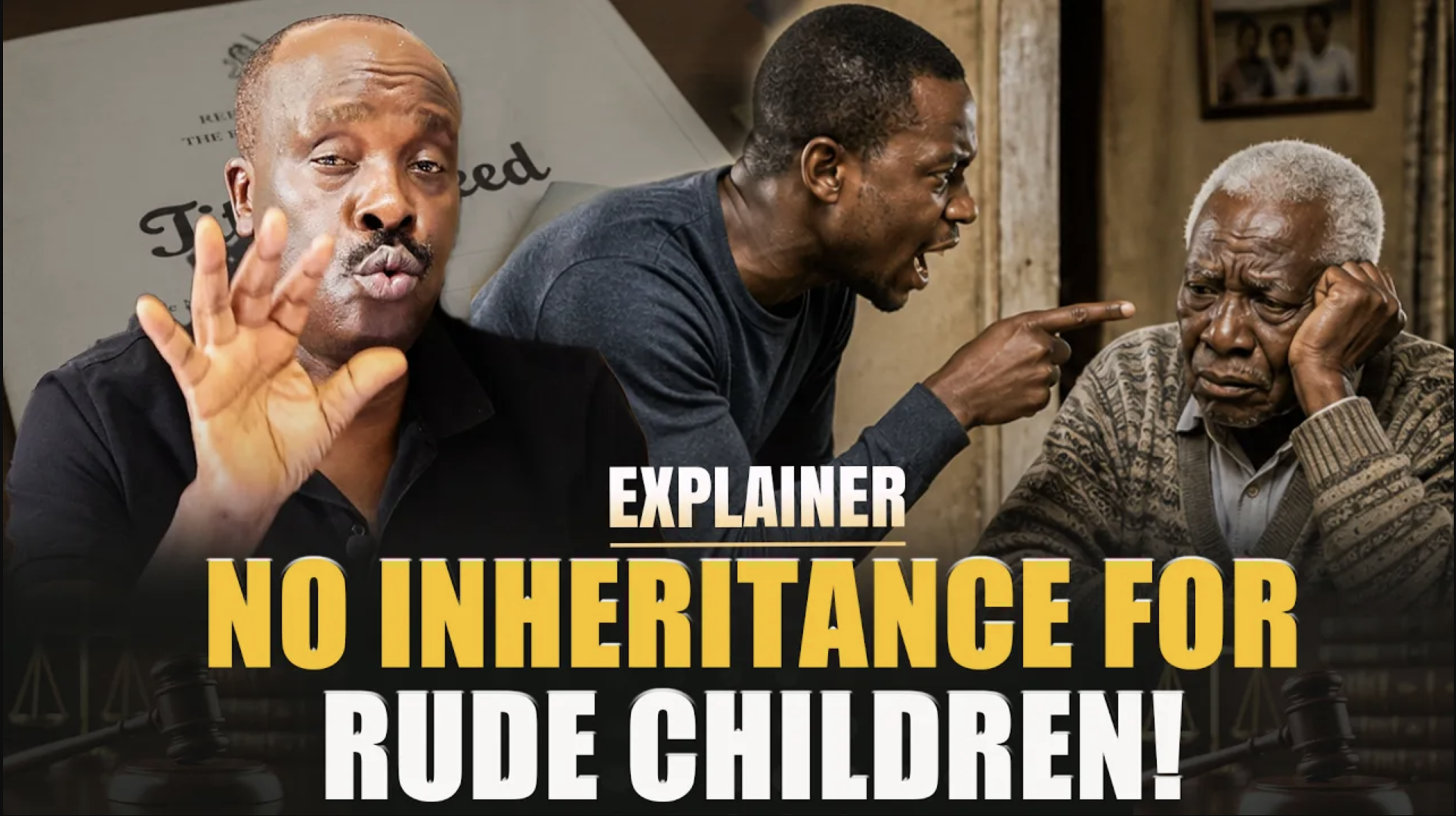
A debate on family responsibility and inheritance has emerged following legal analysis of Section 28 of the Law of Succession Act, which allows courts to consider the conduct of a beneficiary when determining whether they deserve a share of a deceased person’s estate.
Lawyer Danstan Omari, in one of the legal explainers at Court Helicopter youtube channel, explains that the law recognizes situations where a beneficiary’s behaviour towards a parent may affect their entitlement to inheritance. He questioned whether a child who mistreats their parents, abuses them, takes them to court unnecessarily, or abandons them during difficult moments should still demand a share of their estate.


“Many parents sacrifice everything for their children, taking them to school, supporting them until they become independent, yet when the parents grow old, fall sick, or face challenges, some children turn their backs on them,” Omari stated.
He noted that Section 28 of the Law of Succession Act directs courts to consider several factors, including “the conduct of the dependent in relation to the deceased.” This means that the relationship between the beneficiary and the parent can become a key factor in succession disputes.
According to the lawyer, parents have the legal right to make wills and exclude certain beneficiaries from inheriting their property. A child who believes they were unfairly left out may approach court seeking reasonable provision under the law, but the court will examine the circumstances surrounding the exclusion.
Omari cited several court decisions, including succession matters where judges considered the conduct of beneficiaries before making inheritance decisions.
One of the cases discussed surround a case where the court found that the circumstances surrounding the exclusion mattered. Evidence showed that the father had allegedly failed to support the son from childhood, leading the court to intervene and award the son a share of the estate. The case demonstrated that succession law does not only protect parents’ decisions but also examines whether a beneficiary was unfairly denied support.
However, Omari warned that children who deliberately mistreat their parents risk losing inheritance. He said the law can deny benefits to individuals who abandon, disrespect, or abuse those who would otherwise have considered them dependants.
He advised families to observe basic principles of respect and responsibility, including; Taking care of parents, treating them with courtesy and respect, honouring them in young and old age and avoid at all times, harrassing them just as the bible itself indicates.
He concluded that inheritance is not only about blood relationships but also about conduct, responsibility, and the relationship maintained during a parent’s lifetime.
“Why lose your inheritance because of disrespect? Respect your parents… in law, it may determine whether you inherit their property,” said Danstan
Omari.