
Lawyers have urged the High Court to dismiss a constitutional petition seeking the removal of nearly 100 Senior Counsel from the Roll of Senior Counsel, arguing that the case is legally defective and that the court lacks jurisdiction to hear it.
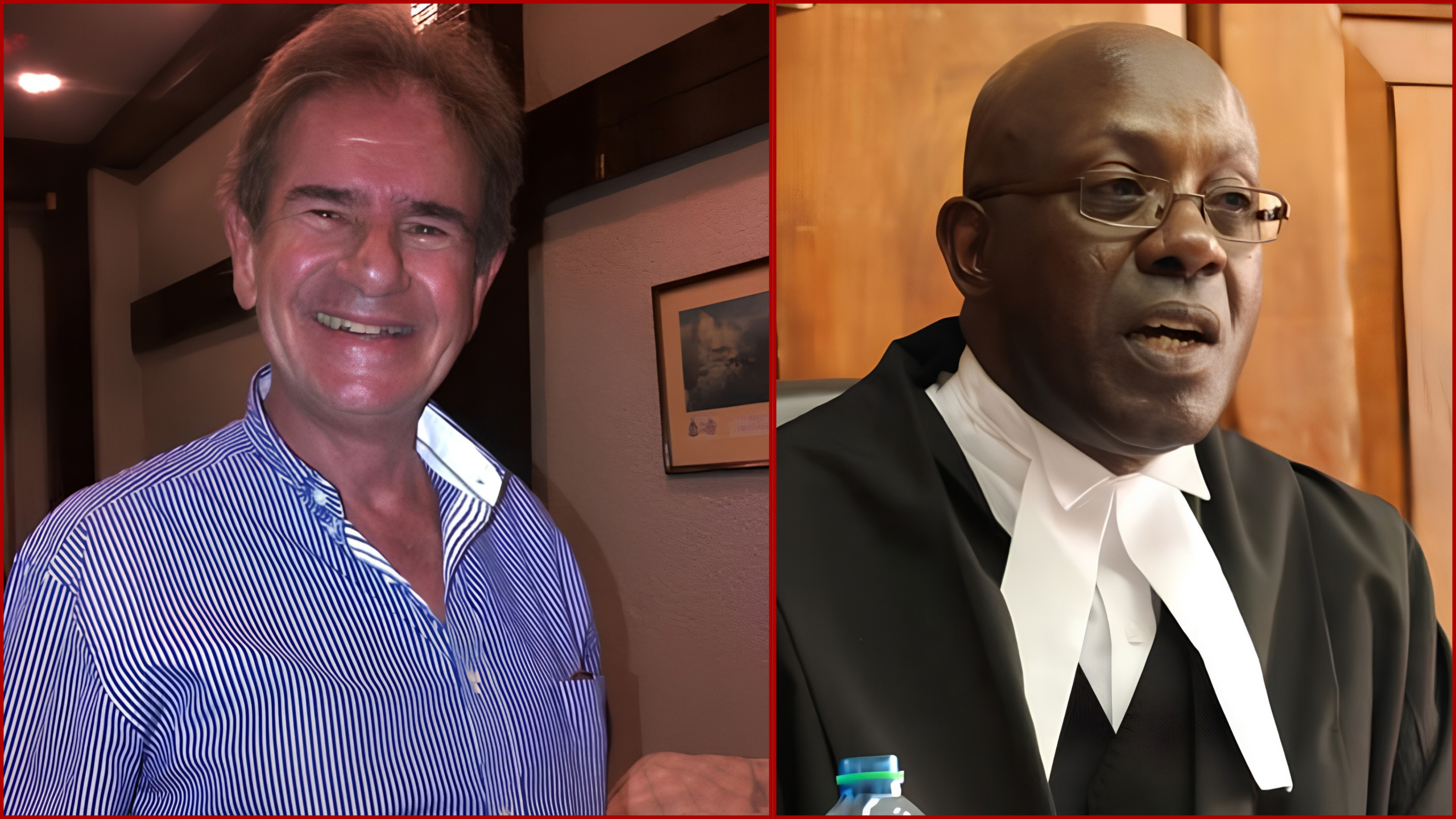
Appearing before the Constitutional and Human Rights Division, lawyer Ochieng Ong’ow together with Senior Counsel Chacha Odera, asked the court to uphold a preliminary objection challenging the petition on several legal grounds.


The petition seeks orders directing that the names of almost 100 advocates holding the rank of Senior Counsel be removed from the Roll of Senior Counsel.
However, Ochieng argued that Parliament had already established a specific legal process for handling complaints relating to the conferment and removal of Senior Counsel, making the constitutional petition premature. He submitted that under Section 19 of the Advocates Act and Rule 15 of the Advocates ,Senior Counsel Conferment and Privileges, Rules, complaints concerning Senior Counsel must first be presented before the Committee on Senior Counsel.
According to him, the committee is mandated to investigate complaints, hear affected parties and, where appropriate, recommend removal through the Chief Justice to the President. He argued that because Parliament had created a specialized statutory mechanism, the High Court should decline to exercise jurisdiction until that process had been exhausted.
Ochieng further cited the decision where the court held that disputes concerning the conferment or removal of Senior Counsel must first be dealt with under Rule 15 before constitutional remedies can be sought. He warned that allowing the petition to proceed would undermine the doctrine of exhaustion by permitting litigants to bypass procedures specifically created by Parliament. The lawyer also challenged the petitioner’s legal standing, arguing that although Articles 22 and 258 of the Constitution broaden access to courts, they do not eliminate the requirement that litigation must disclose a genuine constitutional grievance.
Relying on the Supreme Court decision in Kenya Railways Corporation & 2 Others v Okoiti & 3 Others, Ochieng argued that public interest litigation should not be used to advance personal grievances disguised as constitutional disputes. He maintained that the petition directly targets identifiable Senior Counsel whose professional rights would be affected and therefore required a clear legal nexus between the petitioner and the alleged constitutional violations.
Senior Counsel Chacha Odera echoed those submissions, urging the court to exercise constitutional restraint. He argued that the petitioner had failed to identify any specific constitutional rights that had been violated, denied or threatened, despite anchoring the case on Article 22 of the Constitution.
Odera cited the well-known Anarita Karimi Njeru principle, which requires constitutional petitions to clearly set out the rights allegedly violated and the manner of their violation.
According to him, the petitioner had not met that threshold.
“The mere fact that somebody may not be happy over a decision taken does not in itself constitute a constitutional violation,” Odera submitted.
He also challenged allegations that the conferment of Senior Counsel lacked public participation, saying the principle should not be invoked casually.
In a light-hearted remark that drew attention in court, Odera said the phrase “public participation” was increasingly being used in inappropriate situations.
“I went to a restaurant yesterday and they had changed the menu, and one of the customers asked, ‘There was no public participation?'” he told the court.
He argued that public participation in the conferment of Senior Counsel involves institutions established under the law and not every member of the public. Odera further submitted that the petitioner, who is not an advocate, could not claim that his rights had been violated in relation to a process for which he was not eligible.
On the legality of the conferment process, Odera rejected claims that the rules governing the Committee on Senior Counsel had been repealed. He also reminded the court that the conferment of the rank of Senior Counsel is ultimately made by the President upon recommendation by the Committee on Senior Counsel. Odera further criticized the petitioner’s challenge to his appearance for the Law Society of Kenya, saying the petitioner had even questioned whether the LSK required the Attorney General’s approval to appoint counsel.
He warned that unless courts exercised restraint, constitutional litigation risked becoming a vehicle for challenging virtually every administrative decision.
“So, with tremendous respect to the petitioner, this is not a matter for your consideration in exercising your powers under Article 23 of the Constitution,” Odera submitted.