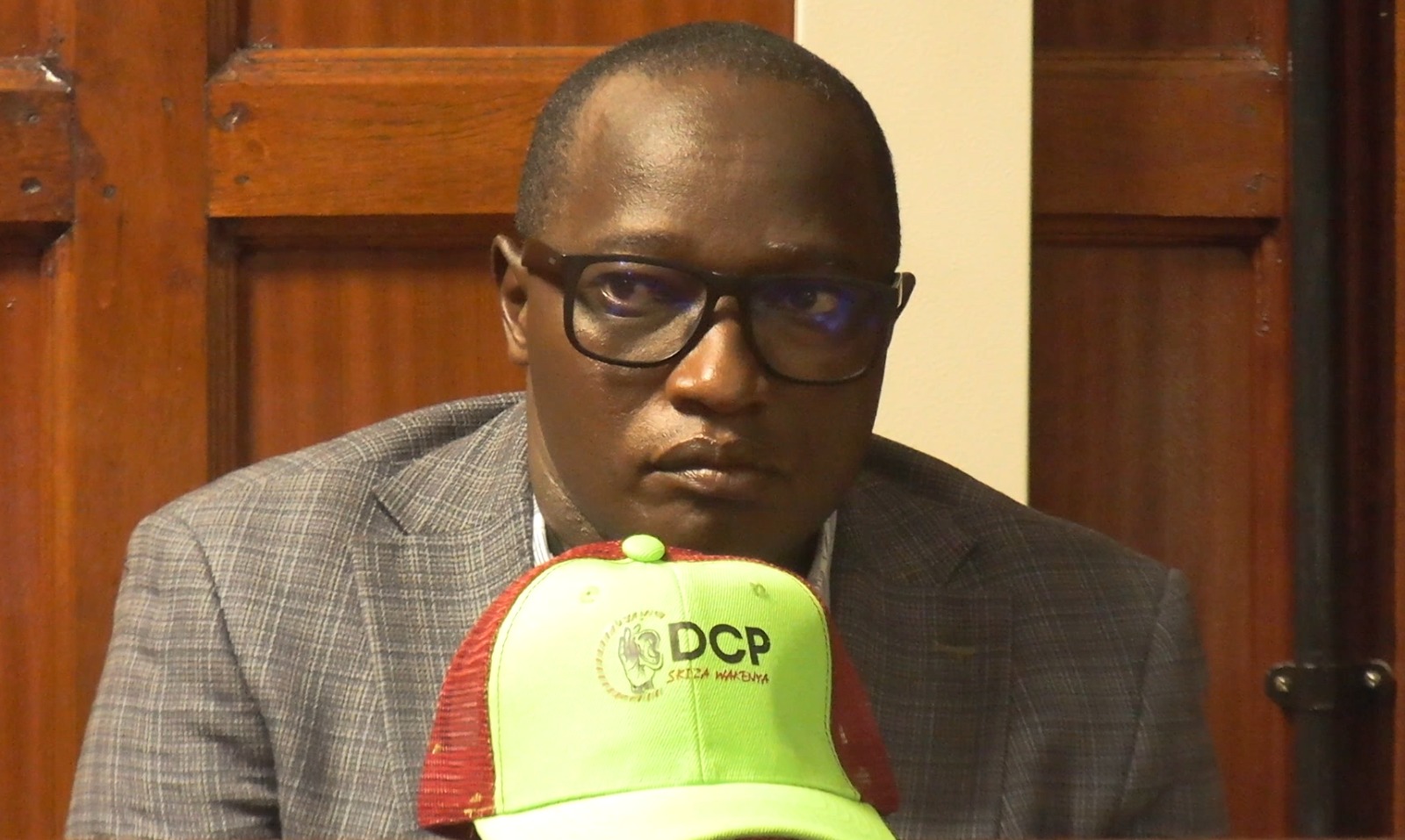
Mukurweini MP John Kaguchia has challenged the legality of the criminal charge facing him over alleged remarks made during a political rally in Kieni, Nyeri County, arguing that the case violates his constitutional rights and freedom of expression.
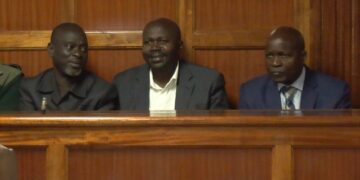
Kaguchia appeared before Milimani Senior Principal Magistrate Teresia Nyangena on Tuesday, where he was presented with a charge of offensive conduct under Section 94(1) of the Penal Code. However, he did not take a plea after his lawyers mounted a constitutional challenge to the charge sheet and the circumstances surrounding his arrest.


Through lawyers Kiragu Wathuta and Ndegwa Njiru, the MP argued that the charge was defective and failed to meet the constitutional threshold under Article 50(2), which guarantees an accused person the right to be informed of a charge in sufficient detail to enable them to answer it.
“The charge before you does not disclose an offence under the law and is purely an attempt by the state to breach the freedom of expression and limit the opposition,” the defence argued.
The lawyers also claimed that Kaguchia’s constitutional rights were violated from the time of his arrest.
The defence told the court that on August 2, Kaguchia appeared on Inooro FM’s Kiririmbi programme between 7pm and 9pm, where public affairs and political issues were discussed.
According to the defence, after the programme ended, staff at Royal Media Services allegedly informed Kaguchia that about 30 Subaru vehicles carrying hooded individuals had surrounded the premises and were looking for him.
Lawyer Kiragu Wathuta told the court that, fearing for Kaguchia’s safety amid what he described as a wave of abductions, he advised the MP to remain inside the Royal Media Services premises overnight.
He said he found Kaguchia at about 5am the following morning having spent the night on couches at the station while waiting for daylight.
At around 9am, the defence said, a senior officer who identified himself as a regional DCI commander arrived at the premises accompanied by uniformed officers and informed Kaguchia that he was under arrest.
The lawyers argued that the arrest was effected without a summons or warrant.
Njiru further submitted that Kaguchia should not have been required to take a plea before consulting his advocates, citing Article 49(1)(c) of the Constitution, which guarantees arrested persons the right to communicate with and be represented by an advocate.
The defence also questioned the jurisdiction of the Milimani Law Courts, arguing that the alleged remarks were made in Kieni, Nyeri County, and should therefore be dealt with by a court with the appropriate territorial jurisdiction.
Njiru further challenged the charge under Section 94(1) of the Penal Code, arguing that it failed to identify the person allegedly threatened, abused or insulted.
He said the charge sheet merely referred to words allegedly uttered by Kaguchia without demonstrating that they were made in a public place or that they amounted to threatening, abusive or insulting words as required by law.
The lawyer also raised concerns over the translation of the alleged remarks from Kikuyu into English. Njiru told the court that he understood Kikuyu and had identified discrepancies between the original words allegedly uttered by Kaguchia and their English translation.
He particularly questioned the interpretation of the word “Kasongo”, arguing that the translation had the potential to distort the alleged remarks and prejudice Kaguchia’s ability to understand and respond to the charge.
The defence has consequently asked the court to determine whether Kaguchia should be required to take a plea before the constitutional and legal objections are addressed.
Pending the determination of his application challenging the plea-taking process, Magistrate Teresia Nyangena released Kaguchia on a Ksh500,000 bond or an alternative cash bail of Ksh250,000.
The court is expected to rule on the plea-taking challenge on August 5, 2026.
The case stems from allegations that Kaguchia made remarks during a political gathering in Kieni that were interpreted by investigators as offensive and potentially threatening in the context of the 2027 General Election.