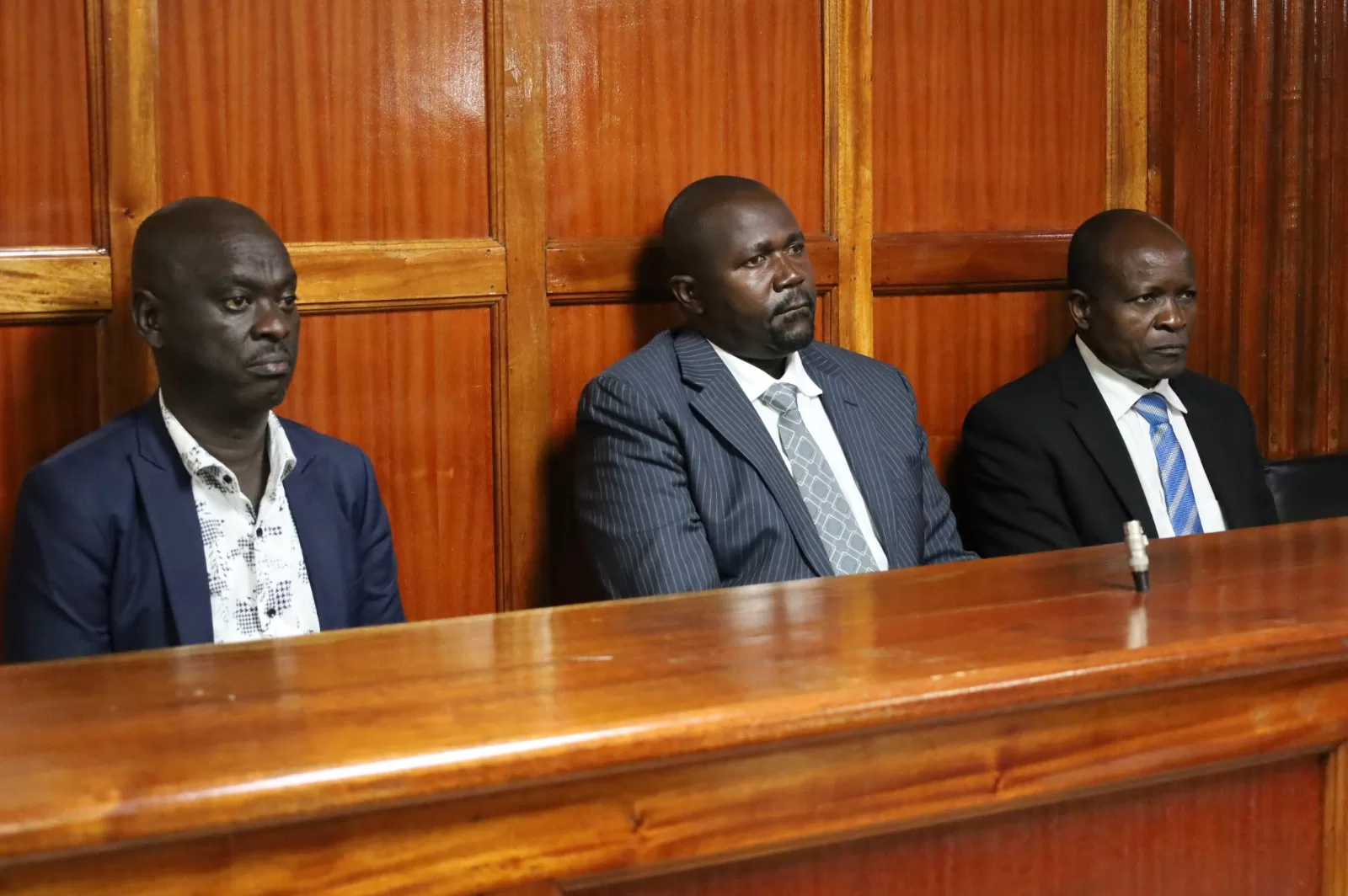
The Director of Public Prosecutions has urged the High Court to consider imposing the death sentence on former Migori Governor Zachary Okoth Obado and his two co-convicts over the murder of university student Sharon Otieno and her unborn child.
During sentencing submissions before Justice Cecilia Githua, Senior Assistant Director of Public Prosecutions Gikui Gichuhi asked the court to consider the maximum sentence provided under Section 204 of the Penal Code, taking into account the circumstances of the offence and the individual culpability of each of the three convicts.


Obado was convicted alongside his former personal assistant Michael Juma Oyamo and Caspal Obiero. The prosecution made the plea despite Sharon’s parents, Douglas Otieno and Melinda Auma, telling the court that they had forgiven Obado and would not oppose a non-custodial sentence for him.
Gichuhi told the court that although the family’s decision to forgive Obado and appeal for leniency was relevant to sentencing, it could not determine the punishment ultimately imposed by the court. “Reconciliation may bring peace to a family; it cannot erase the aggravating circumstances in which a life was unlawfully and deliberately taken,” Gichuhi submitted.
The prosecution strongly opposed a non-custodial sentence for any of the three convicts, arguing that it would not adequately reflect the gravity of the offence or meet the objectives of punishment, denunciation and general deterrence.
Gichuhi further argued that Sharon’s murder was not a private dispute between individuals but a public offence against the State and society. She said the sentence should therefore take into account accountability, proportionality, deterrence, denunciation and public confidence in the administration of justice.
According to the prosecution, its request for the maximum penalty was not based merely on the fact that the death sentence exists under the Penal Code, but on what it described as an individualised assessment of the offence, its circumstances and the culpability of each convicted person.
The prosecution told Justice Githua that it had placed before the court the relevant law, aggravating and mitigating circumstances, victim impact material, probation reports and other public-interest considerations to assist the court in determining the appropriate sentence.
“The Court must impose a lawful and proportionate sentence after independently weighing the totality of the material,” Gichuhi submitted.
The court will ultimately determine the sentences to be imposed on Obado, Oyamo and Obiero