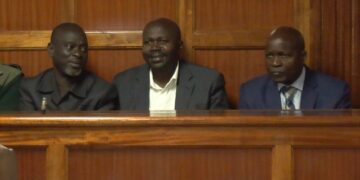
Nine people have been charged with forcible detainer over a parcel of land belonging to the Supreme Council of Kenya Muslims Registered Trustees (SUPKEM) in Huruma, Nairobi.
The accused appeared before Milimani Chief Magistrate Susan Onsarigo on Wednesday, September 16, 2026, where they denied the charges and were granted a Sh200,000 bond or Sh50,000 cash bail each.

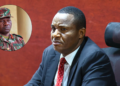
The nine, Said Dorfa Akare, Mohamed Godana Kalicha, Jillo Gobe Jillo, Molu Sora Bonaya, Adan Oge Abdullahi, Ali Kibarabara Said, Noor Salim Nzioka, Hussein Mohamed Jillo and Mohamed Said Jillo. They face a charge of forcible detainer contrary to Section 91 of the Penal Code.
According to the charge sheet, the accused allegedly committed the offence on diverse dates between May 2025 and September 2026 at Huruma Area in Nairobi County. The prosecution alleges that they jointly occupied a parcel of land identified as Nairobi Block 130/1650, also known as L.R. No. 209/10509, belonging to SUPKEM.
The accused are alleged to have held possession of the property without colour of right, in a manner likely to cause a breach of the peace, against SUPKEM, which was entitled by law to possession of the land. The charge sheet lists SUPKEM as the complainant and identifies Hassan Kirua Ole Nando, Wilson Hassan Nandwa and Corporal M. Wambui among the witnesses.
The accused were arrested on September 15, 2026, and presented before court the following day. Before plea-taking, Lawyer Danstan Omari made an oral application seeking to defer the plea to allow the parties to explore mediation.
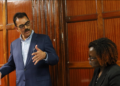
Omari argued that the dispute involved a mosque and had significant religious implications, urging the court to consider the public interest and the possibility of division within the Muslim community. “On one side is SUPKEM, the religious mother umbrella of all the Muslims. The accused people are all members of the Muslim faith,” Omari told the court.
He urged the parties to be given an opportunity to discuss their differences, citing Article 159 of the Constitution, which recognises alternative forms of dispute resolution. “My appeal to the court, to the DPP and all stakeholders is that let us give these people a chance to discuss their problems,” he said.
The application was opposed by the State through prosecutor Kevin Nyaga, who argued that the decision to charge was constitutionally vested in the Office of the Director of Public Prosecutions and that the evidential threshold had been met.
The court declined to defer plea-taking, ruling that the religious nature of the dispute did not provide a legal basis for suspending criminal proceedings. In her ruling, Onsarigo said the importance of places of worship and peaceful coexistence within communities was recognised, but the court had to remain anchored to the law. “Plea taking is not a matter of administrative convenience,” the magistrate said.
She added that Article 159(2)(c) of the Constitution, which recognises alternative forms of dispute resolution including reconciliation and mediation, did not automatically give a criminal court jurisdiction to suspend or defer plea-taking.
“The religious or emotive character of the subject matter cannot by itself confer upon the court a jurisdiction which the law does not provide,” she ruled. The accused subsequently took plea and denied the charges.
The court granted each accused a Sh200,000 bond or Sh50,000 cash bail.