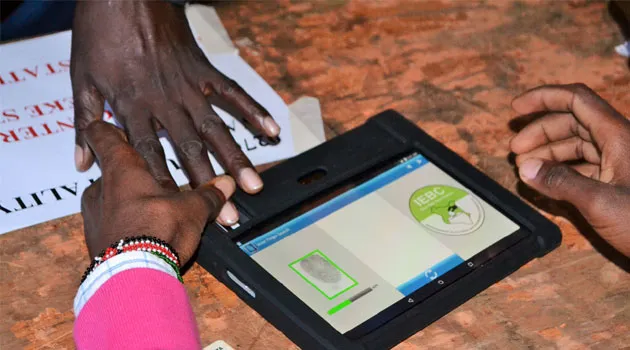
The High Court has ordered the Independent Electoral and Boundaries Commission (IEBC) to allow accredited political parties and election observers to access source code and audit logs connected to the continuous voter registration system.
Justice Gregory Mutai issued the interim directive while hearing a petition filed by advocate Gilbert Njoroge, who has challenged aspects of the commission’s electoral technology and compliance with voter-registration requirements.


The order allows the authorised parties and observers to examine the specified technical records as the court considers the wider questions raised in the petition. However, Justice Mutai limited the case to specific issues, ruling that an earlier challenge concerning the general suitability of IEBC’s electoral technology had already been determined and could not be reopened.
The remaining questions include whether political parties and accredited observers are entitled to access the source code and audit logs, and whether the IEBC has complied with the legal requirements governing publication of the voter register.
Njoroge relied on portions of a KPMG audit of the voter register to support his concerns over the accuracy and transparency of voter-registration data.
According to the material presented to the court, the audit identified 481,711 registrations containing duplicate or missing identification numbers. A further 164,269 entries reportedly contained identification numbers that did not correspond with records held by the National Registration Bureau. The audit also identified 246,465 deceased voters whose identification numbers remained reflected in the register as of June 2022.
Justice Mutai said the audit findings, together with incomplete responses from some government agencies, raised substantive questions about the accuracy and transparency of the register.
The judge, however, cautioned that the excerpts relied upon by the petitioner did not include every section of the audit dealing with database controls, system controls or the IEBC’s responses. The court also noted restrictions contained in the audit report concerning its use and disclosure.
The petitioner had further raised claims that the IEBC’s technology provider had resisted requests for access to source code and audit logs, citing intellectual-property concerns.
Justice Mutai said those allegations would have to be tested during the substantive hearing but found that they were sufficient to establish an arguable case for the limited interim access granted. The judge declined, however, to suspend the use of the electoral technology altogether.
He noted that the technology had already been used during the 2026 by-elections and that Kenya’s electoral system combines biometric voter identification with physical result forms, allowing aspects of the process to be subjected to manual verification and judicial scrutiny.
The court also declined to halt the ongoing electoral processes, holding that suspending constitutionally mandated activities would require a clear and compelling justification. As a result, the broader challenge to the suitability of IEBC’s technology was struck out on the basis of res judicata, meaning the issue had already been conclusively determined.
The court also removed claims concerning the extension of the Smartmatic contract and the handling of voter data, finding that the petitioner had not first exhausted the relevant mechanisms before the Public Procurement Administrative Review Board and the Data Protection Commissioner.
The petition will therefore proceed on the narrower questions surrounding access to the voter-registration technology and compliance with requirements on publication of the voter register. The ruling does not declare IEBC’s electoral technology unsuitable. Instead, it provides accredited parties and observers with interim access to specified technical information while the remaining issues are determined by the court.
Former National Assembly Speaker Justin Muturi welcomed the ruling, saying it places greater emphasis on the ability of authorised stakeholders to scrutinise electoral records and information.