President William Ruto has said police officers who used unlawful force during protests must be held accountable, insisting that the government will not shield security personnel who exceed their constitutional mandate.
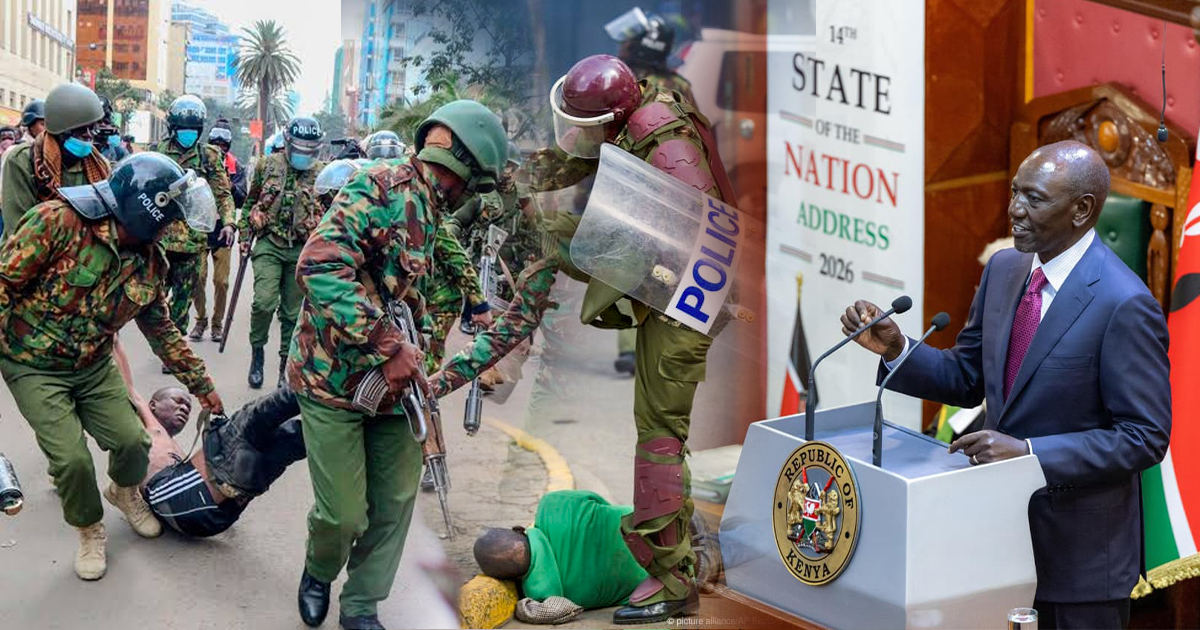
Speaking during his State of the Nation Address in Parliament on Wednesday, November 18, 2026, Ruto defended the role of security agencies in maintaining law and order but acknowledged that some officers may have violated the law while responding to demonstrations.


The President said security agencies had a constitutional responsibility to protect lives and property, adding that police officers were equally entitled to exercise their authority independently in carrying out their duties. However, he maintained that such authority did not give officers the licence to use unlawful force against members of the public.
“Where security officers use unlawful force or exceed their authority, wrongdoing must be acknowledged, and those responsible must be held accountable in accordance with the law,” Ruto said.
His remarks come against the backdrop of years of protests in Kenya, including the demonstrations following the disputed 2017 General Election and the June 2024 anti-Finance Bill demonstrations. The June 2024 protests, which were largely driven by young Kenyans, left several people dead and others injured. The demonstrations reached their peak on June 25, when protesters breached Parliament Buildings as lawmakers considered the Finance Bill 2024, prompting a security response that attracted widespread criticism.
Addressing the issue, Ruto acknowledged the suffering caused by the demonstrations, noting that Kenyans had lost their lives, others sustained serious injuries, while families were left devastated. He also recognised the destruction of public institutions, including attacks on the Judiciary, the looting of businesses and the loss of livelihoods. At the same time, the President reiterated that Kenyans had a constitutional right to demonstrate and express dissatisfaction with the government.
Citing Article 37 of the Constitution, which guarantees the right to assemble, demonstrate, picket and present petitions to public authorities peacefully and without arms, Ruto said the government had an obligation to protect those freedoms.
“We must always protect that right. Kenyans must remain free to express disagreement and criticise their Government,” he told Parliament.
On compensation, Ruto disclosed that the government had allocated Sh.2 billion to provide redress to victims of protest-related violations, including cases dating back to 2017. He said the Compensation Panel had, by July 2026, reported payments amounting to Sh.1.2 billion to 1,476 verified beneficiaries. The beneficiaries included 1,036 civilians who suffered during protests and 356 police officers who were injured while carrying out their duties.
Nevertheless, Ruto acknowledged that the financial payments could not undo the suffering experienced by victims and their families.
“For both the demonstrators and police, no compensation can restore a lost life or erase the suffering of a family,” he said.
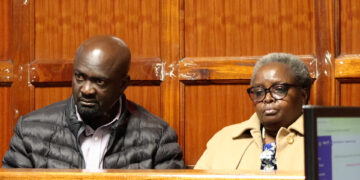
He was, however, categorical that compensation should not be mistaken for justice, insisting that investigations into alleged violations must continue and that officers found to have broken the law should face prosecution.
“Equally, compensation does not replace accountability. Investigations must continue, and prosecutions must follow for violations of the law, wherever the evidence warrants,” he added.
To prevent a recurrence of such incidents, the President said the government was strengthening the systems used to manage public order. The measures include improved police training, better professional standards, officer welfare, appropriate equipment, clearer operational command and stronger oversight.
He also cited de-escalation procedures as part of the reforms aimed at ensuring security officers protect the public while respecting constitutional freedoms.
Concluding his remarks on the issue, Ruto maintained that the country did not have to choose between security and individual liberties, saying both were constitutional obligations that the State must uphold.