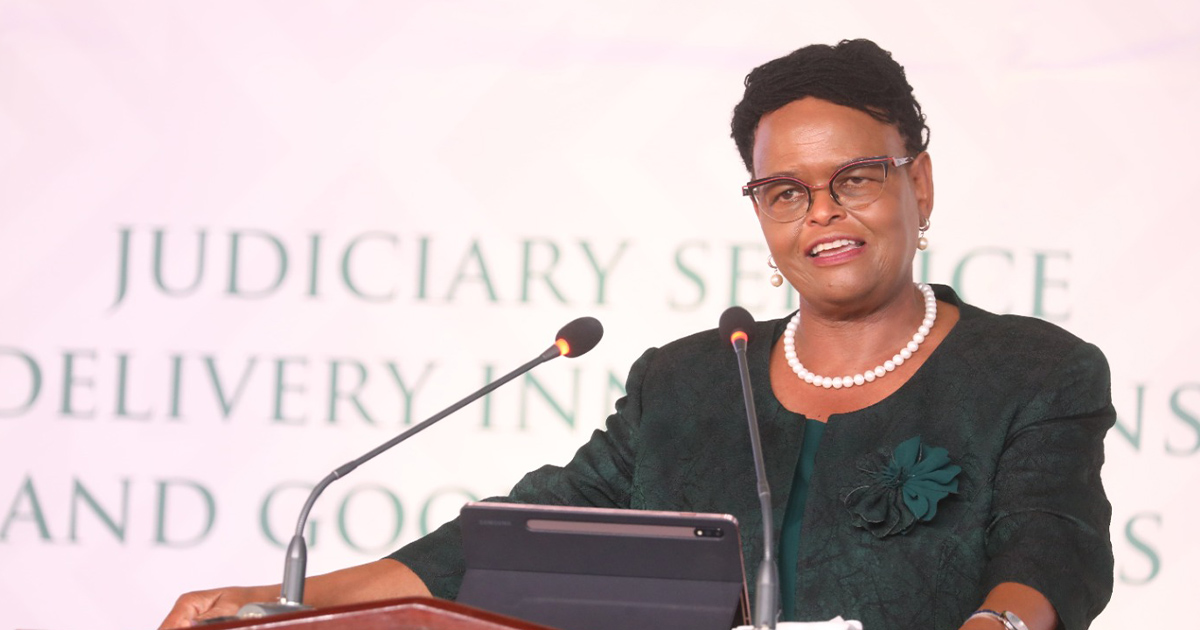
The High Court has temporarily barred Chief Justice Martha Koome and the Judicial Service Commission (JSC) from publishing individual performance data for judges and judicial officers in the State of the Judiciary and Administration of Justice Report (SOJAR), scheduled for launch on Friday, November 20, 2026.
Justice David Mburu issued the conservatory orders on Thursday, November 19, after Nairobi resident Duncun K. Kariuki moved to court seeking to stop the publication, arguing that the proposed release of individual performance reports was unconstitutional and lacked an established regulatory framework.


In his application, Kariuki argued that the accuracy, veracity and correctness of the data had not been verified and that publishing individual scores without proper context could expose judges and judicial officers to ridicule, doxxing and other forms of cyber harassment.
He further raised concerns that some courts might be excluded from the exercise, a move he argued could amount to discrimination and create unnecessary divisions within the Judiciary. However, the petitioner clarified that he was not opposed to transparency or the publication of judicial performance data in principle. Instead, he wanted proper modalities established to guide the exercise and ensure that the information was presented fairly and could be properly interpreted.
In his supporting affidavit, Kariuki stated: “THAT the Petitioner is not opposed to the publication of the said data in principal but is only craving for formulation of the modalities of the publication for the data to have the basis for a sensible interpretation thereof.”
He also told the court that an earlier application dated July 14, 2026, raising similar constitutional questions, was still awaiting a ruling. He argued that proceeding with the publication before the court determined the dispute would undermine the judicial process.
“The intended publication of the data if so published shall render both the pending Application and Petition academic, otiose and a mockery to the pending application and Petition,” Kariuki stated in his affidavit.
Consequently, Justice Mburu agreed that the matter raised fundamental constitutional and legal questions and that allowing the publication to proceed could render the pending proceedings academic.
In his orders, the judge stated: “I am satisfied that the application and the pending petition raise fundamental constitutional and legal questions and that the intended publication of the data if so published shall render the petition and pending application academic and otiose.”
The court therefore issued a conservatory order prohibiting the JSC and the Chief Justice from publishing individual performance data for judges and judicial officers as an addendum, appendix or in any other form in the SOJAR report pending the hearing of the application between the parties.
Additionally, the respondents and interested parties were directed to file and serve their responses within seven days of service of the order. The parties were also granted permission to file written submissions.
The constitutional petition raises questions concerning judicial independence, the dignity and welfare of judicial officers, data protection and the respective mandates of the JSC, the Chief Justice and the Chief Registrar of the Judiciary.
Among the legal provisions cited by Kariuki are Articles 160 and 172 of the Constitution, which address judicial independence and the functions of the JSC, as well as Section 31 of the Data Protection Act.
The matter will be mentioned on December 1, 2026, for further directions.