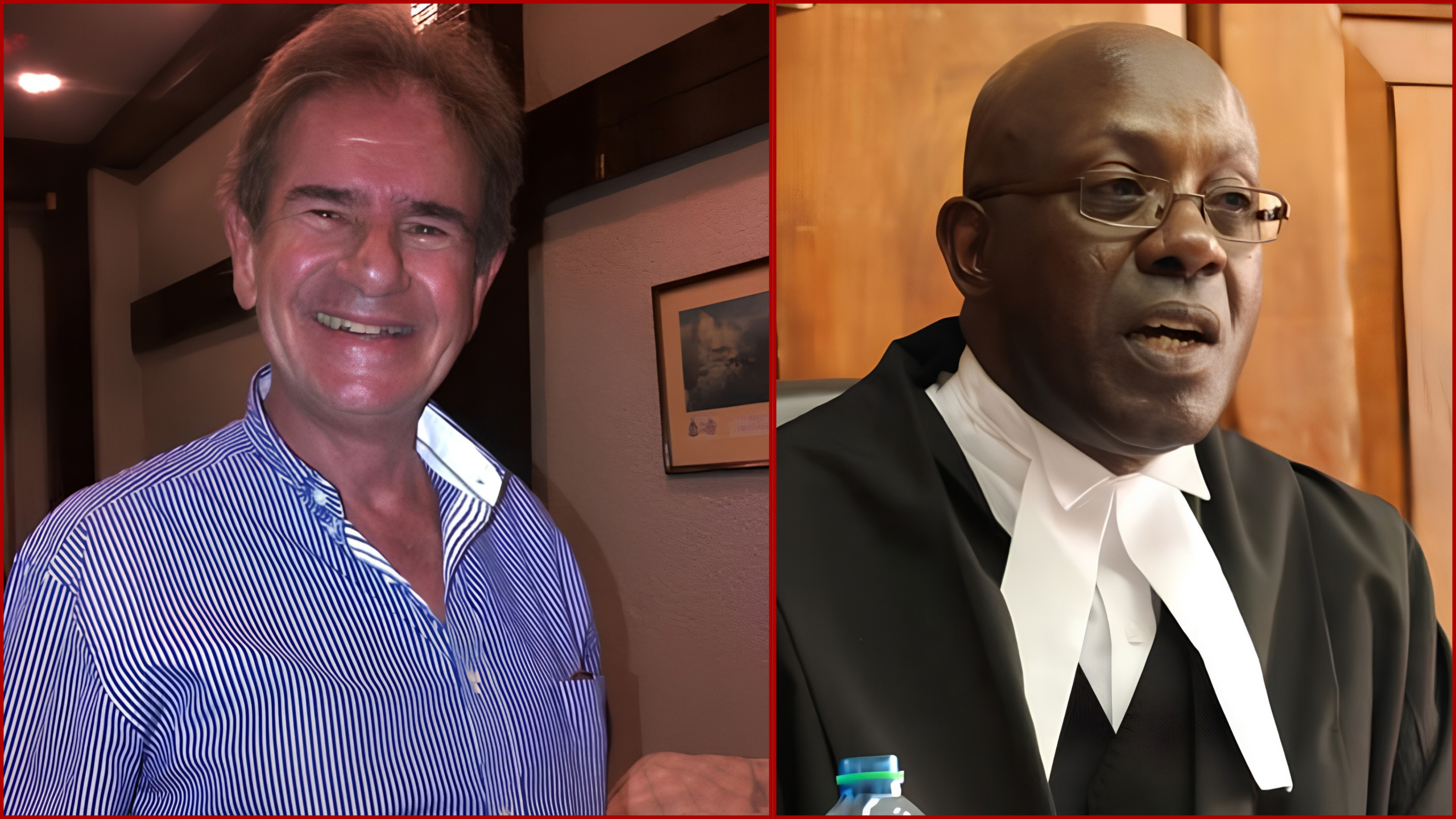
The High Court has dismissed a petition by Nairobi lawyer Joseph Kimani Wachira seeking to stop investigations and possible prosecution over allegations that Sh10 million was sought to influence a judge handling a commercial dispute involving former Cabinet Secretary Raphael Tuju and his company, Dari Limited.
Justice Joseph Kipkoech Biomdo ruled that Wachira had failed to demonstrate that the Ethics and Anti-Corruption Commission (EACC) entrapped him or acted unlawfully in investigating the alleged bribery scheme. The decision lifts interim orders that had restrained his arrest and prosecution, allowing the investigation to proceed.


The allegations centre on Milimani High Court Commercial Case No. E636 of 2024, involving Dari Limited and Tuju against Garam Investment Auctioneers and others. According to the EACC, Tuju reported on March 9, 2026, that Wachira, Okiri Thomas Awili and former High Court judge Joseph Mutava, now deceased, had sought Sh10 million allegedly intended for a sitting judge to secure a favourable ruling in the dispute. The complaint followed an adverse ruling against Tuju in the commercial case.
Investigators told the court that they acted on Tuju’s complaint, provided him with treated cash and an audio-visual recording device, and accompanied him to Entim Sidai Wellness Sanctuary in Karen, where a meeting was scheduled. Additionally, EACC officers arrested the three men after Tuju signalled them during the meeting. Investigators allegedly recovered Sh1 million in treated money at the villa, where the discussions had been recorded.
Wachira denied soliciting or receiving a bribe, arguing that Tuju had produced the money without any demand from him. He maintained that the operation was a pre-arranged set-up intended to implicate him and relied on a statutory declaration by Awili to support his claim.
He also accused the respondents of leaking recordings of his arrest to the public, damaging his reputation and violating his constitutional rights. He asked the court to declare the investigations unlawful and prohibit any prosecution arising from the incident.
However, Justice Biomdo found that the material before the court showed that the meeting had been arranged beforehand and that Tuju, as a participant, recorded the conversation.
“Based on these facts, I find that there was no entrapment,” the judge ruled.
The court held that the EACC had acted on a complaint of suspected corruption and that there was no evidence the commission had organised the meeting or influenced the discussions. Its role, the judge found, was limited to facilitating the collection of evidence. The judge also declined to terminate the investigation on the basis of competing accounts presented by Wachira and the respondents, saying the disputed facts required proper evaluation in a trial rather than at the investigative stage.
“The Petitioner has failed to demonstrate that the EACC’s probe has crossed the high threshold of malice, clear lack of factual foundation, illegality, or ultra vires action to warrant judicial interference,” the judgment states.
On the complaint that recordings had been leaked, the court observed that the alleged disclosure did not automatically invalidate the investigation. Whether evidence had been obtained illegally and whether its admission would compromise a fair trial were matters to be considered by the trial court if charges were eventually brought.
Justice Biomdo noted that Wachira had not been formally charged at the time of the judgment, with investigations still ongoing. The court therefore did not determine whether the alleged bribery took place or whether any of the individuals named in the complaint was criminally liable.
The petition was dismissed in its entirety, all interim orders were vacated, and Wachira was ordered to pay the costs of the proceedings.