A Nairobi lawyer has moved to the High Court seeking to suspend the implementation of the new mandatory motor vehicle inspection regulations set to take effect on July 1, arguing that they were enacted unconstitutionally and are designed to generate revenue rather than enhance road safety.
In an urgent constitutional petition filed before the Constitutional and Human Rights Division of the High Court, advocate Charles Mugane wants the court to suspend Legal Notice No. 13 of 2026, which introduced the Traffic (Motor Vehicle Inspection) Rules, 2026, pending the determination of his petition.


The new regulations require all privately-owned and government vehicles that are more than four years old to undergo annual mandatory inspections before being allowed on Kenyan roads. Mugane argues that the regulations were introduced without meaningful public participation, contrary to Article 10 of the Constitution, and therefore ought to be declared unconstitutional, null and void.
“It is the procedure of the passing of the impugned Rules and ultimately their constitutionality that is the subject of challenge in the instant Petition,” Mugane states in court papers.
According to the petition, no known process of public participation preceded the publication of the regulations in the Kenya Gazette on February 13, 2026, despite the rules imposing significant obligations on millions of motorists across the country.
“The impugned Rules were gazetted in the opaquest way against the fundamental constitutional principle of Public Participation necessary and expressly provided for under Article 10 of the Constitution of Kenya 2010,” the petition reads.
Mugane argues that beginning July 1, every privately-owned vehicle older than four years will be subjected to mandatory inspection, while owners will also be required to pay inspection charges whose basis has never been publicly explained. He further claims that the inspection fees are excessive and questions why payments are to be made through the eCitizen platform.
“The First Schedule of the said impugned Rules provide for the Motor Vehicle Inspection Fees chargeable for the said exercise which fees despite being exorbitant is unclear as to the criteria used in their determination,” he says.
The lawyer also faults the penalties contained in the regulations, arguing that they expose motorists to harsh punishment and possible abuse.
“Further, the impugned Rules impose extremely punitive offences in terms of unfair and arbitrary imprisonment not exceeding six months as well as hefty fines on conviction or both,” the petition states.
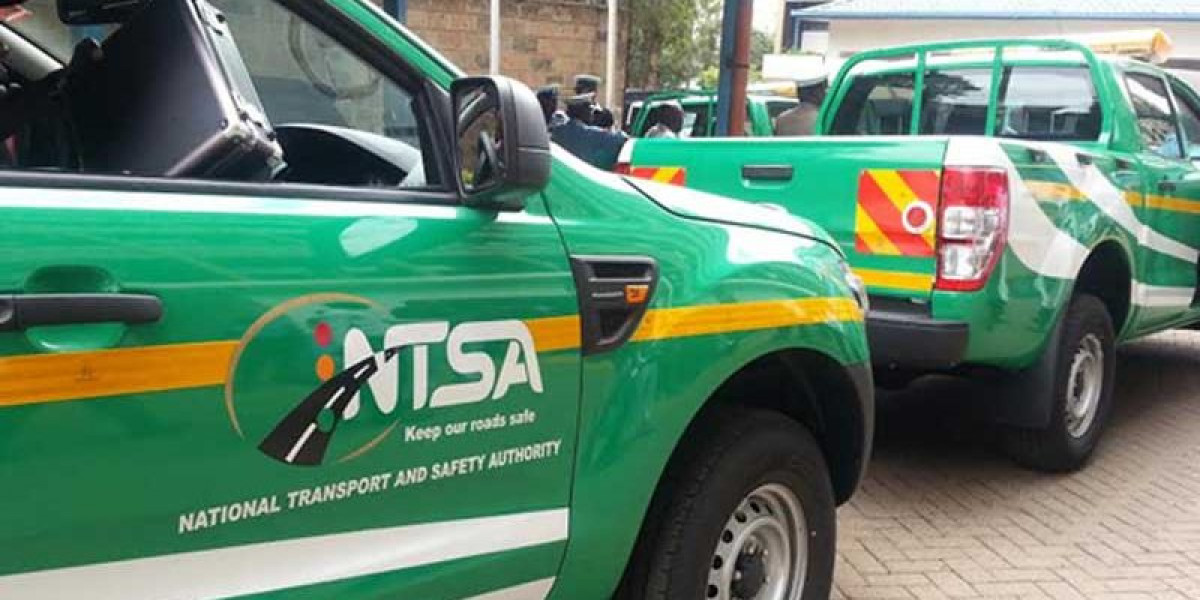
Mugane alleges that the National Transport and Safety Authority (NTSA) has previously attempted to introduce controversial enforcement measures that were later withdrawn after court challenges, citing the abandoned Instant Fines Management System.
“The 1st Respondent has become notorious in the art of trial and error having attempted to implement the ‘Instant Fines Management System Go Live Notice’ in March 2026 and only withdrawing the same immediately after it was challenged in court,” he argues.
He contends that the new inspection rules are “revenue collection strategies disguised as compliance issues” rather than genuine road safety measures. According to the petition, Kenyans have a legitimate expectation that government agencies will formulate policies transparently and in a manner that protects citizens instead of imposing burdens on them.
“Article 10 is not a mere Constitutional request but a command that must be adhered to,” Mugane argues.
Through an accompanying Notice of Motion filed under a certificate of urgency, the advocate wants the High Court to immediately suspend the gazette notice and prohibit NTSA, its officers or agents from implementing the regulations until the constitutional petition is heard and determined. He argues that unless conservatory orders are granted before July 1, the public will suffer irreparable harm through the enforcement of regulations whose legality is yet to be tested.
“The imminent consequence of not stopping the implementation of The Traffic (Motor Vehicle Inspection) Rules, 2026 is that of continuing harassment of members of the public owing to the unconstitutional passage of the said impugned Rules,” the court papers state.
The petition names the National Transport and Safety Authority and the Attorney General as respondents, while the Law Society of Kenya, Katiba Institute and the Kenya Human Rights Commission have been listed as interested parties.
The High Court is expected to determine whether to grant interim conservatory orders before the regulations come into force on July 1.