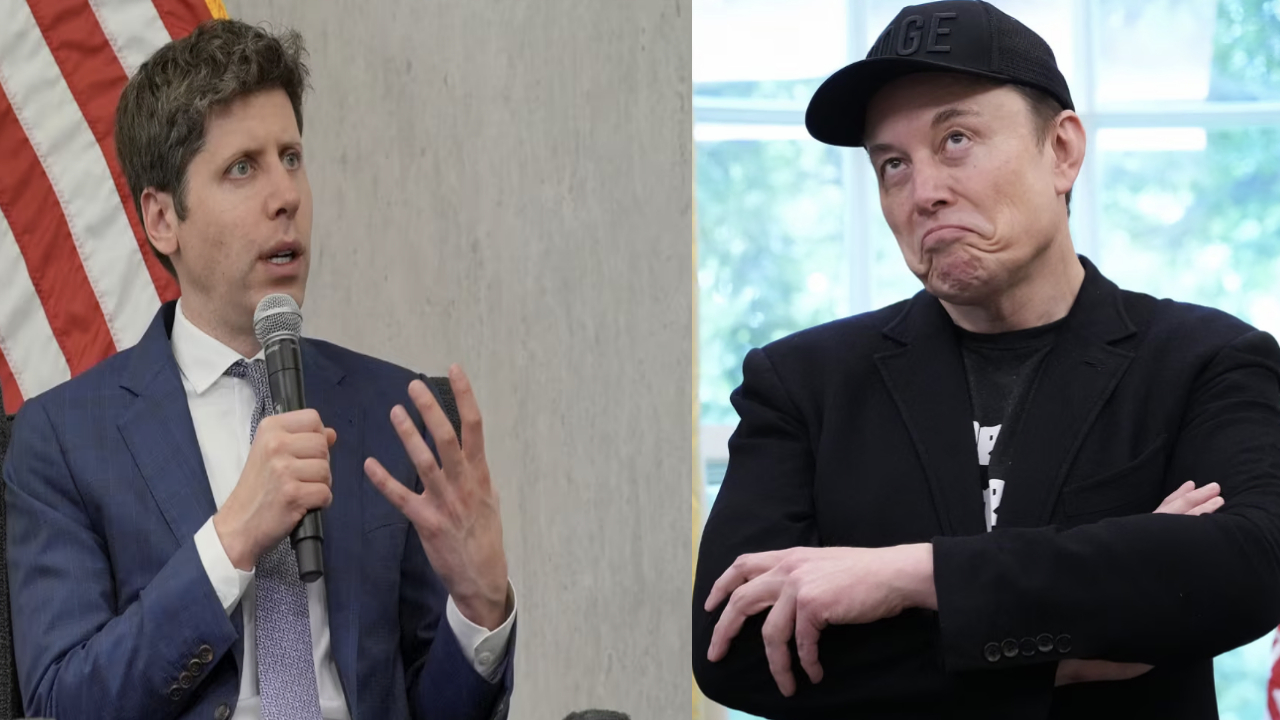
A high-stakes legal battle between Elon Musk and Sam Altman is set to reach a dramatic turning point as jury selection begins Monday, April 27, 2026, in a federal courtroom in Oakland. The case pits two former allies against each other in a dispute that could redefine not only the future of OpenAI but also the broader trajectory of artificial intelligence.
Filed as Musk v. Altman in the U.S. District Court for the Northern District of California, the lawsuit centers on allegations that OpenAI abandoned its founding mission as a nonprofit dedicated to the safe and open development of artificial general intelligence. Musk, who co-founded OpenAI in 2015 and contributed tens of millions of dollars in early funding, claims the organization’s leadership later pivoted toward profit in violation of promises made to him and other early supporters.


Musk, who contributed roughly $38 million in OpenAI’s early days, alleges he and other donors were misled. “This case is about whether promises made to donors and the public were kept,” his legal team has argued in court filings.
At the heart of the dispute is OpenAI’s transition from a nonprofit research lab into a “capped-profit” entity and, ultimately, a fully for-profit company in 2025. The shift coincided with a multibillion-dollar partnership with Microsoft, which Musk argues fundamentally altered the organization’s purpose. He alleges that Altman and OpenAI president Greg Brockman misled donors by prioritizing commercial gain over public benefit.
OpenAI has strongly rejected those claims, characterizing the lawsuit as an attempt by Musk to undermine a rival venture. The company argues that evolving into a profit-driven model was necessary to secure the vast resources required to compete in the global race for advanced AI systems. It has also pointed to Musk’s own competing AI company, xAI, as evidence of a conflict of interest.
The case has already survived multiple attempts at dismissal. Presiding judge Yvonne Gonzalez Rogers ruled earlier this year that a jury should determine whether OpenAI breached its original charitable obligations. That decision set the stage for a trial expected to last several weeks and feature testimony from some of Silicon Valley’s most influential figures, including Musk, Altman, Brockman, and potentially Microsoft CEO Satya Nadella.
In a notable development ahead of trial, Musk’s legal team stated that he does not intend to personally benefit from any financial damages awarded. Instead, any monetary recovery—estimated by experts to reach as high as $134 billion—would be directed to OpenAI’s original nonprofit arm. Musk is also seeking sweeping structural remedies, including the removal of Altman and Brockman from leadership roles and a court order reversing OpenAI’s for-profit conversion.
The proceedings are expected to delve into internal communications, including emails and text messages, that could shed light on the company’s decision-making during its transformation. However, the court has limited the scope of the trial by excluding certain personal matters deemed irrelevant to the core legal questions.
Beyond the personalities involved, the outcome of the case could have far-reaching implications for the tech industry. A ruling in Musk’s favor might force OpenAI to restructure, potentially slowing its development efforts and reshaping competition in the AI sector. A victory for OpenAI, on the other hand, could validate the controversial shift toward profit-driven models as a necessary evolution in a capital-intensive field.
Altman, who has publicly sparred with Musk in recent years, has expressed confidence ahead of the trial. “I’m really excited to get Elon under oath,” he wrote on X earlier this year, describing the proceedings as “Christmas in April.” In a podcast appearance, he added, “My fear at this point is if he decides to drop the case right before trial.”
As tensions between the two camps continue to play out both in court and in public, the trial underscores a deeper debate over how transformative technologies should be governed. What began as a shared vision to safeguard humanity’s future has now become a defining legal showdown over trust, power, and the price of innovation.
With jury selection underway, the eyes of the tech world—and beyond—are fixed on Oakland, where a panel of citizens will soon weigh competing narratives about ambition, ethics, and the true cost of building the future.