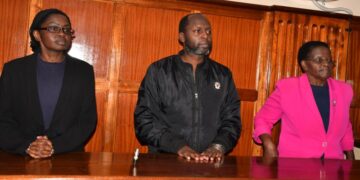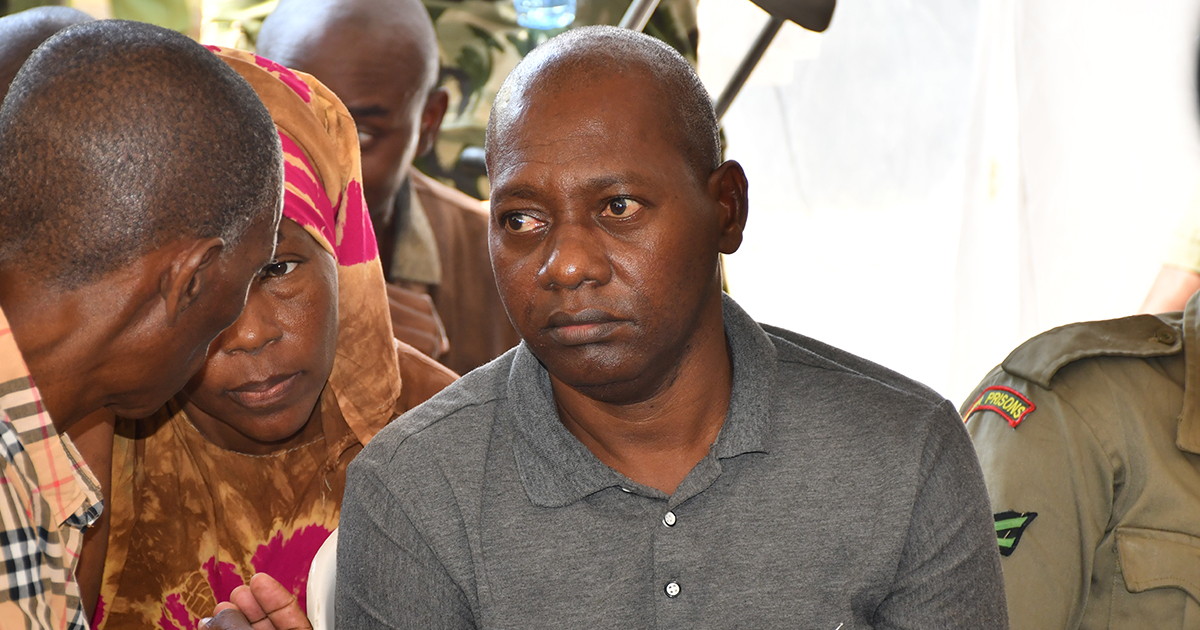
Shakahola cult leader Paul Nthenge Mackenzie is among 12 people who have been convicted of various offences against children following a judgment delivered by the Tononoka Children’s Court in a case arising from activities at the controversial Shakahola Forest religious community in Kilifi County.
Principal Magistrate N. Chepchirchir convicted Mackenzie and 11 others on Wednesday, November 25, 2026, after finding that the prosecution had proved several charges of cruelty to children, assault causing actual bodily harm and infringement of children’s right to education beyond reasonable doubt.


However, the court acquitted all the 39 accused persons of torture charges, ruling that the prosecution had failed to establish a crucial legal requirement that the alleged acts of torture were committed by, or with the involvement of, a public officer. The court further acquitted 24 accused persons of all charges, directing that they be released unless they were being held in connection with other lawful matters.
Mackenzie, who was the first accused person, was found guilty of assault causing actual bodily harm, an alternative charge to one of the torture counts, and five counts of cruelty to a child. The court also convicted Smart Deri Mwakalama and Stephen Sanga Muye of assault causing actual bodily harm, while Evans Kolombe Sirya and Titus Munyao Musyoka were found guilty of cruelty to a child.
Other convicted persons include Gilbert Kea Katana and Peris Mupa alias Kadzo Yeri Katana, who were found guilty of cruelty to a child and infringing a child’s right to education. Catherine Wanjiru Henry was convicted of cruelty to a child and infringement of a child’s right to education, while Alice Kawira was found guilty of violating a child’s right to education. Agnes Shihale Jumba was convicted of cruelty to a child and infringement of a child’s right to education, while Felix Katana and Frida Katana were found guilty of infringing a child’s right to education.
The case arose from alleged violations of children’s rights within the Good News International Church, led by Mackenzie, at Shakahola Forest in Kilifi County between 2020 and 2023.
The 39 accused persons were jointly charged with 17 counts involving offences against children who were followers of the religious movement. The charges included two counts of subjecting children to torture, each carrying an alternative charge of assault causing actual bodily harm, nine counts of cruelty to children through denial of food and six counts of infringing children’s right to education.
The prosecution alleged that children within the religious community were subjected to harmful practices, including denial of basic needs and access to formal education, as part of the religious teachings and practices associated with the movement. The charges were brought against the accused persons over their alleged individual or collective involvement in the treatment of the children at the forest.
The proceedings were part of the wider legal investigations into activities at Shakahola, which attracted national and international attention following the discovery of hundreds of bodies in mass graves in the forest in 2023.
Mackenzie, a self-proclaimed preacher, has been at the centre of several criminal proceedings arising from the Shakahola tragedy, in which followers were allegedly instructed to fast to death in anticipation of meeting Jesus Christ.
In the children’s case, however, the court was required to determine the individual criminal responsibility of each accused person in relation to the specific children named in the charges. The cases against the fifth and 27th accused persons abated following their deaths, while charges against the seventh accused were withdrawn on April 2, 2026, pursuant to a plea agreement in a separate Malindi case.
In its judgment, the court ruled that freedom of religion does not give anyone the right to subject children to harmful practices or violate their fundamental rights. Magistrate Chepchirchir observed that although the Constitution protects freedom of religion, including the right to hold and peacefully practise religious beliefs, such protection cannot be used to justify criminal conduct against children.
The court further rejected the defence of lawful discipline, holding that religious motivation could not excuse conduct that otherwise amounted to an offence under Kenyan law.
On the torture charges, the magistrate explained that the legal definition of torture requires proof that the suffering was inflicted by, or with the instigation, consent or acquiescence of, a public officer or someone acting on behalf of a public officer.
The court found that a religious leader holds a private office and that the prosecution had not established the necessary connection to a public officer in the case. Consequently, all 39 accused persons were acquitted of the torture charges, with the court proceeding to consider the alternative assault charges.
The magistrate also emphasised that criminal responsibility had to be established individually, warning that merely being a member of the religious community, guarding premises or participating in activities such as digging graves was insufficient to establish guilt.
The prosecution was required to demonstrate how each accused person participated in an offence involving the particular child named in the respective count. The court further held that liability for aiding, enabling, counselling or procuring an offence, or participating in a common unlawful purpose, would be determined under Sections 20 to 22 of the Penal Code.
It declined to apply the higher essential-contribution test under Article 25(3) of the Rome Statute, noting that the accused persons were being tried for offences created under Kenyan law.
The 12 convicted persons will return to court on December 3, 2026, for mitigation and sentencing.