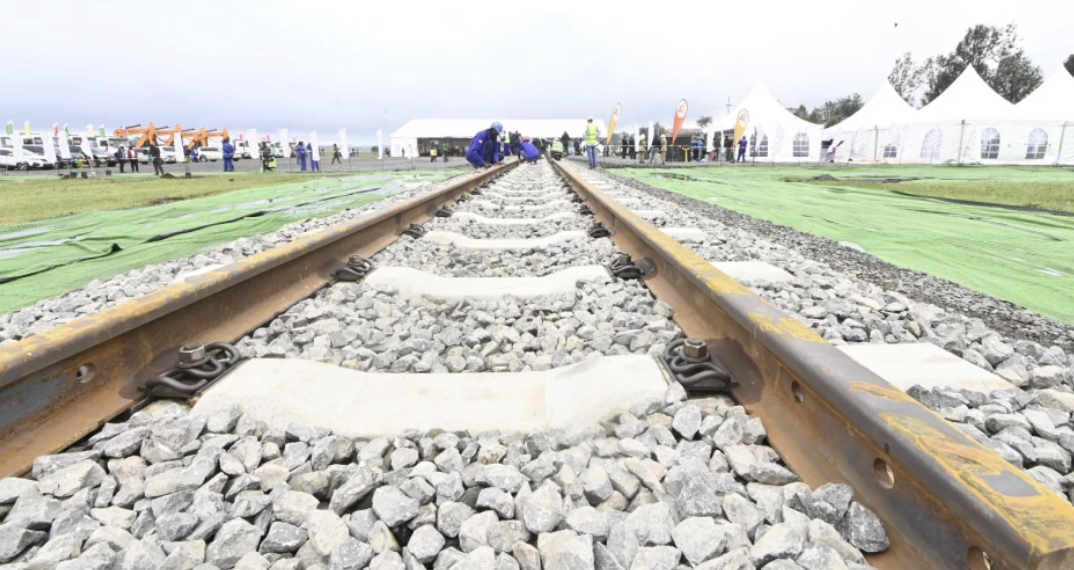
The High Court has declared the government’s KSh12 billion Ngong-Riruta metre gauge railway project unconstitutional, finding that it was initiated and implemented in violation of the Constitution and several statutory requirements.
In a judgment delivered by Justice Gregory Mutai, the court held that the project commenced without parliamentary approval, a competitive procurement process, a feasibility study, or meaningful public participation, rendering its implementation unlawful.


Despite finding the project unconstitutional, the court stopped short of cancelling it altogether, noting that construction is already about 40 per cent complete. Instead, the judge ruled that the government may only proceed with the remaining works after fully complying with the law.
Among the conditions imposed by the court are obtaining parliamentary approval, conducting a fresh competitive procurement process, undertaking a feasibility study, and carrying out meaningful public participation involving all affected stakeholders.
“The use of the Railway Development Levy Fund (RDLF) for the project before March 27, 2026, was unconstitutional, and the subsequent amendment to the law cannot be applied retrospectively to validate earlier constitutional violations,” Justice Mutai ruled.
The case was filed by Busia Senator Okiya Omtatah alongside the Karen Langata District Association, who challenged the legality of financing the project through the Railway Development Levy Fund. They argued that residents and other affected stakeholders were never adequately consulted before construction commenced.
The court agreed, holding that the consultations undertaken after construction had already begun could not remedy the constitutional defects that tainted the project from the outset. Justice Mutai also criticised Kenya Railways Corporation and other government agencies for failing to disclose critical project documents despite court orders directing them to do so.
To ensure compliance with the Constitution, the judge directed the government to act within 90 days by either commencing a fresh, transparent and competitive tender process for the remaining works or demonstrating that the existing contracts can withstand constitutional scrutiny through full disclosure, competitive benchmarking and parliamentary oversight.
The court further ordered the government to conduct fresh public participation involving residents’ associations, affected landowners and other stakeholders along the railway corridor.
Additionally, the government must disclose the project’s feasibility study, route alignment, procurement records and financing arrangements.
Justice Mutai also ordered that the conservatory orders issued on January 20, 2026, suspending construction of the railway project, shall remain in force for one year or until the government fully complies with all the court’s directives, whichever comes first.