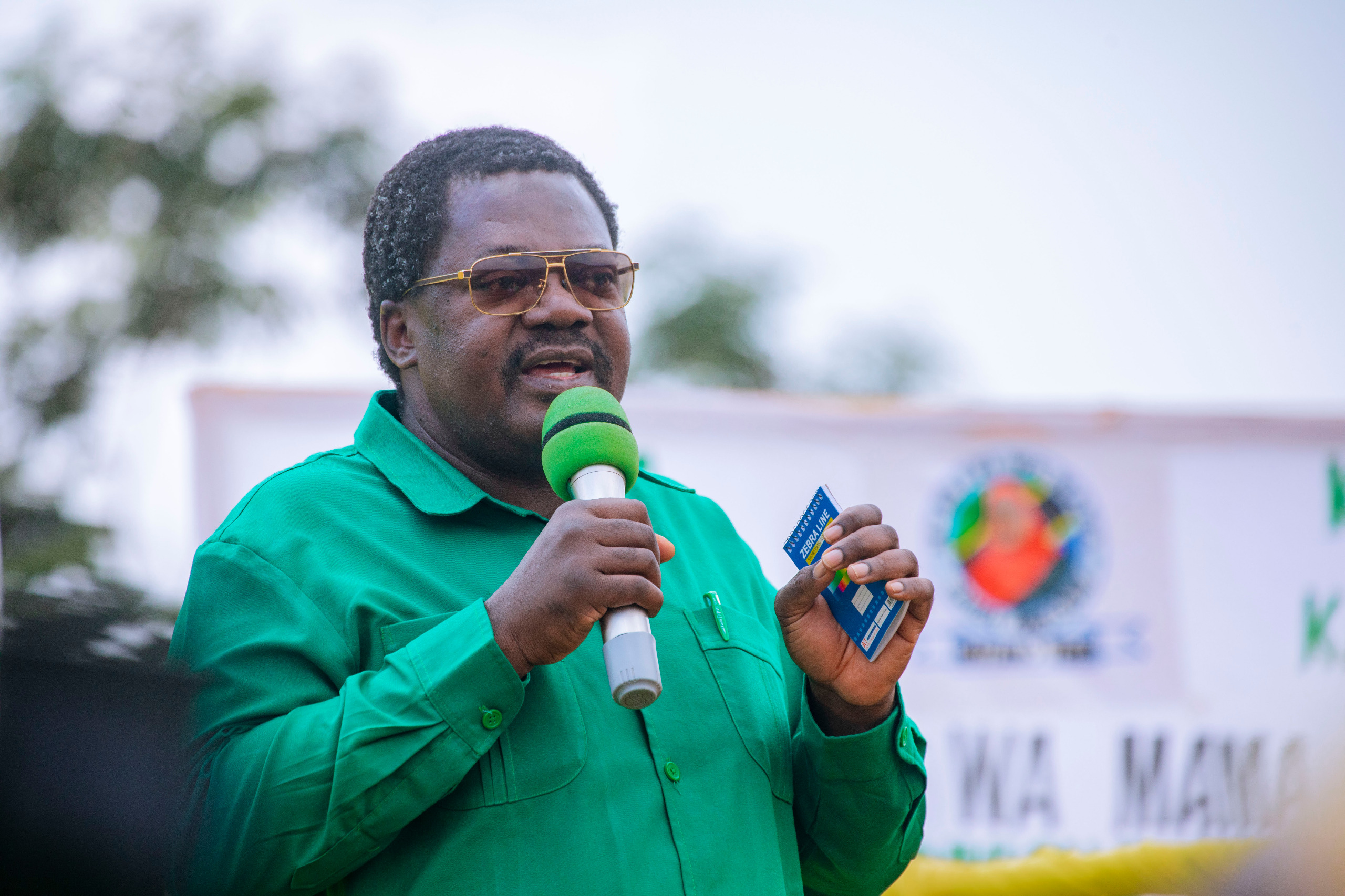
Tanzania’s Vice President, Dr Emmanuel John Nchimbi, has announced his resignation from office and retirement from active politics and public service, with the decision taking effect on September 4, 2026.
In a statement issued on Tuesday, August 25, from the Office of the Vice President in Dodoma, Nchimbi said he had formally informed President Samia Suluhu Hassan of his decision. He cited Article 50(2)(c), read together with Article 149(2) of the Constitution of the United Republic of Tanzania, as the legal basis for stepping down.


“Today, 25 August 2026, I wrote a letter to the President of the United Republic of Tanzania, Samia Suluhu Hassan, informing her that I have decided to retire from politics and public service,” Nchimbi said.
Nchimbi explained that his decision was also connected to a commitment he made to President Hassan on August 27, 2025. At the time, he pledged to support the President and serve the country faithfully, while assuring her that he would be willing to leave office if she eventually wanted a different person to serve as Vice President.
“I also assured her that if at any time she felt she needed another Vice President, I would relinquish this position,” he said.
According to Nchimbi, he had since become convinced that President Hassan wanted a change in the vice-presidential position. As a result, he said he had decided to honour the commitment he made to the Head of State.
“I have become convinced without doubt that Her Excellency the President desires change, and therefore I have decided to fulfil my promise,” he stated.
He went on to thank President Hassan and the ruling Chama Cha Mapinduzi (CCM) party for the confidence they had placed in him throughout his political career. Nchimbi also expressed gratitude to Tanzanians for supporting him during his years in public service.
Nchimbi’s political career began in the 1990s after he completed his studies at the Institute of Development Management (IDM) Mzumbe, now known as Mzumbe University.
Born on December 24, 1971, in the Mbeya Region, Nchimbi grew up in a family with a strong public service background. His father, Mzee John Nchimbi, from Songea District, served in the Tanzania Police Force and rose to the rank of Assistant Commissioner of Police. He also served as Regional Police Commander for Mtwara.
Beyond his police career, Nchimbi’s father was involved in CCM politics, serving as a National Executive Committee member through the party’s armed forces wing before later becoming a CCM regional secretary.
Emmanuel Nchimbi began his primary education at Oysterbay Primary School in Dar es Salaam, where he studied from 1980 to 1986. He later attended Uru Secondary School between 1987 and 1989 before moving to Sangu Secondary School, where he completed Form IV in 1990. He then proceeded to Forest Hill Secondary School in Mbeya for his A-Level studies from 1991 to 1993. After that, he joined IDM Mzumbe, earning an Advanced Diploma in Administration between 1994 and 1997.
His political career gained momentum soon after completing his studies. Nchimbi was elected to the CCM National Executive Committee and, in 1998, became chairman of the party’s youth wing, Umoja wa Vijana wa Chama cha Mapinduzi (UVCCM). At the same time, he built experience in public administration and academia. He worked at the National Environment Management Council from 1998 to 2003 while pursuing further studies. Between 2001 and 2003, he earned a Master of Business Administration specialising in Banking and Finance from Mzumbe University.
He was subsequently appointed District Commissioner for Bunda, serving from 2003 to 2005. He later pursued doctoral studies at Mzumbe University and obtained his PhD between 2008 and 2011.
Nchimbi made his first major electoral bid in the 2005 General Election, when he contested the Songea Town parliamentary seat on a CCM ticket. He won with 67.6 per cent of the vote against Edson Mbogoro of CHADEMA, who secured 30.5 per cent. Following his election to Parliament, then-President Jakaya Kikwete appointed him Deputy Minister for Information, Culture and Sports in January 2006.
However, he was moved to the Ministry of Labour, Employment and Youth Development in October 2006, where he served as Deputy Minister until February 2008. He was subsequently appointed Deputy Minister for Defence and National Service, a position he held until November 2010. Nchimbi successfully defended his Songea Town parliamentary seat in the 2010 General Election. He secured 59.9 per cent of the vote against Mbogoro, who received 37.48 per cent.
His political influence continued to grow under President Kikwete. In May 2012, he was elevated to Cabinet level as Minister for Information, Culture and Sports before being appointed Minister for Home Affairs later that year. He served as Home Affairs Minister until December 2013 and later represented Tanzania diplomatically as ambassador to Brazil and Egypt. Nchimbi eventually returned to senior CCM leadership and was appointed the party’s Secretary-General in January 2024. He later became President Samia Suluhu Hassan’s running mate in the 2025 General Election before assuming the vice-presidency.
His resignation will bring to an end a political career spanning nearly three decades and covering parliamentary leadership, ministerial appointments, diplomatic service, senior party positions and the country’s second-highest office.
With his resignation scheduled to take effect on September 4, attention will now shift to President Samia Suluhu Hassan and the process of appointing Nchimbi’s successor.