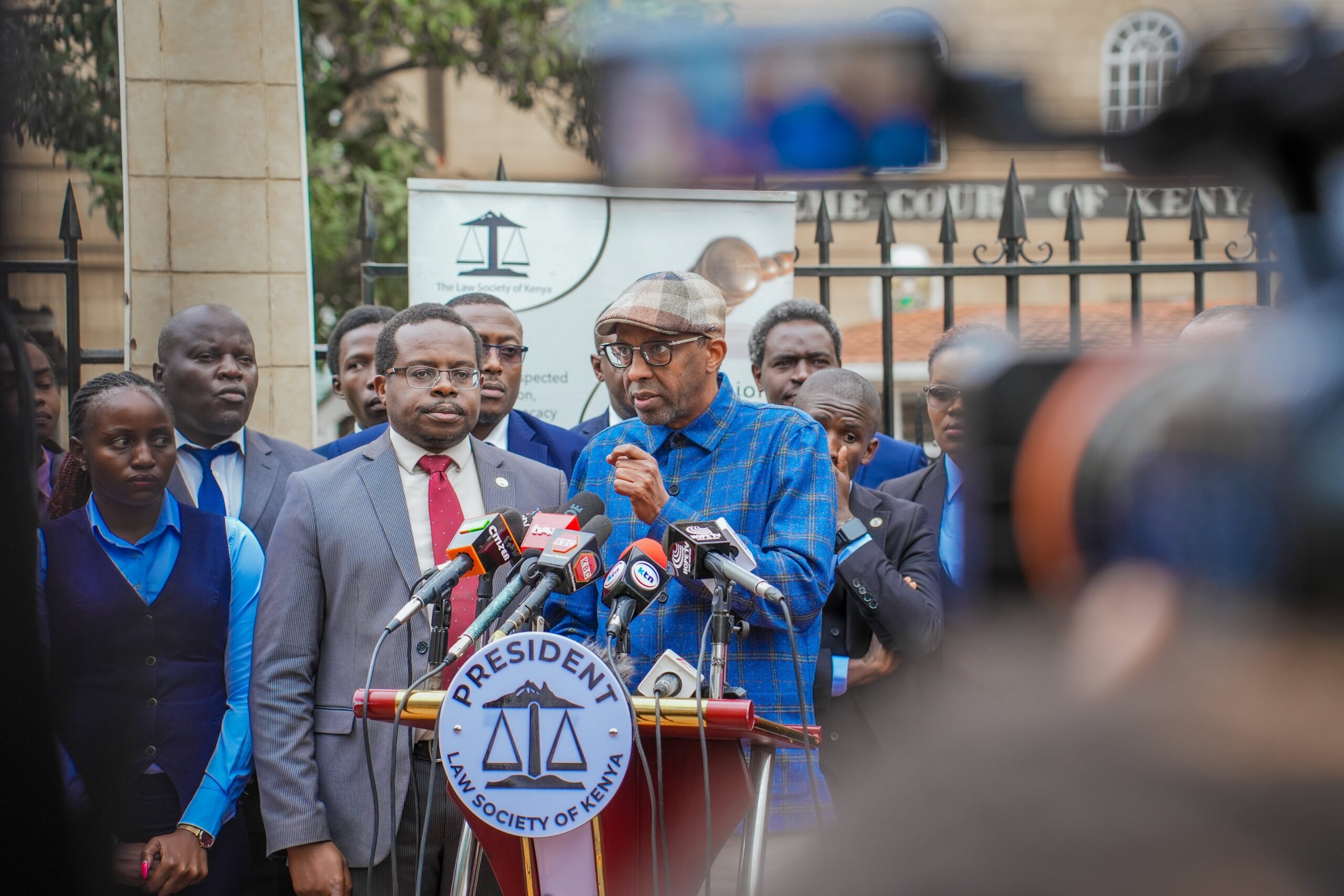
Lawyer Adrian Kamotho has moved to the High Court seeking to suspend the Law Society of Kenya’s (LSK) targeted boycott of selected judges and judicial officers, arguing that the action threatens access to justice, judicial independence and the constitutional right to a fair hearing.
In the case, Kamotho is seeking conservatory orders to halt the implementation of the LSK’s resolutions and communications issued between July 17 and July 22, 2026, pending the hearing and determination of the case.


Kamotho argues that the boycott places advocates in an impossible position by forcing them to choose between complying with the Law Society’s directives and fulfilling their professional obligations to clients and the courts. He argues that the continued implementation of the boycott is likely to lead to adjournments, delays in court proceedings, increased legal costs, disruption of part-heard matters and prejudice to litigants through the possible loss of liberty, property, evidence and interim court protection.
He wants the High Court to bar the LSK from directing advocates to refrain from appearing before judges named in the boycott, seeking adjournments or transfers of cases solely because a judicial officer has been targeted, or taking disciplinary action against advocates who decline to participate in the boycott. He also seeks orders restraining the Society from threatening or recommending adverse action against judges and judicial officers who continue hearing cases despite the boycott.
According to the court papers, the nationwide boycott took place on July 22, while the targeted boycott against specific judges began on July 23 and remains in force indefinitely.
Kamotho contends that the LSK has no legal mandate under the Law Society of Kenya Act or the Advocates Act to compel advocates to withdraw legal representation, dictate which judges should hear cases or interfere with the exercise of judicial authority. He further argues that the boycott violates litigants’ constitutional rights to equality before the law, access to justice and a fair hearing, particularly in criminal and other time-sensitive cases.
He maintains that the dispute extends beyond the internal affairs of the Law Society because it directly affects litigants, advocates, judges, judicial officers and the administration of justice.
He adds that public interest favours uninterrupted court proceedings and continued legal representation, while noting that the orders sought would not prevent the LSK from pursuing judicial accountability through lawful constitutional and statutory processes.