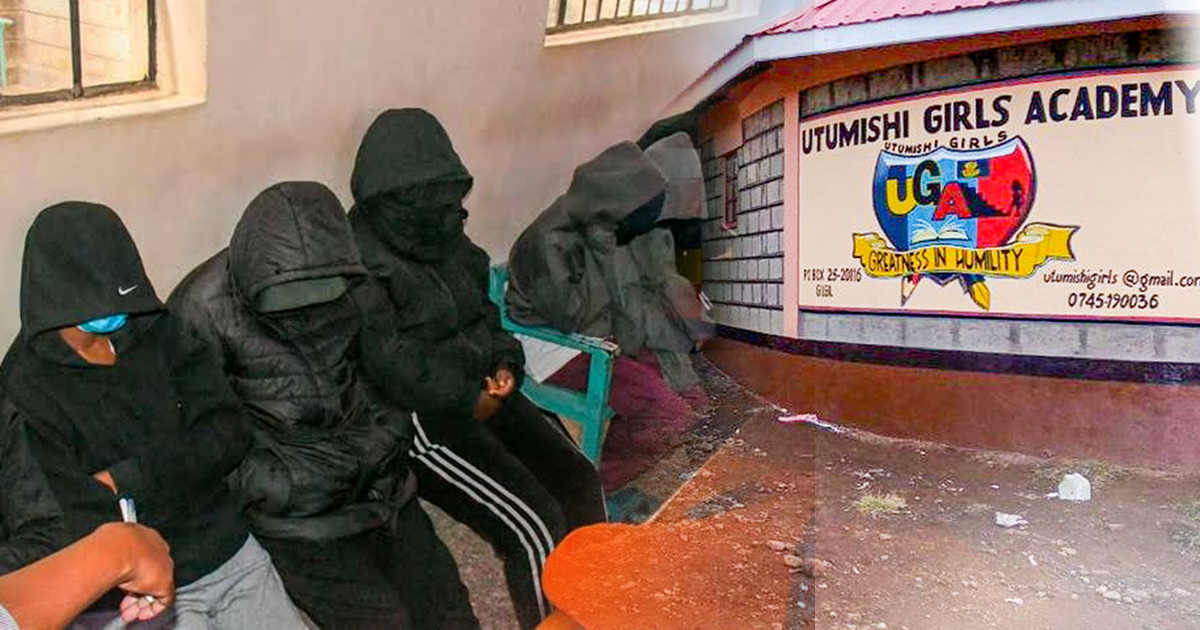
The High Court in Kibera has denied bail to eight minors charged with the murder of 16 students in the Utumishi Girls Academy dormitory fire tragedy, citing the risk of witness interference and concerns over the safety of the children themselves.
Justice Diana Kavedza ruled that the prosecution had established compelling reasons to keep the minors in custody, although she stressed that the seriousness of the murder charges alone could not justify continued detention. “The gravity of the charges remains material, but it must be evaluated strictly within the charge-centric framework,” said Justice Kavedza.


She added that the prosecution bore the burden of demonstrating a real risk that could not reasonably be addressed through stringent bail conditions.
The eight minors face 16 counts of murder under Section 202 as read with Section 204 of the Penal Code. Although they have denied the charges.
The prosecution had opposed their release, citing the possibility of witness interference, absconding, public hostility and threats to the safety of the accused and other parties. The prosecution told court that many of its potential witnesses were minors who had been classmates, dormitory mates, cubemates and close acquaintances of the accused.
According to the prosecution, this gave the accused knowledge of the witnesses’ identities, families and places of residence. Justice Kavedza found that the close relationships created both the opportunity and means for possible interference. “The gravity of the charges combined with these close relationships significantly heightens the risk of witness interference,” said the Judge.
The judge acknowledged that the prosecution had not presented evidence of actual interference. However, she found that the circumstances established a risk that was real rather than speculative. “While the prosecution has not adduced evidence of actual interference at this stage, the court is satisfied that the risk is not merely speculative, but real and substantiated,” she ruled.
The court was also told that many potential witnesses remained traumatised and vulnerable following the incident. Justice Kavedza said their previous close association with the accused heightened the concern over possible interference with witnesses and could affect the integrity of the trial. Families of the deceased and injured children had also opposed the release of the accused, citing fears of retaliation and re-victimisation.
The judge, however, cautioned that the views of victims and their families could not, on their own, override the minors’ constitutional presumption of innocence and right to liberty. “While a victim’s opposition cannot, by itself, override an accused person’s constitutional presumption of innocence and right to liberty, the court is duty-bound to perform a delicate balancing act,” she said.
The court also considered whether releasing the eight children could expose them to harm, particularly after their identities had allegedly become known despite orders intended to protect their privacy. The court heard that the minors had allegedly experienced bullying, physical assaults and discrimination while at the Nairobi Children’s Remand Home.
A social inquiry report commissioned after concerns were raised by their parents recorded allegations of assaults by other minors at the facility. The report further indicated that the identities of the accused and the charges they faced had become known within the remand facility despite the use of pseudonyms.
Justice Kavedza said the disclosure was particularly concerning given the hostility surrounding the case. “The court’s concern is that once the anonymity of the subject was compromised, their protective shield intended by statute was substantially eroded,” she said.
The judge said the court had to determine whether the loss of anonymity had created a real and continuing threat to the minors’ physical safety and welfare. While dismissing the bail application, Justice Kavedza emphasised that the eight accused remained children in conflict with the law and that their detention could not be treated as punishment.
If the institution does not have sufficient capacity, the Cabinet Secretary and Accounting Officer in the Ministry of Correctional Services must make arrangements for eight separate sleeping spaces and file a report with the court within 30 days.
The minors are also to receive reading materials, regular medical care and continuous psychosocial support. In dismissing the bail application, the judge said the decision was based on the totality of the evidence and the applicable legal principles.