The High Court in Milimani has scheduled December 14, 2026, for the hearing of a constitutional petition challenging the alleged abduction and unlawful detention of advocate Abshir Ahmedsadak Abdi and Ayub Mohamud Maalim.
Justice Alexander Muteti declined to allow the State’s bid to have the case closed following the reappearance of the two men near the Kenya-Ethiopia border after 11 days of disappearance.


In his ruling, the judge maintained that the safe return of the two petitioners does not extinguish the constitutional questions raised in the case, particularly concerning the circumstances surrounding their disappearance, alleged detention and the legality of the actions of those suspected to have been involved.
The court consequently allowed the constitutional inquiry to proceed, paving the way for witnesses to testify and undergo cross-examination as the parties seek to establish what happened during the period the two men were missing.
The Law Society of Kenya (LSK), under its president Charles Kanjama, and lawyers representing the families, led by Eric Theuri, have opposed efforts to terminate the proceedings, insisting that the court must establish accountability and determine whether the constitutional rights of the two men were violated.
The case stems from the disappearance of Abdi and his colleague Maalim on November 1, 2026, after they were allegedly intercepted by armed men wearing balaclavas along Muchai Road, off Ngong Road, in Nairobi.
According to court proceedings, the two were forced into a black Toyota Land Cruiser Prado after Abdi’s vehicle reportedly veered into a drainage channel. Their disappearance prompted a habeas corpus application filed by Abdi’s brother, Zakaria Abshir, seeking to compel the State to produce the missing advocate and explain his whereabouts.
The matter was placed before Justice Muteti, with the court summoning senior security officials to explain the circumstances surrounding the disappearance.
During the proceedings, the petitioners raised concerns over alleged involvement of security officers, with Abdi’s brother identifying a person he claimed to have seen in CCTV footage as Siyad Mohamed.
The family and lawyers also sought preservation and production of CCTV footage, mobile phone records, vehicle tracking information and other evidence that could help trace the two men and establish what happened during their disappearance.
On November 12, 2026, the court was informed that the two men had been found alive in separate locations in Marsabit County, near the Kenya-Ethiopia border, after spending 11 days in captivity. They were reportedly blindfolded and abandoned in different locations before finding their way to safety.
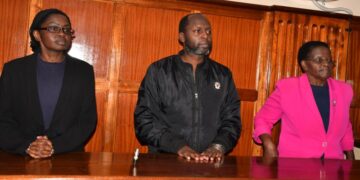
Abdi subsequently appeared before Justice Muteti alongside Maalim on November 13, expressing their willingness to testify and narrate their ordeal.
The State, however, opposed the continuation of the proceedings, arguing that the recovery of the two men had rendered the habeas corpus application unnecessary. The Independent Policing Oversight Authority (IPOA) also opposed taking their testimony in the proceedings, arguing that doing so could interfere with its independent investigations and potentially expose witnesses.
However, the petitioners, supported by the LSK and human rights advocates, maintained that the court had a constitutional obligation to establish whether the two men had been unlawfully detained and whether state agencies had any responsibility for their disappearance.