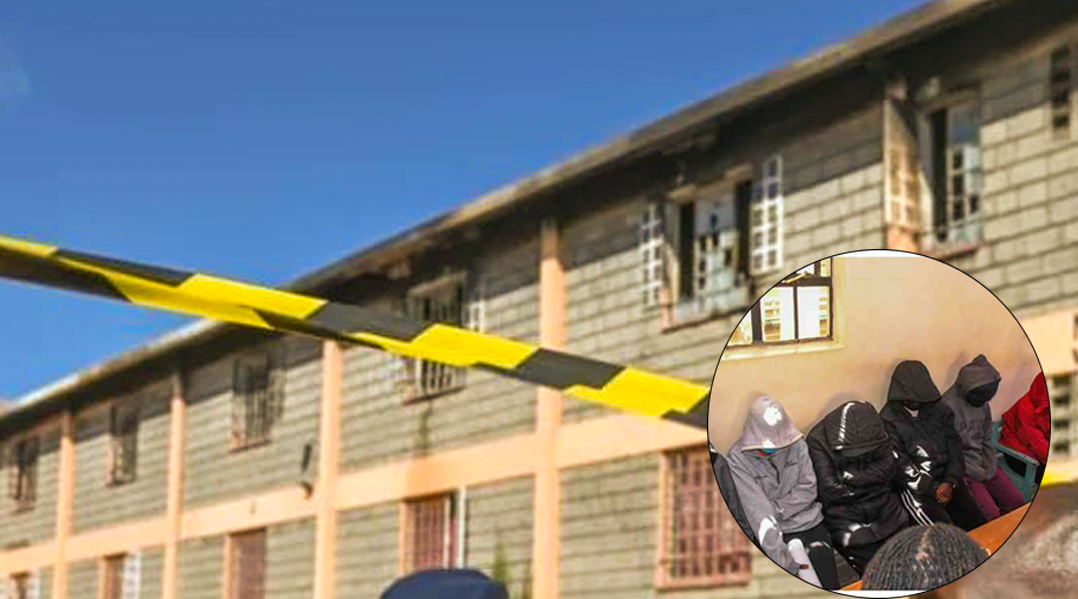
A court in Naivasha has ordered that the nine students from Utumishi Girls Academy in Gilgil be detained at the Nakuru Children’s Remand Home for 21 days as investigations into the deadly dormitory fire continue.
While ruling on an application by the prosecution seeking to hold the girls for 30 days, Chief Magistrate Abdulqadir Ramathan reduced the detention period to 21 days, saying the time would be sufficient for investigators to complete their inquiries. The court also declined to release the minors on bond or bail, finding that the prosecution had advanced compelling reasons for their continued detention. The matter will be mentioned on June 24, 2026.

According to the prosecution, detectives require additional time to gather evidence, including tracing and recording statements from key witnesses located in different parts of the country. Investigators further argued that releasing the suspects at this stage could interfere with ongoing investigations.
Court documents indicate that the girls allegedly told investigators they were unhappy with changes to the examination timetable, the introduction of charges for a cultural event and were influenced by reports of unrest at a neighbouring boys’ school. They are said to have disclosed that the plan to set the dormitory on fire was discussed at about 9 p.m. before being carried out roughly three hours later.
However, as the criminal investigation gathers pace, a separate debate has emerged over the use of CCTV cameras inside student dormitories. Authorities have suggested that footage from the cameras helped investigators reconstruct movements within the dormitory before the fire and identify persons of interest. Supporters of the surveillance argue that the recordings may prove critical in uncovering the truth behind the tragedy.
Yet the footage has also raised difficult questions about privacy and the extent to which schools can monitor children in spaces they use for sleeping.
Although reports indicate that the cameras were positioned to monitor a hallway within the dormitory, the same footage shows beds placed along that corridor and students waking up and moving about after the fire alarm. This has sparked questions about whether the issue lies with the placement of the cameras or with the school’s decision to allow learners to sleep in an area covered by surveillance equipment.
The debate becomes even more sensitive given that the dormitory housed girls. Critics have questioned whether students moving between bathrooms and sleeping areas, sometimes wrapped only in towels or changing clothes, could have been captured by the cameras. If so, they ask whether the surveillance may have intruded into spaces where children could reasonably expect privacy.
At the centre of the debate is Article 31 of the Constitution, which guarantees every person the right to privacy, including children in schools. The provision protects individuals from unnecessary intrusion into their private affairs, communications and personal spaces. The discussion also touches on the Data Protection Act, which regulates the collection, storage and use of personal data, including images and video recordings captured through CCTV systems.
Lawyer Danstan Omari has also questioned the legality of the surveillance footage, suggesting that its admissibility and the circumstances under which it was obtained could become a key issue in the case. Speaking on the Court Helicopter News YouTube channel, Omari argued that the cameras appeared to have been installed in an area where students slept, raising concerns under Article 31 of the Constitution.
“I said this. Those CCTV cameras were installed where the kids were sleeping. Under Article 31, the Bill of Rights, the right to privacy is protected. Was it violated? It was violated. Those kids are likely to go home scot-free,” Omari said.
His remarks have added another dimension to the ongoing debate, with some legal observers questioning whether evidence obtained through surveillance in a student living space could face constitutional scrutiny if a court finds that the learners’ privacy rights were infringed.
Whether the CCTV footage ultimately strengthens the prosecution’s case or becomes the subject of a separate legal challenge remains to be seen. For now, the nine students remain in custody as investigations continue. But beyond the question of who was responsible for the fire, the tragedy has opened a broader national conversation: when does the need for security justify surveillance, and when does it cross the line into a violation of privacy?
As investigators work to establish the circumstances that led to the deadly fire, the courts may ultimately be called upon to answer not only questions of criminal responsibility, but also whether the pursuit of safety in schools can lawfully extend into spaces where learners sleep, change and expect privacy.