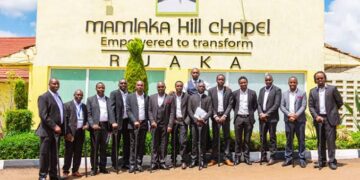
Religious leaders and civil society organisations have questioned the justification for Sh10 million vehicle grants for judges, urging the Supreme Court to balance judicial independence with accountability in the use of public funds. In a joint press statement released on Tuesday, October 13, 2026, the organisations raised concerns over the cost of the disputed benefit as the Supreme Court prepares to determine a case concerning judges’ taxable car grants.
The groups estimated that the grants could cost taxpayers approximately Sh2.3 billion before tax, or Sh1.61 billion after tax, every four years, based on the judicial positions covered by their analysis.


They clarified that the figures were estimates based on available information and assumptions, rather than confirmed expenditure or a determination of the legality of the grants. “Kenyans are at risk of being fleeced by an unholy union of Parliament, the Executive and the Judiciary when the institutions entrusted with protecting the public interest instead preside over, enable or defend privileges at public expense,” the organisations stated.
The groups questioned the justification for the private vehicle benefit at a time when Kenyans are grappling with the rising cost of living, unemployment, school fees, healthcare expenses and a heavy tax burden.
They also pointed out that judges already have access to official chauffeur-driven transport, raising questions about the proportionality of an additional benefit intended for private vehicle use. “The issue is not whether judges deserve fair remuneration. They do. The issue is whether a private vehicle benefit of this magnitude is legally justified, equitable and defensible to citizens who finance the State while struggling to meet their basic needs,” the statement reads.
The organisations argued that the estimated Sh1.61 billion after-tax cost could instead support public services such as hospitals, school infrastructure, essential medicines, water provision and agricultural programmes.
They maintained that the debate was not about denying judges fair remuneration but ensuring that public benefits are legally justified and sustainable in a country where many citizens struggle to meet basic needs. “Public money is a public trust, not an entitlement to be expanded without justification,” they said.
The dispute raises questions about the relationship between judicial independence and the constitutional mandate of the Salaries and Remuneration Commission (SRC) to determine and regularly review the remuneration and benefits of State officers.
Article 230 of the Constitution establishes the SRC and requires it to consider principles including fiscal sustainability, transparency, performance, and the attraction and retention of skills when determining remuneration. Article 160(4), on the other hand, protects judges against disadvantageous variation of their remuneration and benefits.
The High Court, in Gachuiri v Attorney General and another, held in 2024 that the taxable car allowance was a protected benefit under Article 160(4). The Court of Appeal subsequently considered the dispute in proceedings involving the SRC and Peter Mwangi Gachuiri and others in 2026.
The organisations acknowledged the constitutional protections afforded to judges but warned against interpreting judicial independence as immunity from financial accountability. “Judicial independence is indispensable, but it must never become judicial exceptionalism,” the statement reads.
They called on the Supreme Court to clarify the legal status of the disputed benefit, the extent of constitutional protection against disadvantageous changes to judicial remuneration and the applicable framework governing public-sector compensation.
The groups also raised concerns about the ethical sensitivity of a dispute involving benefits accruing to members of the institution called upon to adjudicate it. Without alleging wrongdoing or prejudging the case, they said actual or properly raised apparent conflicts of interest should be addressed in accordance with the law to preserve public confidence in the administration of justice.
They further invoked Article 201 of the Constitution, which requires openness and accountability in public finance, prudent use of public money and equitable sharing of the burdens and benefits of public expenditure.
The statement was signed by 16 religious organisations and civil society groups, including Transparency International Kenya, the Kenya Human Rights Commission, the Institute for Social Accountability, the Okoa Uchumi Campaign and the National Integrity Alliance.
Other signatories included the Joint Forum of Religious Organisations, the Seventh-day Adventist Church, Friends Church, the Presbyterian Church of East Africa, Muslim Professionals League Africa, Badili Africa, Youth Alive! Kenya, PAWA254, Inuka Kenya Ni Sisi! and the National Council of Churches of Kenya’s Nairobi Region County Coordinating Committee.
The organisations urged religious institutions, professional associations, universities, workers’ organisations and the media to sustain peaceful public engagement on public expenditure. “Our demand is not for a weakened Judiciary. It is for a Judiciary whose independence is matched by integrity, whose authority is matched by humility, and whose decisions strengthen public confidence in the rule of law,” they stated.
They maintained that no public institution should place itself above the Constitution and called for public funds to be used in a manner that serves the interests of Kenyans.