
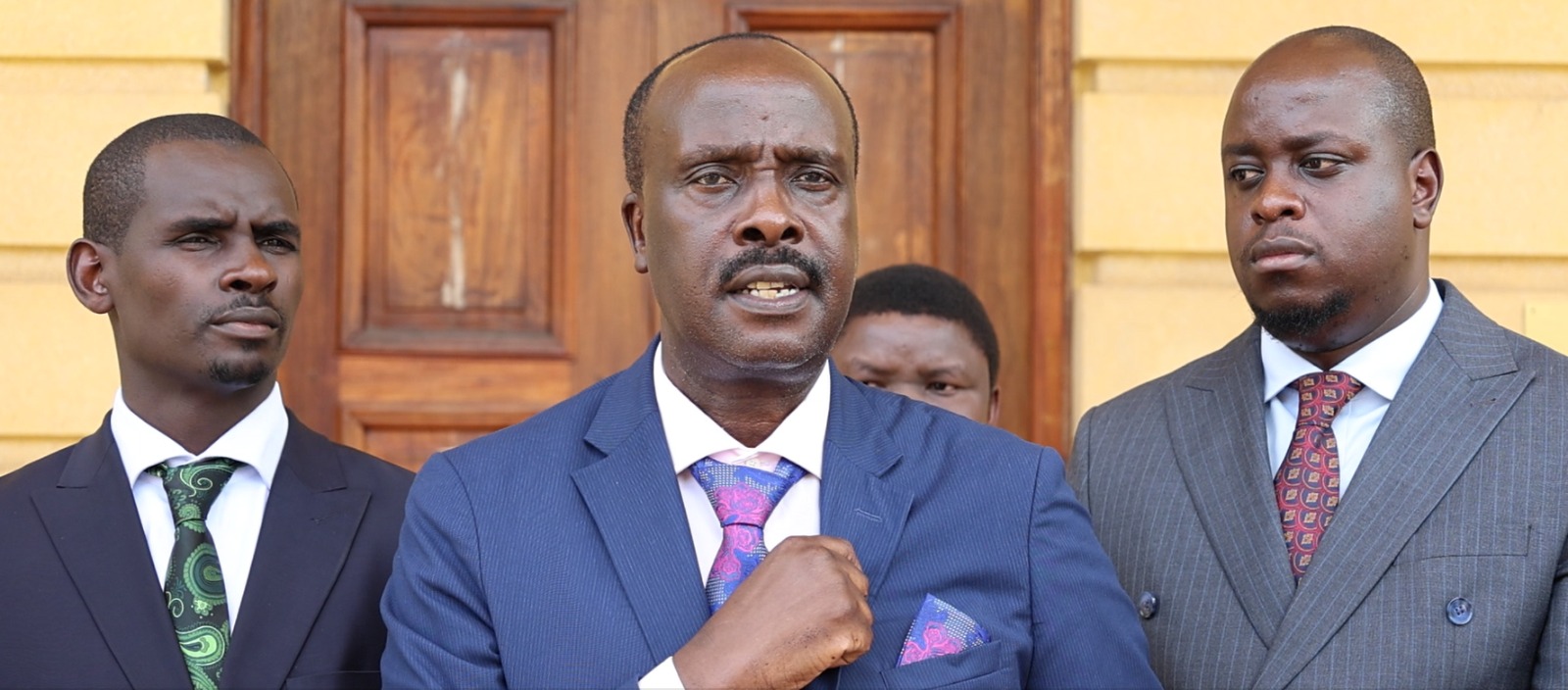
Lobby group Sheria Mtaani has moved to the High Court to challenge proposals to grant prosecutorial powers to the Ethics and Anti-Corruption Commission (EACC), arguing that the move would be unconstitutional.
In court papers, Sheria Mtaani maintains that the Office of the Director of Public Prosecutions (ODPP) holds exclusive authority to prosecute criminal cases under Article 157 of the Constitution, and that this mandate cannot be transferred through an Act of Parliament. Through lawyers Danstan Omari, Shadrack Wambui and Stanley Kinyanjui, the group argues that Kenya’s legal framework deliberately separates investigative and prosecutorial roles to ensure accountability and prevent abuse of power.


“When the EACC prosecutor is going to prosecute and then take the witness stand, that will be absurdity. That has never happened. The investigator cannot be a prosecutor,” said Danstan Omari.
The lawyers further argue that the ODPP cannot be reduced to a “rubber stamp,” noting that corruption cases require independent scrutiny before charges are approved.
“The files from EACC take time for investigations, then you expect the ODPP to approve them within hours, that is not how justice works,” the lawyers said in the court filings. The petition seeks the court’s interpretation on whether Parliament can lawfully enact legislation transferring prosecutorial powers from the ODPP to the EACC.
Speaking during a media briefing outside Milimani Law Courts, the lawyers traced the historical evolution of Kenya’s prosecutorial system, arguing that the current structure was a deliberate constitutional choice.
“Kenyans rejected that system because a complainant cannot be an investigator and at the same time a prosecutor,” said Danstan Omari, referring to the pre-2010 legal framework where prosecutorial powers were exercised under the Attorney General. He added that Article 157 of the Constitution created an independent ODPP whose mandate can only be altered through a referendum.
Additionally, Shadrack Wambui alluded that the separation between investigators such as the EACC and the Directorate of Criminal Investigations (DCI), and prosecutors under the ODPP, was designed to protect the public.
“It is a deliberate safeguard so that the vulnerable are not subjected to a system where the investigator becomes the prosecutor,” said Wambui citing a 2020 High Court decision involving the DCI where the court ruled that investigators cannot assume prosecutorial powers.
“The court was clear that an investigator cannot commence or undertake prosecution. That authority lies with the DPP, ” Wambui added.
Stanley Kinyanjui of Sheria Mtaani too, warned that collapsing the distinction between investigators and prosecutors would undermine constitutional checks and balances.
“If we allow one body to investigate and prosecute, we risk abuse of power. That is why the Constitution created separate offices,” said Kinyanjui.
He backed up his sentiments by pointing out to recent cases where charges were withdrawn shortly after being filed, arguing that this demonstrated the importance of independent prosecutorial review.
Sheria Mtaani said it will proceed with the case to ensure the constitutional roles of investigative and prosecutorial bodies remain intact.