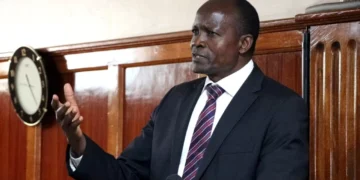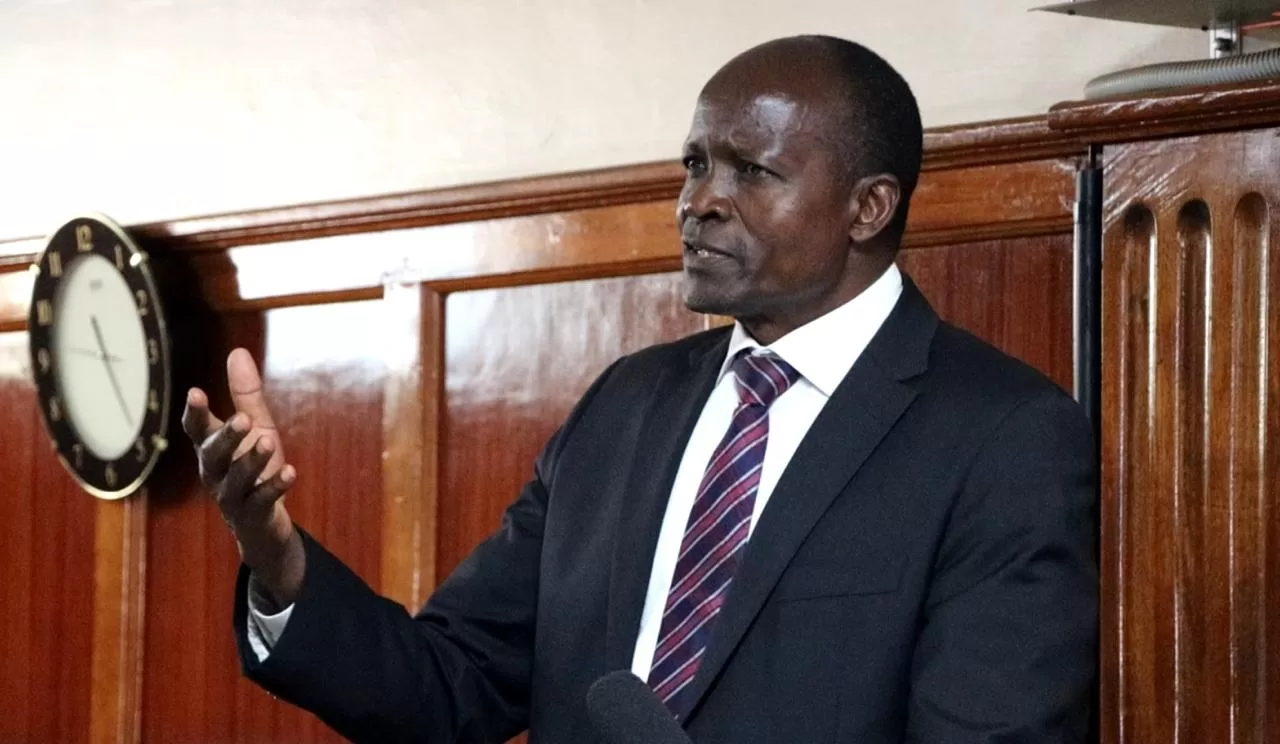
The Milimani Anti-Corruption Court has approved a plea bargain agreement between the Office of the Director of Public Prosecutions (ODPP) and former Migori Governor Okoth Obado, paving the way for the withdrawal of a corruption case linked to the alleged loss of Ksh 73.4 million in public funds.
Chief Magistrate Celesa Okore allowed the application after reviewing the agreement entered into by the Director of Public Prosecutions (DPP), Okoth Obado and 17 co-accused persons.
Obado had been charged alongside several individuals, including Dan Achola Okoth, Scarlet Susan Okoth, Jerry Zachary Okoth, Everlyne Adhiambo Zachary, Jared Peter Odoyo, Christine Akinyi Ochola, Joram Otieno, Ochanda Patroba, Penina Auma and Carolyne Anyango, as well as a number of companies linked to the case.
The accused persons were first arraigned in 2021 over allegations of conspiracy to commit an economic crime, conflict of interest, money laundering and unlawful acquisition of public property. Prosecutors alleged that the offences were committed between 2013 and 2017 during Obado’s tenure as Migori governor.
The case stemmed from investigations by the Ethics and Anti-Corruption Commission into alleged embezzlement and laundering of county funds through proxies, relatives and associated companies. At the time, the prosecution argued that public money was irregularly acquired and used to purchase high-value properties and vehicles.
According to the ODPP, the plea bargain process began after the accused formally requested an out-of-court settlement through an alternative dispute resolution mechanism provided for under the Constitution, the Criminal Procedure Code and ODPP prosecutorial policies.
Following consultations involving prosecutors, defence lawyers and the EACC, the parties agreed on a settlement that required the accused to surrender assets worth three times the amount allegedly lost.
Under the agreement, the accused forfeited eight parcels of land and two Toyota Land Cruiser vehicles valued at approximately Ksh 235.6 million.
Among the assets surrendered to the state are a house in Loresho Ridge valued at Ksh 40 million, the Sunrise Centre commercial block in Suna East worth Ksh 88 million, two five-storey residential buildings with 40 units valued at Ksh 57.6 million, two apartments in Greenspan, Nairobi worth Ksh 18 million, a residential property valued at Ksh 10 million and two single-storey residential blocks estimated at Ksh 7.7 million.
The plea agreement was presented in court in accordance with Sections 137A to 137O of the Criminal Procedure Code and the Criminal Procedure Rules, 2018.
In allowing the settlement, the court noted that the agreement met the legal threshold for plea bargaining and asset recovery.
The ODPP said the resolution demonstrates its commitment to accountability, recovery of public assets and the use of constitutionally recognised mechanisms such as diversion and alternative dispute resolution in appropriate cases.