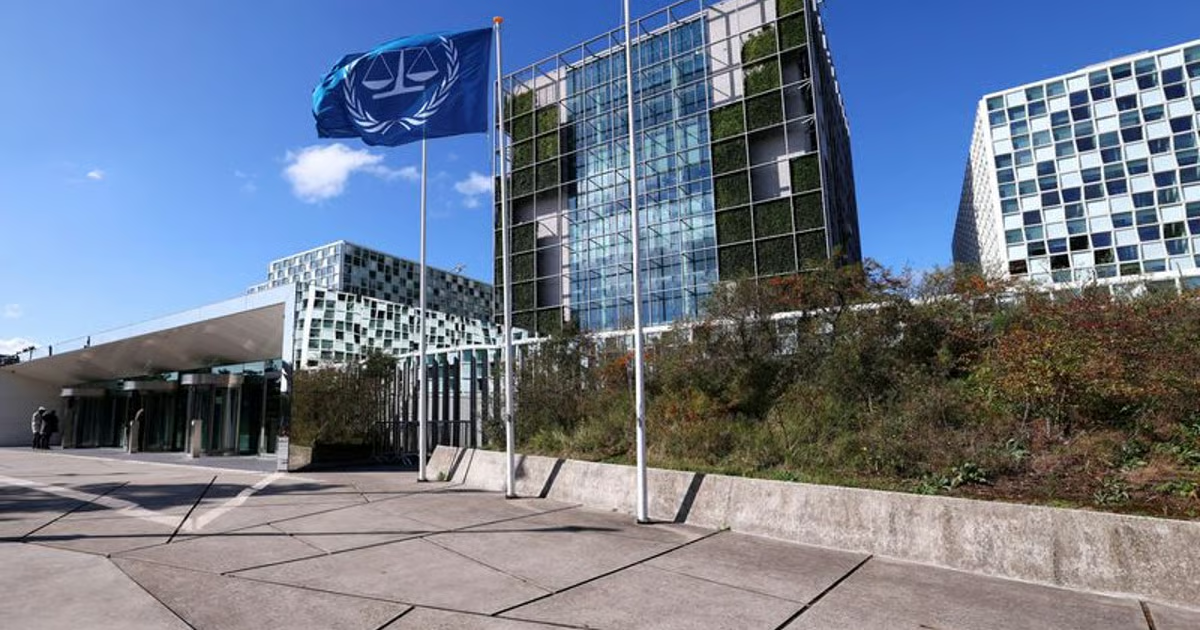
The International Criminal Court (ICC) has ended its contract with French insurance giant AXA, with the change taking effect October 1, as the court faces growing pressure from the United States over its activities.
An ICC spokesperson confirmed that the Hague-based court and AXA had agreed to terminate their contractual relationship by mutual consent. The court will now use a new health insurance provider. “AXA and the Court have decided by mutual agreement to terminate the contractual relationship,” the spokesperson said. The decision comes amid an escalating campaign by the administration of US President Donald Trump against the ICC. Trump has urged countries to withdraw from the court, describing it as “evil” and a “rogue institution.”


The Trump administration has accused the ICC of exceeding its authority by asserting jurisdiction over nationals of countries that are not parties to the court’s founding treaty, the Rome Statute. The United States and Israel are among the countries that have not ratified the treaty.
According to a report by the Financial Times, AXA cited concerns over the potential extraterritorial application of US sanctions as a factor in its decision to end the relationship with the ICC. The insurer reportedly said the decision reflected an international business environment that had become “increasingly tense and complex.”
AXA had held months of discussions internally and with the ICC in an effort to find ways to continue the relationship while managing the risks posed by potential US sanctions. However, the parties were reportedly unable to find a workable solution without a so-called blocking statute. Blocking statutes are legal measures designed to shield European companies and individuals from the extraterritorial effects of sanctions or other laws imposed by foreign countries.
The development highlights the growing impact of US pressure on the ICC and organizations that do business with the court. The United States has already imposed financial sanctions and visa restrictions on ICC officials, while US authorities have prepared additional measures that could affect the court’s ability to conduct its operations, according to sources cited by international media.
The ICC, which prosecutes individuals accused of genocide, war crimes and crimes against humanity, has increasingly become a target of US criticism over its investigations involving nationals of countries outside the court’s membership.
The end of AXA’s contract does not mean the ICC will be left without health insurance coverage, as the court has confirmed that a new provider will take over. However, the move underscores the wider challenges facing the institution as international tensions over its jurisdiction and independence continue to intensify.
For the ICC, the dispute is part of a broader struggle to maintain its operations while navigating mounting political and economic pressure from a major power that rejects the court’s authority over US citizens.