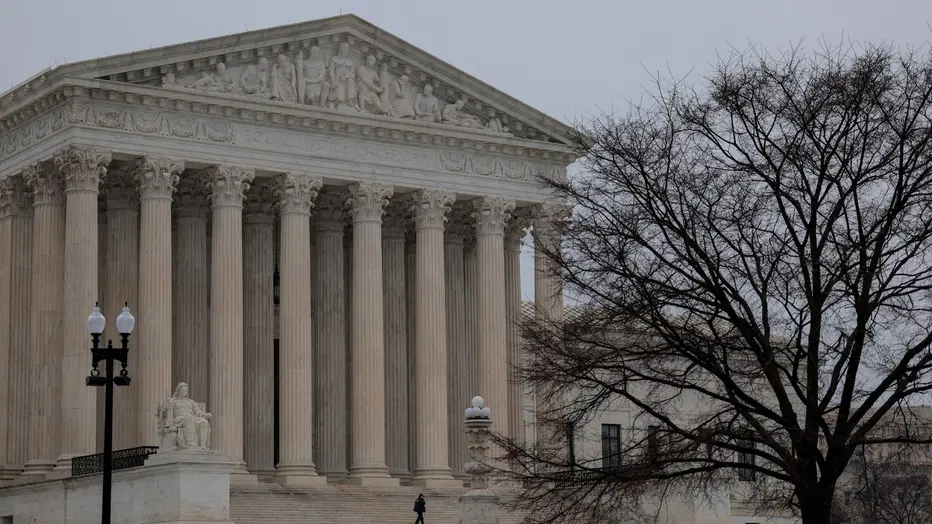
The US Supreme Court has agreed to consider whether a Nigerian man who was forced to prepare meals for an armed separatist group can be denied asylum under American laws prohibiting support for terrorist organisations.
The case involves Izuchukwu Ozurumba, whose asylum application was rejected after US immigration authorities determined that his work for a group known as the Unknown Gunmen amounted to providing material support to terrorism.


The Justice Department challenged a lower court ruling that found Ozurumba’s cooking did not meet the legal threshold for material support under US immigration law.
According to court documents, Ozurumba travelled to a remote camp outside Lagos in 2022 after receiving a job offer. He later discovered that the camp was operated by the Unknown Gunmen, a group believed to have links to Nigerian separatists.
His lawyers told the court that he noticed the group’s members leaving the camp around the time reports of killings and arson emerged. They said he attempted to leave but was held against his will and forced to work without pay.
After approximately six months, Ozurumba escaped while accompanying members of the group on a trip to obtain supplies. He returned to Lagos before fleeing to Venezuela after receiving beatings and death threats. The threats allegedly continued, prompting him to travel to the US-Mexico border, where he entered the United States illegally in July 2023.
During former President Joe Biden’s administration, an immigration judge ruled that the Unknown Gunmen qualified as a terrorist organisation and concluded that Ozurumba’s cooking helped the group meet its basic needs. The judge denied him asylum and other protection against deportation, finding that the circumstances under which he worked did not change the legal assessment.
Ozurumba was deported to Nigeria last year while his legal challenge was still ongoing.
In September 2025, the 4th US Circuit Court of Appeals ruled in his favour, describing him as a captive labourer and finding that his cooking did not constitute material support for terrorist activities. However, the court did not direct the government to bring him back to the United States.
The Justice Department has argued that allowing the ruling to stand would make it more difficult for authorities to exclude non-citizens with links to terrorism. It maintains that providing meals to members of a terrorist organisation constitutes material support, just as supplying fuel for their vehicles would.
The Supreme Court’s decision is expected to clarify how broadly US immigration law can be applied to people accused of supporting terrorist organisations, particularly those who claim they were compelled to provide assistance.