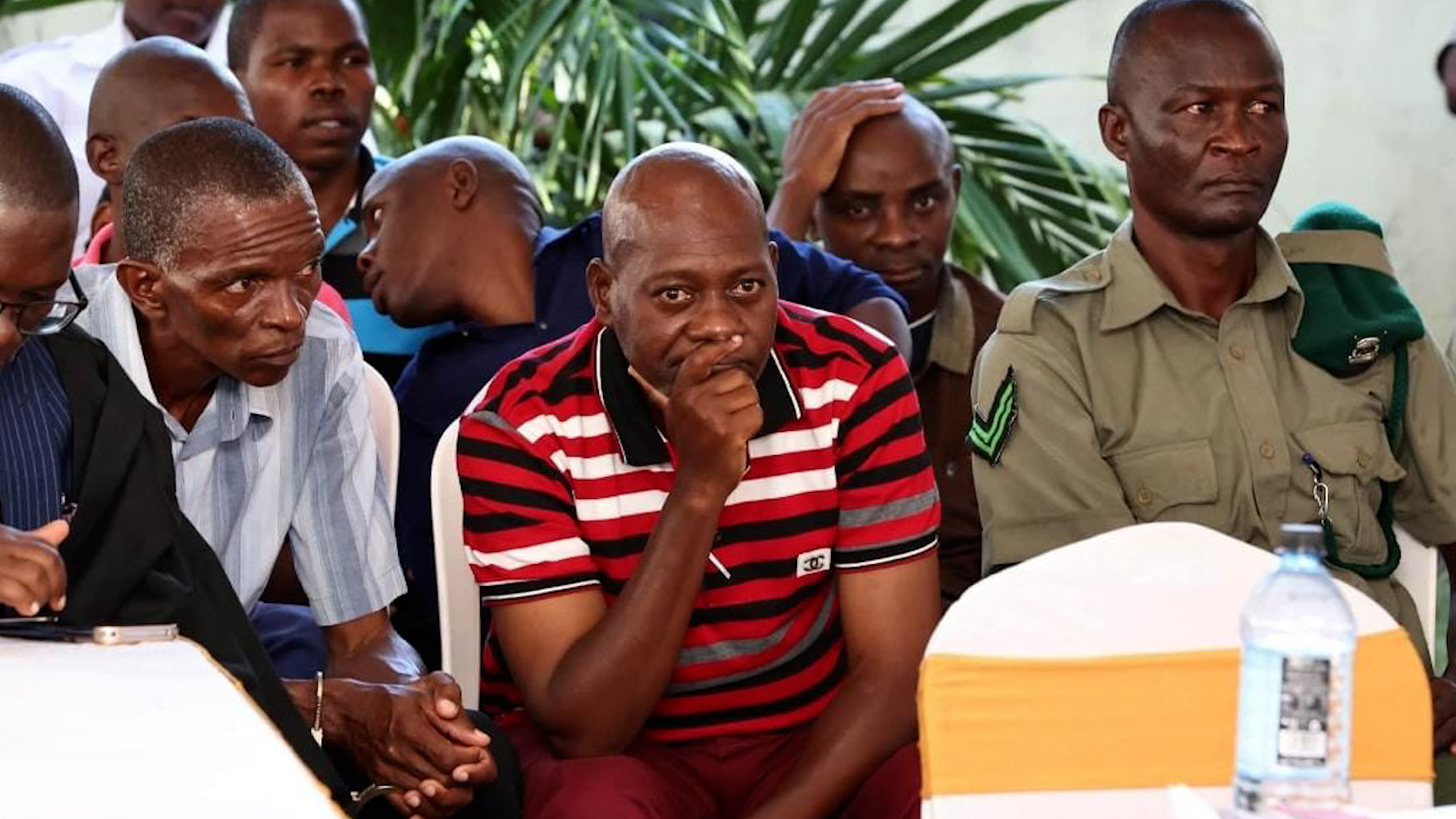
Controversial preacher Paul Nthenge Mackenzie and 28 other accused persons have been convicted of murdering 191 people, 190 children and one adult, in the Shakahola Forest tragedy, following a judgment that lasted more than nine hours at the High Court in Malindi.
Justice Diana Kavedza, who presided over the case, found that the prosecution had proved its case against the 29 accused persons over deaths linked to a fasting regime propagated by Good News International Ministries, led by Mackenzie.
The court heard that followers were instructed to fast to death in the belief that they would meet Jesus, with children required to die first, followed by young people, women and men. Those who resisted the instructions were allegedly forced to comply “kwa mangumi na mateke”, meaning through kicks and blows.
The judgment followed a trial in which the prosecution called 120 witnesses, while the defence presented nine witnesses. The 31 accused persons had faced 191 counts of murder arising from deaths at Shakahola Forest in Kilifi County between January 2021 and September 2023.
In her findings, Justice Kavedza established that the religious movement exhibited characteristics of a doomsday cult, including absolute leadership, isolation of followers, manipulation and domination. The court found that the teachings discouraged formal education, rejected modern medicine, portrayed government institutions as instruments of Satan and encouraged followers to sever ties with society before relocating to Shakahola.
Survivors testified that children were denied food and water despite food being available. Those who attempted to eat, drink or escape were beaten, tied up or confined, while siblings died one after another. The court also heard that burials were described as “harusi”, meaning weddings, while deceased children were celebrated as “shujaa wa imani”, or heroes of faith. Graves were subsequently flattened or concealed.
Justice Kavedza found that the children had not given free, informed and legally meaningful consent to fast to death, citing evidence of coercion, violence and confinement.
On parental responsibility, the court held that it was “a legal duty to protect the child’s life, health and welfare, not a right of ownership.”
The judge further found that parents had no legal entitlement to determine that their children should die in pursuit of religious beliefs, adding that knowingly subjecting a child to the fatal fasting regime could establish a direct causal connection with the child’s death.
Post-mortem evidence attributed 72 deaths to starvation, while other cases involved asphyxia, neck compression and traumatic head injury. In 110 cases, the precise cause of death could not be established because of severe decomposition.
However, the court found that the surrounding circumstances, including survivor testimony, the fasting regime and the pattern of deaths, supported the conclusion that those victims had also died under the same system.
Justice Kavedza rejected the defence challenge to the exhumation process, finding that the recovery and examination of the bodies had been conducted through a sufficiently organised and reliable process.
The court further found that Mackenzie had acted with direct intention to cause death, while the criminal responsibility of the other accused persons was assessed based on their individual roles and the evidence presented against them.
Following the convictions, the court set the sentencing process in motion, with the first mention scheduled for October 30, 2026, to receive the pre-sentence report. The accused persons are expected to present their mitigation on Monday, November 2, before Justice Kavedza delivers the sentences on Friday, November 6, 2026.
Speaking shortly after the judgment, Director of Public Prosecutions Renson Ingonga welcomed the convictions, describing the day as a significant moment in the pursuit of justice for the victims.
“Thank you very much, and today was a momentous day. This is the day most of us have been waiting for,” Ingonga said.
He noted that the Shakahola tragedy had attracted enormous public interest both nationally and internationally, adding that the prosecution and defence teams, investigators and other actors had invested considerable effort in ensuring justice was served.
“The teams put in a lot, and we appreciate what the court has done today. We are happy with the verdict,” he said.
Ingonga described the outcome as a major achievement, noting that securing convictions in a case involving 191 counts, multiple accused persons and numerous witnesses was no easy task. He said the prosecution would now await the sentencing scheduled for November 6.
Deputy Director of the Directorate of Criminal Investigations Jonah Nyango also welcomed the judgment, thanking the stakeholders who participated in the investigation and prosecution of the case.
“As DCI, we must extend our gratitude for the judgment that has been delivered today. I think we have seen justice,” Onyango said.
He acknowledged that the proceedings had been lengthy but praised the stakeholders for carrying out their responsibilities professionally.
The proceedings against two of the original accused persons, Kelvin Sudi Asena and Edison Safari Mnyambo, were terminated following their deaths. Enos Amanya Ngala, one of the convicted persons, had pleaded guilty to all 191 counts and was convicted on his own plea.
The judgment marks a major development in the Shakahola case, which came to light in 2023 following reports of starvation and deaths among followers of Mackenzie’s religious movement.
The court’s determination places responsibility on the convicted persons for the deaths and sets the stage for the final phase of the proceedings, with sentencing expected on November 6, 2026.