Thursday, April 16, 2026
Court Helicopter
  • Home
  • News
  • Court Update
  • County
  • Explainer
  • Photo-Story
  • Interviews
No Result
View All Result
  • Home
  • News
  • Court Update
  • County
  • Explainer
  • Photo-Story
  • Interviews
No Result
View All Result
Court Helicopter
Home Explainer

Could the U.S. Kidnap a Sitting Kenyan President? Maduro Arrest Sparks Chilling Legal Question

Vivian Navate by Vivian Navate
March 29, 2026
in Explainer
0
15
VIEWS
Share on FacebookShare on TwitterShare on WhatsApp

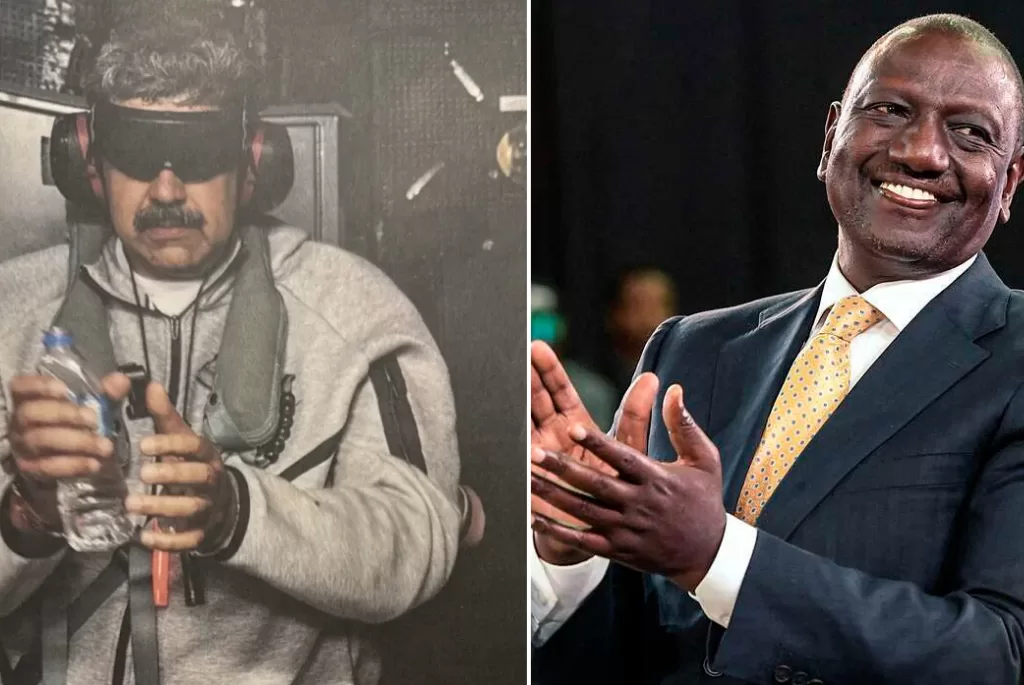
A dramatic global debate has erupted after United States forces moved in on Venezuelan President Nicolás Maduro, seizing him to face international trial in 2026. The development has triggered a sobering question across Africa and beyond: could the U.S., or any foreign power, legally capture a sitting Kenyan President and take him abroad for prosecution?

According to Kenyan constitutional lawyer Danstan Omari, the uncomfortable answer is YES, but under specific circumstances recognised by international law.

Related posts

Sakaja Cannot Be Arrested on Senate Orders, Omari Says

Sakaja Cannot Be Arrested on Senate Orders, Omari Says

April 1, 2026

Why Courts Impose “Hefty” Bonds in Non-Violent Cases

March 29, 2026

Omari explains that Kenya’s Constitution grants the President strong immunity from criminal proceedings within the country during his time in office. He cites Article 143(2) which states that “criminal proceedings shall not be instituted or continued in any court against the President or the person performing the functions of that office, during their tenure of office.” In practical terms, this means a sitting President cannot be arrested and charged before any Kenyan criminal court, whether in Makadara, Milimani, or elsewhere.

However, Omari points out that this immunity has a constitutional limit, one that many Kenyans may not be aware of. The same provision contains an exception that opens the door to international prosecution. Article 143(4) states that “the immunity of the President under this Article shall not extend to a crime for which the President may be prosecuted under any treaty to which Kenya is party and which prohibits such immunity.”

In other words, while Kenyan courts cannot touch a sitting President, international law can.
Omari explains that this applies to the most serious international crimes, including genocide, crimes against humanity, war crimes, crimes of aggression, torture, apartheid, enforced disappearance, slavery, piracy and human trafficking. These offences are outlawed under global legal instruments such as the Rome Statute, the UN Charter, and other treaties that Kenya has ratified, thereby agreeing not to shield even its Head of State from accountability.

He illustrates the point clearly: if a Kenyan President were to order extermination of an ethnic group, authorise systematic rape campaigns, wage unlawful war against another state, or preside over widespread enforced disappearances, international authorities could lawfully intervene even to the point of capturing the President and transferring him for trial abroad.

This is precisely the legal foundation behind Maduro’s. Kenya’s Constitution deliberately aligns presidential immunity with global justice systems, ensuring it cannot be used as a shield for international crimes.

History shows Maduro is not alone. Former Liberian President Charles Taylor was seized and delivered to The Hague. Serbia’s Slobodan Milošević faced international trial. Panama’s Manuel Noriega was captured and flown to the U.S. Iraq’s Saddam Hussein was removed and tried. To Omari, these cases demonstrate that global enforcement is both real and precedent-driven.

He stresses that Kenya’s Constitution draws a clear line: a President is protected locally but not insulated from the international community. As he explains it, immunity applies “in Kenyan courts, under Kenyan criminal law, but it does not cover crimes under international treaties prohibiting immunity.”

The Maduro arrest therefore sends shockwaves through political corridors worldwide, especially in regions where state power has historically been used to suppress citizens. To some leaders, it feels like a foreign intrusion. To human rights defenders, it looks like overdue accountability.
Either way, Omari notes, Kenya has already chosen its legal position, and written it into the supreme law of the land.

A Kenyan President cannot be arraigned at home while in office. But if accused of international crimes banned under treaties Kenya has signed, he may legally be taken abroad to stand trial.

Previous Post

When the Bench Became the Voice: How Kenya’s Courts Shaped a Restless Year

Next Post

Seven Charged For Alleged Violent Raid at Gatoto Primary School

Vivian Navate

Vivian Navate

Vivian Navate is a passionate writer and court reporter based in Nairobi. A creative thinker and storyteller, she is deeply committed to justice, transparency, and delivering clear, insightful coverage of Kenya’s legal landscape.

Next Post

Seven Charged For Alleged Violent Raid at Gatoto Primary School

Leave a Reply Cancel reply

Your email address will not be published. Required fields are marked *

BROWSE BY CATEGORIES

  • Africa
  • County
  • Court Update
  • Explainer
  • Interviews
  • News
  • Photo-Story

BROWSE BY TOPICS

#Safaricom #Sakaja Africa Creative Feature Human Rights IPOA Legal Today Maandamano Mathare News Populer sepulchral rights trend Video

POPULAR

JSC Nominates 37 New Judges for High Court and Environment and Land Court
News

JSC Nominates 37 New Judges for High Court and Environment and Land Court

by Vivian Navate
April 10, 2026
0

The Judicial Service Commission (JSC) has nominated 37 new judges for appointment to the High Court and the Environment and...

Court Freezes KCB Accounts in Fraud Dispute Involving Kenya’s Ambassador to Cuba

Court Freezes KCB Accounts in Fraud Dispute Involving Kenya’s Ambassador to Cuba

April 16, 2026
South Africa’s Julius Malema Sentenced to 5 Years in Jail on Gun Charges

South Africa’s Julius Malema Sentenced to 5 Years in Jail on Gun Charges

April 16, 2026

Family of Missing Security Analyst Mwenda Mbijiwe asks state to Produce Him Dead or Alive.

October 14, 2025
Petition Filed Challenging Withdrawal of Charges Against Eight Police Officers in Baby Pendo Case

Petition Filed Challenging Withdrawal of Charges Against Eight Police Officers in Baby Pendo Case

April 13, 2026
Kakamega Woman Rep Elsie Muhanda Sues Bloggers for calling her an alcoholic 

Kakamega Woman Rep Elsie Muhanda Sues Bloggers for calling her an alcoholic 

April 10, 2026

Blogger Gaitho Charged for Alleged False Tweet Against Police in Kware Killings’ Case.

July 18, 2024
CJ Martha Koome says Judiciary Will Not Tolerate Corruption

CJ Martha Koome says Judiciary Will Not Tolerate Corruption

April 10, 2026
Justice Muchelule Calls for Careful Use of Mediation to Protect Vulnerable

Justice Muchelule Calls for Careful Use of Mediation to Protect Vulnerable

April 15, 2026
Court Helicopter

Court and legal stories from around the country

Follow us on social media:

Recent News

  • Court Extends Status Quo in Safaricom Stake Sale Case, Sets Hearing in 10 Days
  • Three Kenyans Challenge Halal Mark on Meat Products
  • South Africa’s Julius Malema Sentenced to 5 Years in Jail on Gun Charges

Category

  • Africa
  • County
  • Court Update
  • Explainer
  • Interviews
  • News
  • Photo-Story

Recent News

Court Extends Status Quo in Safaricom Stake Sale Case, Sets Hearing in 10 Days

Court Extends Status Quo in Safaricom Stake Sale Case, Sets Hearing in 10 Days

April 16, 2026
Three Kenyans challenge halal certification in court, citing lack of legal framework and concerns over consumer rights, pricing transparency and regulation.

Three Kenyans Challenge Halal Mark on Meat Products

April 16, 2026

© 2026 Court Helicopter. All rights reserved.

No Result
View All Result
  • Home
  • News
  • Court Update
  • County
  • Explainer
  • Photo-Story
  • Interviews

© 2026 Court Helicopter. All rights reserved.