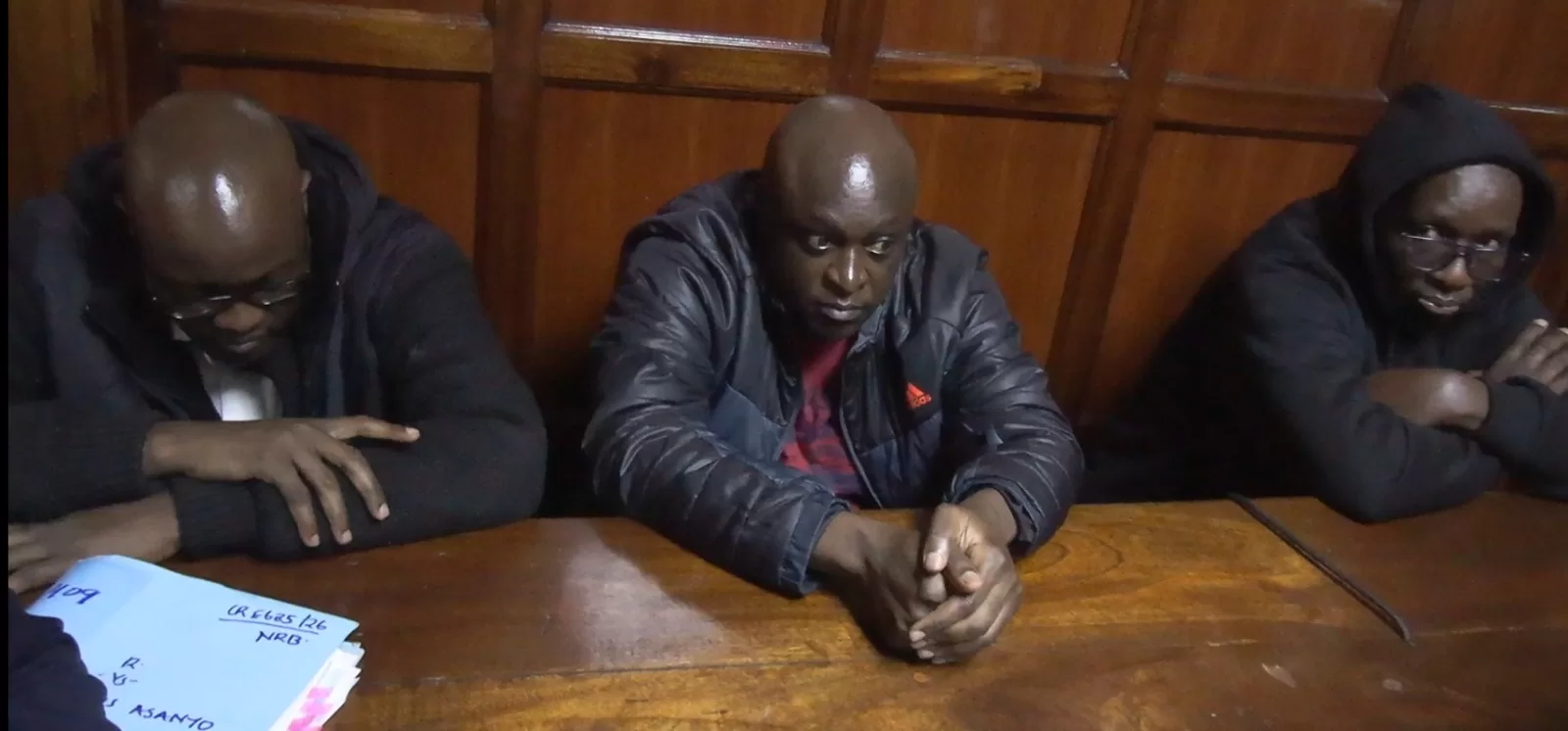
A businessman wanted by authorities in the United States over alleged cyber-crime offences has asked a Nairobi court to release him on bail pending the hearing and determination of extradition proceedings against him.
Francis Asanyo, through his lawyers led by Danstan Omari, has applied to be admitted to bail or bond on reasonable terms as the case seeking his extradition to the United States continues.


In the application, Asanyo says he is a Kenyan citizen by birth with strong family and social ties in the country, insisting that he poses no flight risk.
He is asking the court to grant him interim bail and later release him on bond as the extradition proceedings progress.
Asanyo was arrested on February 15, 2026 over allegations linked to cyber-crime offences under United States law, including conspiracy to commit computer intrusions, conspiracy to commit wire fraud and aggravated identity theft.
However, he maintains that the accusations relate to non-violent economic offences that do not involve physical harm, terrorism or threats to public safety, arguing that continued detention before the determination of the extradition request is unnecessary.
Through his legal team comprising Danstan Omari, Shadrack Wambui and Cliff Ombeta, he told the court that under Article 49(1)(h) of the Constitution of Kenya 2010, an arrested person has the right to be released on bail or bond on reasonable conditions unless there are compelling reasons to deny such release.
Asanyo also challenged an affidavit filed by an investigating officer opposing his release, arguing that it relies largely on hearsay evidence derived from foreign investigations and fails to demonstrate compelling reasons such as a real risk of absconding or interference with proceedings.
His lawyers further argued that the INTERPOL Red Notice and the indictment issued abroad are merely allegations and do not amount to a conviction.
“There is no compelling reason to deny the respondent bail. With an Interpol red alert, where will the respondent flee to? The respondent is willing to deposit his passport in court,” the defence submitted.
The court heard that even suspects facing more serious offences, including murder charges, have been granted bail by Kenyan courts.
Asanyo denied the accusations and maintained his presumption of innocence. He also offered to comply with strict bail conditions including surrendering his passport, reporting weekly to a police station, providing sureties and restricting his movement to Nairobi and Kajiado counties.
He further told the court that continued detention would cause hardship to his family and interfere with his livelihood as a farmer.
Asanyo appeared in court together with two other suspects, Peter Omari and Elvis Ombaigwa, who are also wanted by authorities in the United States in connection with the alleged cyber-crime activities.
However, the prosecution opposed the application, arguing that there are compelling reasons to deny bail given the nature of extradition proceedings.
State counsel Victor Awiti told the court that the risk of suspects fleeing is heightened in extradition matters, noting that an accused person could escape to a country that does not have an extradition treaty with Kenya.
“Considering the nature of the application before you, being an extradition matter, there is a high likelihood that the respondent may flee,” Awiti submitted.
He added that extradition is founded on bilateral and multilateral treaty arrangements that require Kenya to surrender suspects to jurisdictions with which it has extradition agreements.
The prosecution further cited the seriousness of the offences and the potential sentence of up to 30 years in prison if convicted, arguing that the severity of the possible punishment increases the risk of the accused absconding.
The state also raised concerns that the suspects could interfere with electronic evidence linked to the alleged cyber-crime activities if released.
The court is expected to deliver a ruling on the bail application after considering submissions from both the defence and the prosecution.