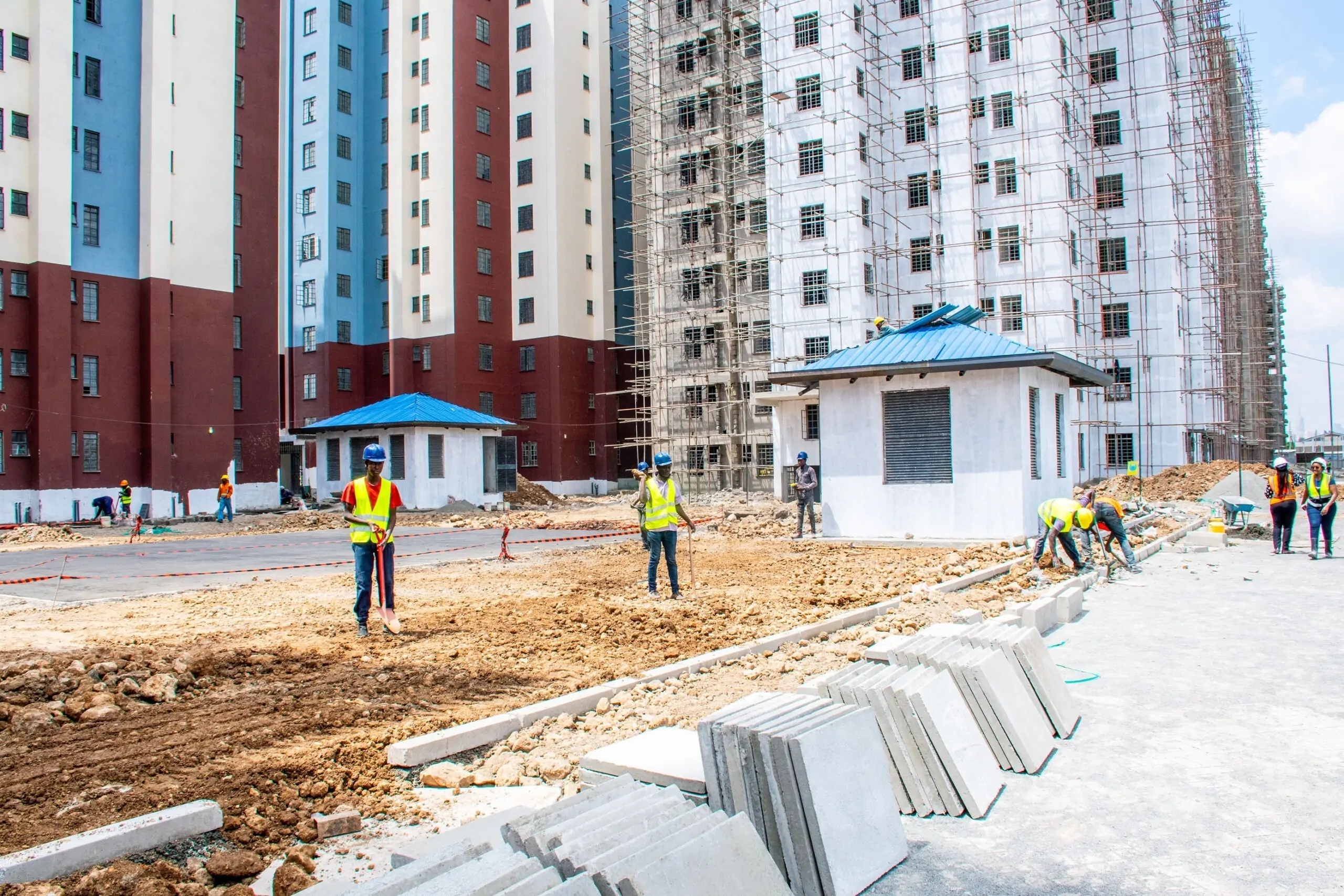
The Court of Appeal has upheld the Affordable Housing Act, 2024, clearing the way for the continued collection of the 1.5 per cent Affordable Housing Levy after a five-judge bench dismissed an appeal challenging the constitutionality of the legislation.
Justices W. Karanja, P. O. Kiage, A. O. Muchelule, W. Korir and G. V. Odunga, sitting in Nairobi, delivered the judgment on Thursday, September 25, 2026, dismissing two consolidated appeals arising from a series of constitutional petitions filed against the Affordable Housing Act.


The appeals were Civil Appeal No. E832 of 2024 and Civil Appeal No. E019 of 2025. They arose from a High Court judgment delivered on October 22, 2024 by Justices O. Sewe, J. Mong’are and Chigiti SC, which had upheld the legislation.
The dispute centred on whether Parliament had lawfully enacted the Affordable Housing Act and whether the levy imposed under the legislation violated constitutional rights and principles, including equality, property rights, the right to housing, devolution, public participation and the constitutional framework governing taxation.
The five judges ultimately found no merit in the appeal and dismissed it, while making no order as to costs because of the public-interest nature of the litigation.
At the centre of the judgment is Section 4 of the Affordable Housing Act, which imposes a levy of 1.5 per cent on the gross salary of an employee or 1.5 per cent of the gross income of a person whose income is not subject to the levy under the employee category. The court noted that the levy is payable to the collector for remittance into the Affordable Housing Fund by the ninth working day after the end of the month in which the salary was due or the income was received or accrued.
The judges rejected the argument that imposing the levy amounted to an unconstitutional deprivation of property. They held that although Article 40 protects property rights, the Constitution also recognises the obligation of citizens to finance government through taxation. The judges said taxation is one of the means through which the State obtains resources to fulfil its constitutional obligations.
The bench further observed that Article 209 empowers the national government to impose taxes and Article 210 requires taxation to be imposed through legislation. The judges, however, stressed that the existence of a constitutional power to tax does not place legislation beyond constitutional scrutiny. “The mere fact that a piece of legislation purports to be enacted in fulfilment of a constitutional provision does not bar the courts from subjecting it to constitutional scrutiny,” the judges stated.
According to the judges, Article 43(1)(b) does not require the State to provide additional housing to people who already have access to affordable housing. Instead, the constitutional objective is to progressively facilitate access to housing for people who, because of their vulnerability, are unable to access it.
On devolution, the appellants had argued that the Act unlawfully transferred the housing function to the national government despite the role assigned to county governments under the Constitution. The judges held that housing is a shared responsibility between the two levels of government and that the Affordable Housing Act establishes a framework for cooperation rather than taking away county functions. The court found that the Act provides roles for county governments through county rural and urban affordable housing committees and other mechanisms established under the legislation.
The bench held that the Act therefore does not claw back devolution but provides a framework for cooperative governance in implementing the constitutional right to housing.
The judges also considered the controversial question of the use of public land for affordable housing projects. The appellants had argued that the legislation undermined the constitutional mandate of the National Land Commission by providing for the use of public land for housing developments. The Court of Appeal found that the Act must be read together with the Land Act.
Under Section 41 of the Affordable Housing Act, the allocation of public land for affordable and institutional housing is subject to the provisions of the Land Act. The judges consequently found that the National Land Commission retains a central role in the allocation of public land.
They went further and made clear that public land cannot simply be allocated for affordable housing outside the constitutional and statutory framework. The court stated that any allocation of public land without the approval of the National Land Commission would be unlawful.
However, the judges declined to make a finding that such unlawful allocation was likely to occur, saying that doing so would amount to a speculative determination.
Public participation was another major issue before the five-judge bench. The appellants argued that Parliament had failed to conduct adequate public participation, claiming that the process did not sufficiently reach ordinary Kenyans and that Parliament had only visited 19 of the country’s 47 counties.
They also argued that the views submitted by members of the public who opposed the housing levy had effectively been disregarded. The Court of Appeal rejected the challenge. The judges considered evidence of oral submissions as well as newspaper advertisements inviting members of the public to submit their views. They noted that public participation does not necessarily require oral hearings and that written submissions are also capable of constituting public participation.
“Considering the steps taken by Parliament, we are not satisfied that there was no adequate public participation in the process leading to the enactment of the Act,” the bench held. The judges therefore upheld the High Court’s finding that Parliament had met the constitutional threshold for public participation.
On the retrospective application of the Act, the judges considered Section 60, which deals with payments, commitments, obligations and ongoing projects associated with affordable housing. The appellants had argued that the provision unlawfully attempted to give the Act retrospective effect and sought, among other orders, refunds of amounts already collected. The court rejected the challenge to the provision.
The judges also upheld the appointment of the Kenya Revenue Authority Commissioner General as the collector of the levy. They found that the Kenya Revenue Authority Act makes the Authority an agent of government for purposes of collecting and receiving revenue and that the functions assigned to the Commissioner General supported the appointment.
In its final determination, the five judges dismissed the appeal and ordered that each party bear its own costs, citing the public-interest nature of the litigation.
The ruling means the Affordable Housing Act remains in force and the 1.5 per cent Affordable Housing Levy imposed under Section 4 continues to have a legal basis. The judgment also leaves an important constitutional message on the implementation of the housing programme: while the State has the power to legislate and collect taxes to pursue constitutional objectives, implementation must still comply with constitutional safeguards on equality, public participation, devolution, public land and the rights of vulnerable groups.
The five-judge bench particularly emphasised that the constitutional right to housing is not simply about putting up houses, but about creating conditions through which Kenyans can access adequate and dignified housing.
In another significant observation, the court said the State must avoid a “one size fits all” approach because the housing needs of low-income earners, people without income and other groups differ. The judges also warned that the implementation of the programme must ensure that those genuinely entitled to assistance are identified and protected from being displaced by individuals who do not meet the intended criteria.
For now, however, the legal challenge to the Affordable Housing Act has failed at the Court of Appeal, leaving the 1.5 per cent levy intact under the 2024 legislation.