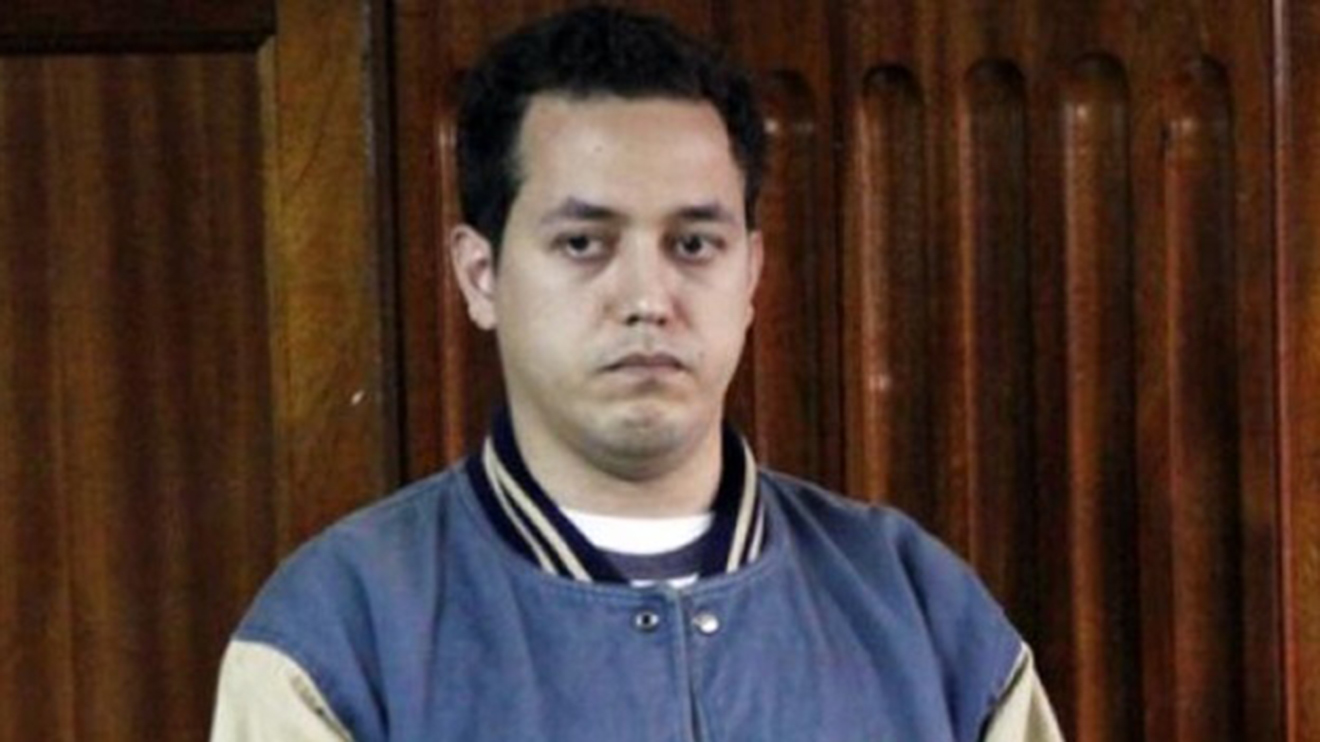
Former Venezuelan diplomat Dwight Sagaray has moved to the Supreme Court seeking to overturn his 20-year prison sentence for the murder of Venezuela’s acting ambassador to Kenya, Olga Fonseca, arguing that the courts convicted him without sufficient evidence linking him to the killing.
During Tuesday, November 24, 2026, proceedings, Sagaray’s lawyer Kenson Mutethia told the Supreme Court that the High Court and Court of Appeal relied on assumptions that his client must have known about the murder plot despite the absence of evidence placing him in meetings where the alleged plan was discussed.


Mutethia questioned how the High Court could find that Sagaray was not present at the meetings where the murder was allegedly planned, yet conclude that he must have known about the scheme. He further faulted the Court of Appeal for describing it as “completely far-fetched” that Sagaray did not know about the plan.
The lawyer argued that motive, association with suspected perpetrators and the possibility of benefiting from a crime cannot independently establish criminal responsibility.
“Unless courts and investigators are very careful, it may be very easy to target persons who are said to have had a motive,” Mutethia submitted.
He warned that alleged contract killings require particularly careful investigations because those suspected of masterminding such crimes may not necessarily appear at the crime scene. Mutethia maintained that the prosecution had failed to demonstrate that Sagaray knew about the alleged plan and intentionally participated in it.
“Where the accusation is only supported by suspicion, without evidence of proof of participation, then that particular charge cannot be sustained,” he told the judges.
He said the defence had presented nine judicial authorities from Kenya, South Africa and India to demonstrate that the lower courts departed from established legal principles when they upheld the conviction.
Separately, lawyer Maingi Musyimi challenged the Court of Appeal’s finding on diplomatic immunity, arguing that Venezuela never expressly waived Sagaray’s immunity but only terminated his diplomatic functions.
Musyimi relied on Articles 32 and 39 of the Vienna Convention on Diplomatic Relations, submitting that immunity continued after the termination of Sagaray’s diplomatic functions until he left Kenya or a reasonable period for his departure expired.
“It was not expressed. All it did, my Lord, was to state that his functions have been terminated,” Musyimi said, referring to the diplomatic communication from Venezuela.
He accused the Court of Appeal of confusing the termination of diplomatic functions with an express waiver of immunity.
“But when it came to the Court of Appeal, they went down a rabbit hole,” he submitted.
The prosecution opposed the appeal, with Deputy Director of Public Prosecutions Jami Yamina arguing that Sagaray was no longer a diplomatic agent when he was arraigned in court in July 2012. Yamina urged the court to interpret the Vienna Convention in good faith and according to the ordinary meaning of its provisions. Prosecutor Fredah Mwanza also opposed the appeal, arguing that Sagaray had not established grounds warranting the Supreme Court’s intervention.
The three-judge bench comprising Justices Smokin Wanjala, Isaac Lenaola and Njoki Ndung’u, presided over by Justice Wanjala, reserved its ruling after hearing the submissions.
Fonseca was murdered in July 2012, barely two weeks after arriving in Kenya to take over the Venezuelan diplomatic mission. Her body was discovered strangled at the embassy residence in Nairobi’s Runda estate on July 27, 2012. Sagaray, who was then the embassy’s first secretary, was prosecuted alongside Kenyan nationals over the killing. The prosecution alleged that he had a strained relationship with Fonseca over control of the embassy and stood to benefit from her death.
The High Court convicted Sagaray and three Kenyan nationals, sentencing each to 20 years in prison. The court found that the four had acted with a common intention to murder Fonseca. In March 2025, the Court of Appeal upheld their convictions and sentences, prompting Sagaray to pursue a further appeal.
In July 2026, the Court of Appeal certified his case as raising matters of general public importance, allowing him to approach the Supreme Court over the interpretation of diplomatic immunity and the evidence required to establish common intention in a murder case