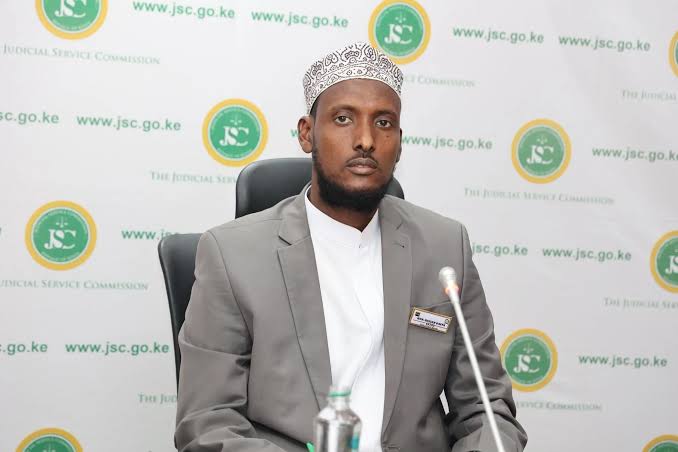
The Judicial Service Commission (JSC) has appointed Hassan Omar Daffa as Kenya’s new Chief Kadhi, ending more than a year of vacancy in the constitutional office following the death of his predecessor, Sheikh Athman Abdul-Halim Hussein.
Daffa succeeds Sheikh Athman, who died in Mombasa on July 10, 2025, with Senior Principal Kadhi Sheikh Sukyan Omar Hassan having overseen the office in an acting capacity since August of the same year.


His appointment follows a competitive recruitment exercise in which the JSC received 14 applications before selecting nine candidates for interviews held on November 2 and 3, 2026.
Among those interviewed was acting Chief Kadhi Sukyan Omar Hassan, alongside Abuu Mohamed Mwalimu, Hassan Kinyua Omari, Mohamed Juma Mwaduga, Abdiaziz Maalami Mohamed, Mohamed Abdalla Kutwaa, Mohamed Garama Randu and Juma Ali Abdalla.
Daffa previously served as a Principal Kadhi and brings experience in Islamic jurisprudence and the administration of Muslim personal law. He takes over the position previously occupied by Sheikh Athman, who assumed office in July 2023 after the retirement of Sheikh Ahmed Muhdhar, who had served as Chief Kadhi for 12 years.
Sheikh Athman was Kenya’s 11th Chief Kadhi.
The Chief Kadhi heads the Kadhi’s Courts within the Judiciary and is responsible for providing administrative and judicial leadership in matters concerning Muslim personal law. The office is established under Article 170 of the Constitution, which provides for Kadhi’s Courts to hear disputes relating to questions of Muslim law on personal status, marriage, divorce and inheritance.
However, the courts can only exercise jurisdiction where all parties involved profess the Muslim faith and voluntarily submit to their authority. Their mandate includes resolving family and inheritance disputes in accordance with Islamic law, while the Chief Kadhi provides oversight and guidance to Kadhis serving across the country.
Ahead of the appointment, the JSC held consultations with Muslim religious organisations and legal stakeholders as part of efforts to make the recruitment process inclusive and reflective of the community’s interests.
The organisations consulted included the Supreme Council of Kenya Muslims (SUPKEM), the Kenya Muslims National Advisory Council, Jamia Mosque, the Association of Muslim Lawyers and Muslims Professional League Africa.
JSC Vice Chairperson Isaac Rutto had previously reaffirmed the commission’s commitment to an open and merit-based recruitment process during a stakeholder engagement forum held in June.
Rutto said the commission was guided by constitutional requirements on transparency, merit and inclusivity in filling the position.