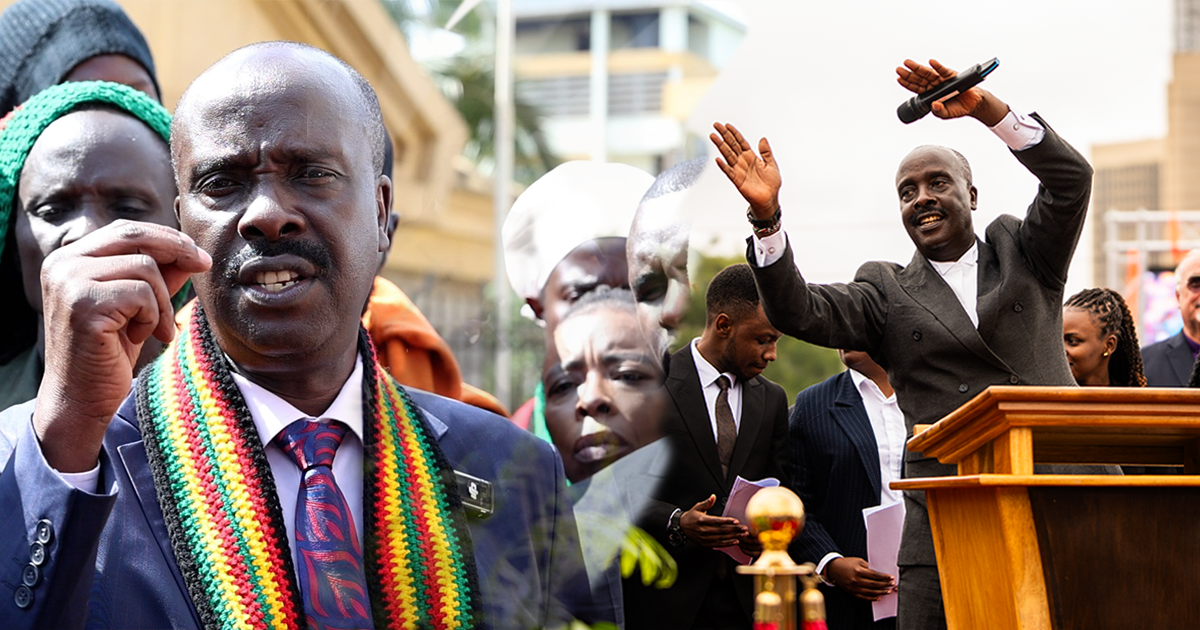
Few lawyers in Kenya have become as closely associated with defending matters of faith as Danstan Omari. Yet, unlike many of the religious groups whose causes he champions, Omari has never publicly identified with any particular religion. Instead, he has built a reputation for standing where constitutional freedoms and religious belief intersect, regardless of the faith involved.
Within the space of just a few days, the seasoned advocate found himself at the centre of two vastly different religious debates.


On July 12, Omari joined senior lawyer Cliff Ombeta, Sheria Mtaani advocates Shadrack Wambui and Stanley Kinyanjui, together with dozens of advocates, at Prophet David Owuor’s Repentance and Holiness Church crusade at Nairobi’s Uhuru Park. Addressing thousands of worshippers, he publicly defended claims of miraculous healing, recounting the case of one follower, Peter Oyan, who had allegedly tested positive for HIV before later receiving negative results after attending the prophet’s healing services. Omari told the congregation that follow-up tests involving the Kenya Medical Research Institute (KEMRI) and the Directorate of Criminal Investigations (DCI) had confirmed the change, as the legal team called on critics of the miracles to apologise.
The appearance sparked debate, with non-believers and sections of Kenyans questioning why some of the country’s most prominent lawyers had thrown their weight behind the church and its healing claims. But to those who have followed Omari’s career, the appearance came as little surprise. Together with senior lawyer Cliff Ombeta, the two have become so synonymous with high-profile and unconventional cases that social media has christened them “Tom and Jerry.” Whether defending politicians, celebrities, religious leaders or controversial causes, the pair somehow always seem to find themselves in the middle of Kenya’s biggest legal conversations.
Barely a day later, Danstan was back in court, this time leading the legal team alongside Sheria Mtaani advocates Shadrack Wambui and Stanley Kinyanjui for the Rastafari Society of Kenya in a constitutional petition seeking recognition of cannabis as a religious sacrament. The High Court dismissed the petition, with Justice Bahati Mwamuye holding that the petitioners had failed to demonstrate that the Narcotic Drugs and Psychotropic Substances Control Act violated their constitutional right to freedom of religion. The court upheld the existing law, citing public health and safety concerns.
Outside the courtroom, Omari remained resolute.
“Kenya cannot be the only country that is harassing the Rastafarian people. We are determined to reverse that and bring back the dignity and respect of the Rastafarians in Kenya,” he said.
He added that his legal team would challenge the decision before the Court of Appeal after studying the judgment, saying the matter raised important constitutional questions on religious freedom.
The two appearances, coming almost back-to-back, capture a pattern that has defined Omari’s legal career. Born into a home of staunch Seventh-day Adventist believers, he has never been publicly associated with defending his family’s own denomination in court. Instead, his practice has seen him represent religious groups and individuals from across Kenya’s diverse spiritual landscape, often in matters that attract intense public scrutiny.
That pattern extends well beyond the recent Owuor and Rastafarian matters. In 2023, Omari once again teamed up with his longtime courtroom ally Cliff Ombeta to represent New Life Prayer Centre and Church founder Pastor Ezekiel Odero at the height of the Shakahola investigations. As public scrutiny intensified over allegations linking the preacher to the deaths uncovered in Shakahola, the two lawyers became the public face of his defence, dismissing attempts to associate Pastor Ezekiel with the tragedy, opposing efforts to deregister the church and insisting that investigations be guided by evidence rather than public sentiment. Omari maintained that the pastor’s constitutional rights deserved the same protection afforded to every Kenyan, regardless of the accusations levelled against him. To many’s suprise, he won the case.
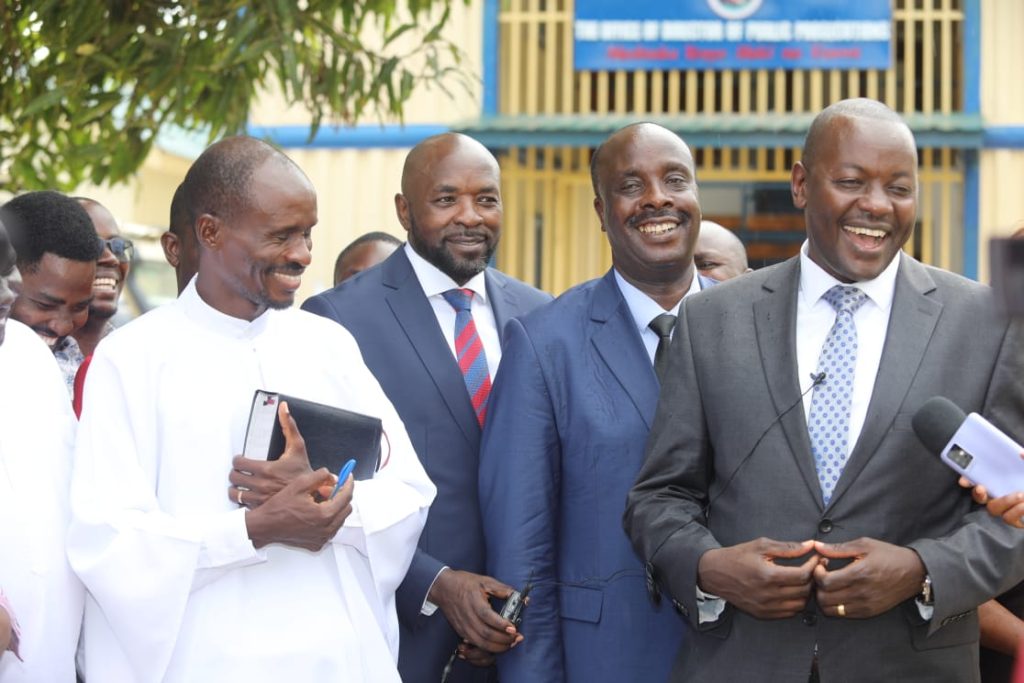
His religious briefs have also taken him into one of the Presbyterian Church of East Africa’s most closely watched criminal cases. Danstan Omari represented former PCEA officials accused of conspiring to steal tens of millions of shillings from the church in a prosecution that lingered in court for years. Throughout the proceedings, he repeatedly criticised delays by the prosecution, accusing the Director of Public Prosecutions of frustrating the trial by failing to present witnesses. He urged the court to safeguard the accused persons’ constitutional right to a fair and expeditious hearing, arguing that justice must apply equally to church officials standing trial as it does to any other accused person.
His willingness to take on almost any brief has earned him a reputation that stretches beyond the corridors of justice. Borrowing from the American television series Better Call Saul, many Kenyans have jokingly coined their own version: “Better Call Omari.” To his admirers, it is a compliment to a lawyer who is always willing to step into the most contentious disputes. To others, it simply reflects a growing expectation that whenever a matter dominates headlines, Omari will not be far from the courtroom.
That reputation has also fuelled questions. Is Omari driven by an unwavering commitment to constitutional litigation and the belief that every Kenyan deserves legal representation, regardless of their faith? Is he simply a lawyer who relishes complex, precedent-setting cases? Or, as the popular Nairobi saying goes, “Kila mtu anajua nini ilimleta Nairobi”, everyone knows what brought them to the city. Others express the sentiment more bluntly with another common phrase, “Hii town ganji ndiyo inabonga,” suggesting that, in the end, money is often the loudest voice. Whether those observations are fair or merely the inevitable commentary that follows lawyers who represent controversial clients remains open to debate.
What is difficult to dispute, however, is the consistency of Danstan Omari’s courtroom approach. Whether representing followers of Prophet David Owuor, Pastor Ezekiel Odero, officials of the Presbyterian Church of East Africa or Rastafarians seeking constitutional protection for their religious practices, his arguments rarely dwell on theology. Instead, they are anchored on the Constitution, particularly the guarantee of freedom of conscience, religion, belief and opinion.
Supporters view his work as a reflection of Kenya’s secular constitutional order, where every individual and every faith, whether mainstream or minority, is entitled to equal protection before the law. To them, the advocate’s personal beliefs are secondary to his professional obligation to ensure that every Kenyan has access to legal representation and constitutional justice.
As the legal battle over cannabis heads to the Court of Appeal, and debate continues over faith healing claims, Omari once again finds himself at the centre of conversations that stretch beyond the courtroom.
For a lawyer who professes no religion of his own, Danstan Omari has become one of Kenya’s most recognisable defenders of the right of others to practise theirs. Whether motivated by conviction, professional duty, intellectual curiosity or simply the demands of legal practice, one thing has become increasingly clear: when faith and the law collide in Kenya, chances are many will say, half in jest and half in expectation, “Better Call Omari.”