Doomsday cult leader Paul Nthenge Mackenzie found himself confronted by his own Prophecy on the day of sentencing.
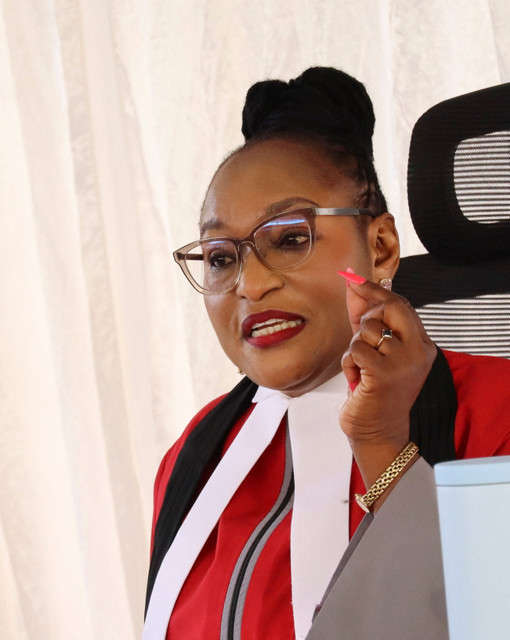
The learned Judge, Justice Diana Kavedza dressed in her red Judicial ceremonial robes appeared to be revisiting the chilling statement by Paul Mackenzie, “Kitawaramba”, which became a significant part of the narrative surrounding the Shakahola massacre.


Mackenzie, who was sentenced to 200 years in prison for his involvement in the mass murder of 191 people in Shakahola Forest, Kilifi County, had previously made statements that reflected his defiance and determination to continue with his controversial religious teachings.
However, on the sentencing day, the word “Kitawaramba” took on a different significance as the court examined the conduct of Mackenzie and the influence he wielded over his followers.Justice Diana Kavedza, while delivering the sentence, took a firm position on the abuse of religious authority, observing that spiritual leaders occupy a position of immense trust and responsibility.
The judge warned that using the pulpit to systematically groom, coerce or isolate vulnerable followers was particularly dangerous, especially when religious teachings were manipulated to cause suffering and loss of life.
The court also considered the prosecution’s argument that Mackenzie posed a danger to the public and deserved a severe sentence to protect society from his dangerous disposition.
The sentencing marked a major moment in the Shakahola massacre proceedings, with Mackenzie receiving 200 years’ imprisonment while his 26 co-convicts were handed prison terms ranging between 100 and 160 years, depending on their individual involvement in the crimes.
The case arose from the horrific discoveries in Shakahola Forest, where hundreds of bodies were recovered following investigations into a religious movement associated with extreme fasting and starvation.
The prosecution established the criminal responsibility of the accused persons in the deaths that formed the subject of the murder trial, leading to their convictions.
For Mackenzie, the 200-year sentence marked a dramatic fall from his position as a religious leader whose followers had entrusted him with their spiritual lives.
The Shakahola judgment has also reignited debate about the regulation of religious institutions, the protection of vulnerable followers and the responsibility of authorities to intervene when religious teachings are allegedly used to facilitate criminal activities.
Ultimately, the sentencing delivered a strong message that religious influence cannot be used as a shield against criminal accountability.