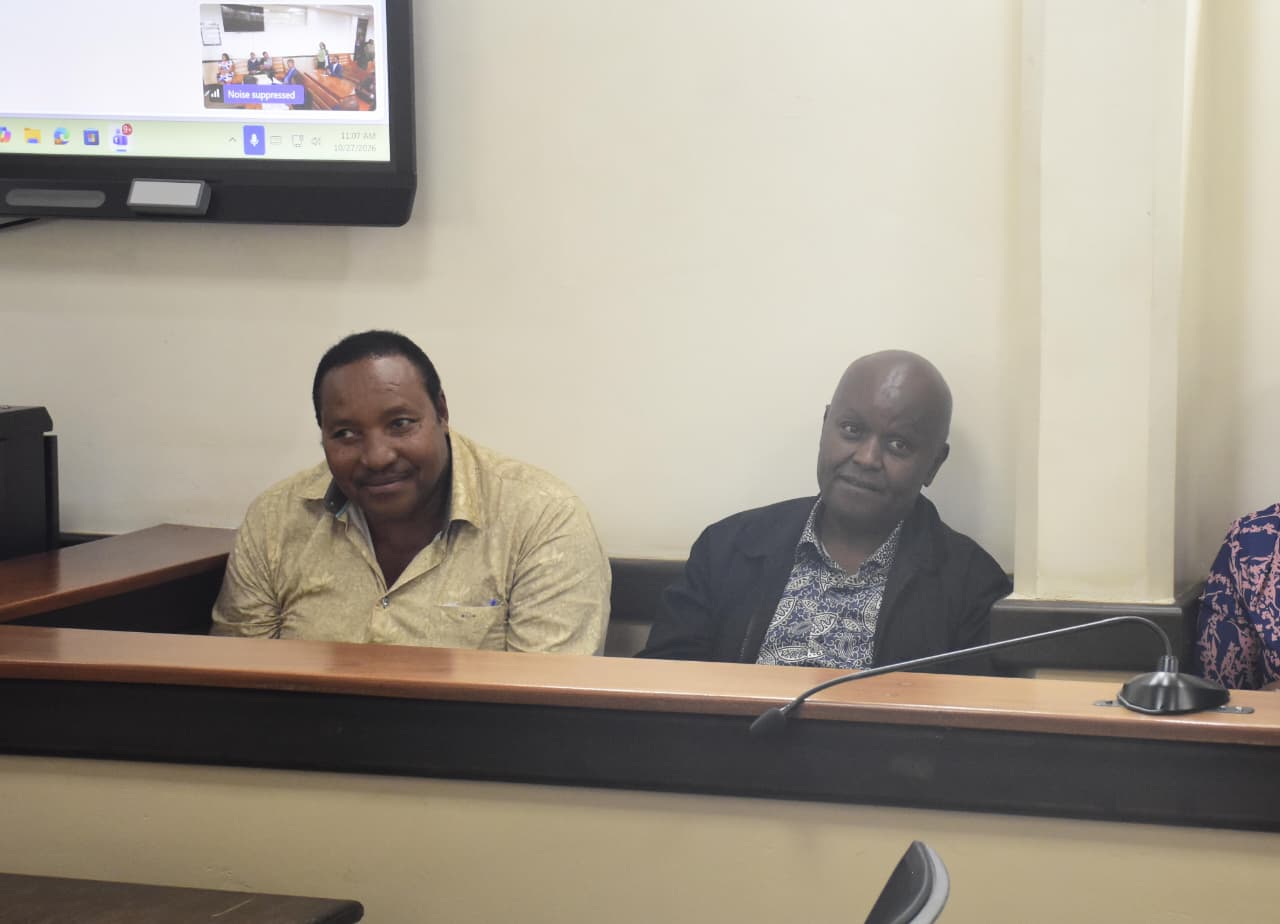
Former Kiambu Governor Ferdinand Waititu and his co-accused have pleaded for leniency for their wives as they appeared before the court for mitigation the Sh 588 M graft case.
During mitigation proceedings before Magistrate Harrison Barasa, Waititu apologised to the court for his wrongdoing and asked for a reduced sentence, saying he and his wife were first-time offenders. He also urged the court to consider his wife’s limited involvement in Delta Hotel, arguing that the business had other directors and employees responsible for its daily operations.


The former governor further argued that the companies linked to the case were already operating before he assumed office, asking the court to consider his role as a director at Saika Enterprises.
Other accused person, Director Enterprises limited also appealed for mercy for his wife, citing her limited role in the companies and arguing that she was not directly involved in the alleged financial transactions.
Lawyers representing Susan Wangare told the court that she was not a signatory to the company’s bank accounts and did not benefit financially from the transactions. The defence maintained that her involvement was limited to being a business partner.
Similar arguments were made for another accused person’s wife, whom the defence described as a silent partner who held only one share in Testimony Enterprises Limited and had no active role in its operations.
Charles Chege, a director of Testimony Enterprises Limited, told the court that he was serving an 11-year prison sentence and that Kiambu County still owed him Sh 117 million for work he claimed to have undertaken. He also asked the court to consider his wife’s limited involvement in the company and the family’s financial difficulties.
The defence further highlighted the impact of imprisonment on the accused persons’ children, arguing that punishing both spouses would place an unfair burden on their families, particularly where the wives were the sole breadwinners.
The accused persons expressed remorse and asked the court for forgiveness, urging it to consider their individual roles, family responsibilities, time already served and status as first-time offenders.