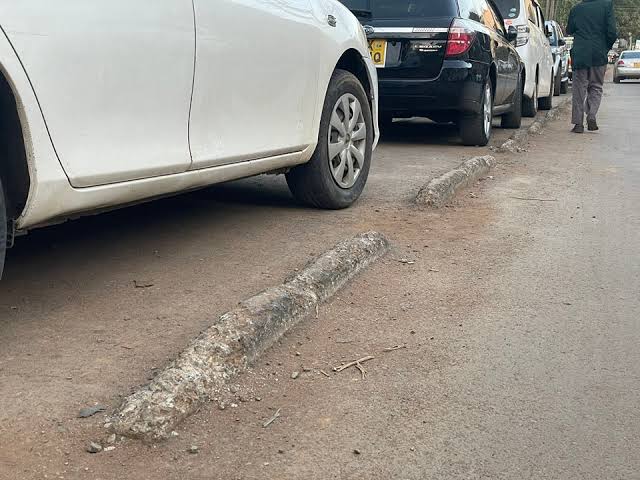
Nairobi County legislators have suffered a legal setback after the High Court ruled that the failure by city authorities to take action against their illegal parking practices violated the Constitution.
In its judgment, the court found that Nairobi City County breached its constitutional obligations by failing to enforce parking regulations against Members of the County Assembly (MCAs) accused of leaving their vehicles on pedestrian walkways and other undesignated areas.


Justice Nyaundi particularly cited City Hall Way, Mama Ngina Street and Wabera Street as some of the areas where county legislators had been parking their vehicles in disregard of traffic regulations. The judge held that allowing the practice to continue without intervention by the county’s enforcement agencies undermined the rule of law and amounted to unequal treatment under the Constitution.
The court specifically found that the county administration’s failure to act against the offending legislators violated Articles 10 and 27, which require public institutions to uphold national values and ensure equality before the law.
As part of measures to prevent further violations, the judge ordered the County Executive Committee Member responsible for transport to provide regular updates on efforts to enforce parking regulations within and around the County Assembly. The official will be required to submit an enforcement report every six months, with the first report due on January 20, 2027. The court further directed Nairobi City County to publish the reports on its official website to allow members of the public to monitor compliance with the parking regulations.
The case was initiated by Robert Leroy Ochieng, who moved to court seeking intervention over what he described as the persistent obstruction of pedestrian walkways and road reserves by vehicles belonging to Nairobi MCAs.
In support of his petition, Ochieng presented photographs showing vehicles occupying pedestrian spaces and parking in areas where stopping or parking was prohibited. The court also considered motor vehicle registry records which connected the vehicles captured in the photographs to members of the County Assembly. Additionally, the petitioner relied on a television investigation that exposed the illegal parking practices in the affected streets.
The judge noted that the County Assembly Clerk had previously issued a communication reminding MCAs to observe parking regulations and use designated parking spaces. However, the court observed that the warning had seemingly failed to achieve the intended compliance, as the unlawful parking practices persisted.
The ruling underscores the obligation of county authorities to enforce the law equally, regardless of whether those found violating traffic regulations are ordinary members of the public or elected representatives.