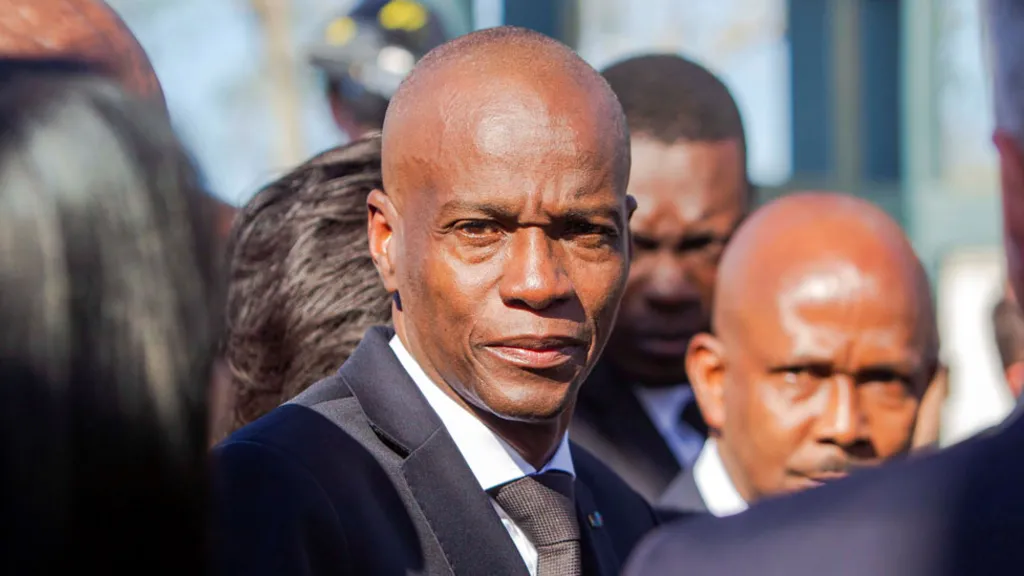
Eighteen people suspected of taking part in the assassination of Haitian President Jovenel Moise have been transferred to the United States, where they are expected to face prosecution over the 2021 killing.
US officials said the suspects were flown from Haiti to Florida on Sunday aboard a military aircraft as American authorities continued efforts to prosecute those accused of participating in the plot. Moise, 53, was killed on July 7, 2021, when armed men stormed his private residence and shot him. His wife was also wounded during the attack.


FBI special agent Brett Skiles said the arrests demonstrated the agency’s determination to pursue everyone allegedly involved in the assassination. Federal prosecutor Jason Reding Quinones said the 18 suspects had been transported to Florida to face proceedings in the Southern District of Florida.
He said 30 people had now been indicted in connection with the assassination, adding that US authorities would continue pursuing other suspects. Among those transferred is Joseph Felix Badio, a former official in Haiti’s Ministry of Justice who has been identified by Haitian authorities as a key suspect in the investigation.
The remaining 17 suspects are Colombian nationals who are alleged to have been part of the armed group involved in the operation. Colombia’s Foreign Ministry confirmed that 17 of its citizens had been moved from Haiti to the United States but said its government had not participated in the decision or arrangements leading to their transfer.
The latest developments follow the conviction in May of four men by a federal court in Miami for their alleged roles in the plot. The charges included conspiracy to kill or kidnap Moise, providing material support for the operation and violating the US Neutrality Act.
The four men could receive life sentences. Prosecutors said they were associated with CTU Security, a Florida-based private security company, and had been drawn into the scheme by expectations of obtaining profitable contracts after Moise was removed from power.
US courts have pursued the case because part of the alleged conspiracy was organised from American territory.
Moise’s assassination plunged Haiti further into political and security turmoil. The country has remained without an elected president and has struggled to contain increasingly powerful criminal gangs. Haiti is scheduled to hold presidential and legislative elections on December 13, alongside a constitutional referendum, although the polls remain dependent on security conditions.
Armed gangs are estimated to control much of the capital, Port-au-Prince, where kidnappings, armed robberies and carjackings remain widespread.
An international security mission backed by the United Nations is assisting Haitian police in confronting the gangs, but the force has faced difficulties reaching its planned staffing levels.