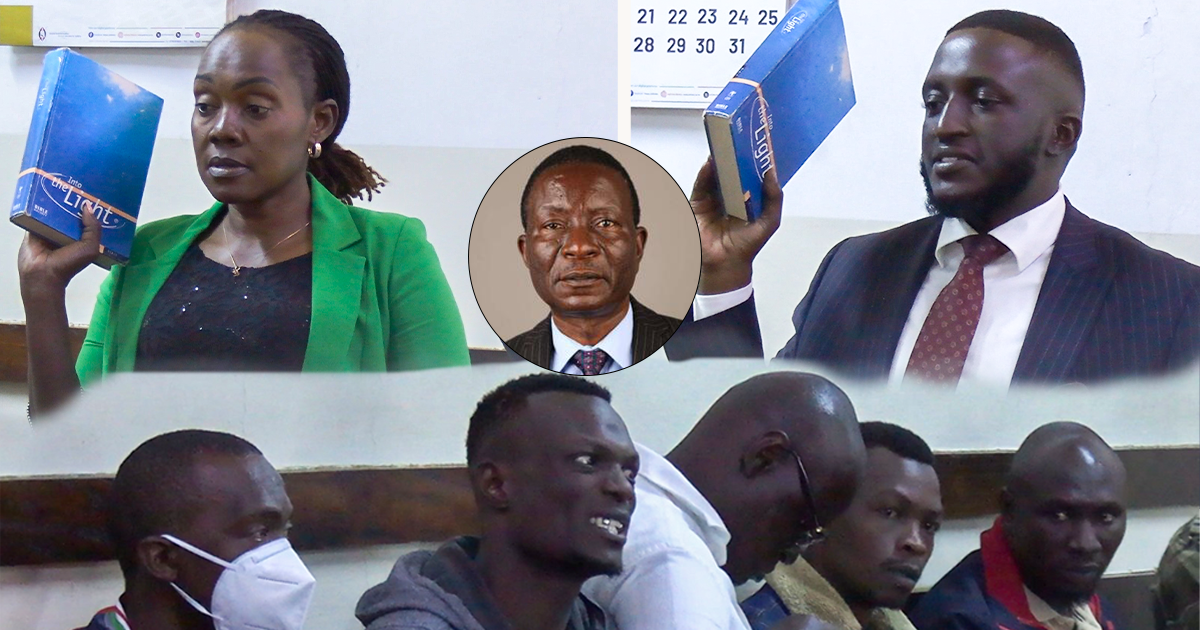

The Kilifi Magistrate Court has dismissed a suit challenging the Islamic burial of a deceased man, finding that the evidence presented proved he had converted to Islam during his lifetime and was therefore entitled to be buried according to Islamic rites.
In its judgment, the court held that the plaintiff failed to discharge the burden of proof and was unable to rebut the evidence presented by the defence regarding the deceased’s religious faith.


The court noted that the plaintiff was the only witness to testify in support of the case, while the defence presented evidence showing that the deceased had embraced Islam and actively practised the religion.
Among the evidence considered were social media accounts and testimony that the deceased adopted the Muslim name Zakaria. Defence witnesses told the court that the deceased regularly attended the mosque, observed the fasting month of Ramadan, dressed as a Muslim, and lived openly as a follower of the Islamic faith.
The court also considered submissions regarding Islamic practices, including the obligation to greet fellow Muslims, visit the sick, offer sincere advice, and bury deceased Muslims according to Islamic rites.
The plaintiff had argued that the deceased lacked the mental capacity to make the decision to convert to Islam. However, the court found that no expert medical evidence had been produced to support the claim.
Hon Charles Obulutsa observed that the issue of a person’s mental capacity is a scientific question requiring expert opinion, which was absent in the proceedings. Consequently, the court was satisfied that the deceased voluntarily converted to Islam, lived as a Muslim, and deserved to be buried in accordance with his adopted faith.
The court therefore dismissed the suit and ruled that the defendant, who had initially buried the deceased under Islamic rites before the burial was halted by a court order, is now free to collect the body from Kilifi County Hospital for reburial under Islamic rites.
The Learned Magistrate further directed that the plaintiff and other family members are at liberty to attend and participate in the burial ceremony if they wish.
The court also informed the parties that they have 30 days to lodge an appeal against the decision.
In an emotional moment after the judgment, counsel for the defendant informed the court that the plaintiff, Stephen Kazungu Charo, had passed away on Monday evening after suffering a terminal illness.
The court expressed its condolences to the deceased plaintiff’s family.
Defence counsel Nassir told the court that despite the emotionally charged litigation, his client had always maintained that the dispute was never personal but was intended solely to allow the court to determine the matter based on the evidence and the law.
The Judgement brings to an end a long-running dispute over the deceased’s final resting place, with the High Court affirming that his demonstrated religious beliefs during his lifetime should determine the manner of his burial. Defence team include Brance Odhiambo, Ahmed Salim, Omar Salim, Majid Mufid, Rajab Shaban, Hakeem Guyyo, and Abdun Bwanadi. The deceased is set to be burried at Takaungu muslim cemetery.