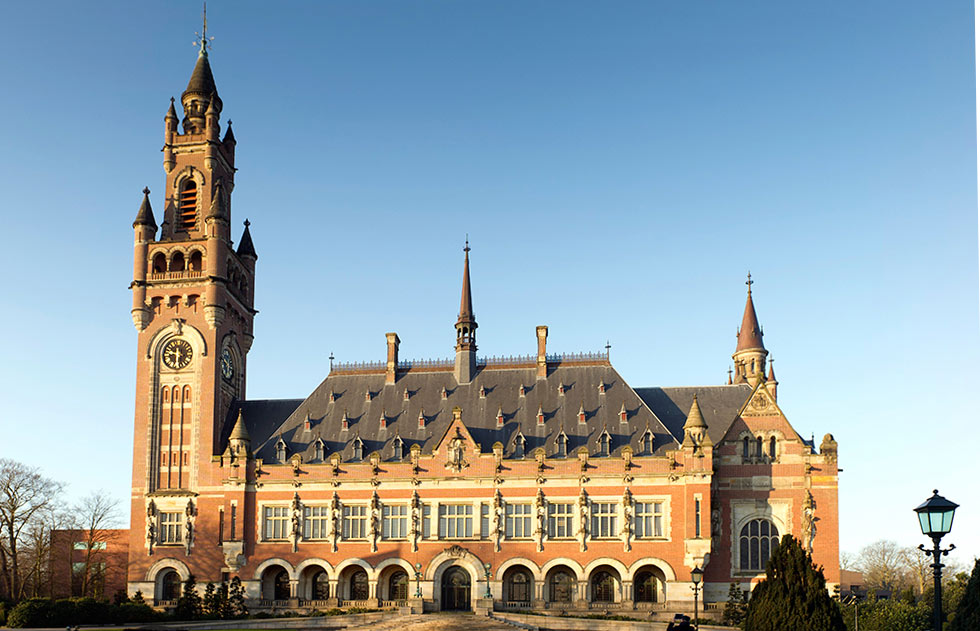
Germany has asked the International Court of Justice (ICJ) to reject a case brought by Nicaragua over Berlin’s military support for Israel, arguing that the court should not proceed with accusations that Germany breached its obligations under the 1948 Genocide Convention.
Nicaragua has accused Germany of contributing to alleged violations in Gaza by providing military, financial and diplomatic support to Israel. The case is separate from South Africa’s genocide proceedings against Israel, although Nicaragua’s arguments are closely linked to the wider conflict in Gaza.

During proceedings before the ICJ, German representatives acknowledged that Berlin imposed significant restrictions on military exports to Israel between August and November 2025. Germany said the measures were intended to ensure that its arms transfers complied with international humanitarian law amid Israel’s military campaign in Gaza.
According to Germany’s submissions, no final export licences for military equipment destined for Israel were approved between 8 August and 12 September 2025. Berlin further argued that licences issued afterwards contained restrictions intended to prevent the equipment from being used in active operations in Gaza.
The German position has nevertheless faced scrutiny following reports that military exports to Israel have increased sharply this year. Der Spiegel reported that Germany authorised almost $930 million worth of military equipment exports to Israel during the first six months of 2026.
Nicaragua argues that Germany’s continued assistance goes beyond ordinary military cooperation and amounts to facilitating acts that could constitute genocide. Berlin, however, has challenged the ICJ’s jurisdiction to hear the case.
The dispute comes against the backdrop of the ICJ’s earlier proceedings concerning Israel’s conduct in Gaza. In 2024, the court found that at least some of the rights claimed by South Africa under the Genocide Convention were plausible and ordered provisional measures aimed at preventing acts covered by the convention and ensuring humanitarian assistance could reach Palestinians in Gaza.
Germany has repeatedly maintained that Israel’s security is a central element of its foreign policy. During the proceedings, its representatives linked that position to Germany’s historical responsibility arising from the Nazi era and the Holocaust.
Nicaragua has rejected that justification. Its ambassador to the Netherlands, Carlos José Argüello Gómez, told the court that Germany was failing to distinguish between Israel’s claim of self-defence and what Nicaragua characterises as genocidal conduct.
The legal battle is unfolding as the humanitarian situation in Gaza remains catastrophic. According to Gaza’s Health Ministry, more than 73,000 people have been killed since the war began, with women and children making up a large proportion of the reported deaths. Independent assessments have suggested that the actual death toll could be substantially higher.
Large numbers of Palestinians have also been displaced, with approximately one million people reportedly left without permanent homes and many living in makeshift shelters.
The situation on the ground has further intensified the international debate over Israel’s military campaign, its control of territory inside Gaza and its plans for the future of the territory.
Meanwhile, South Africa’s separate genocide case against Israel at the ICJ is expected to take several more years before reaching a full hearing, with proceedings not anticipated to conclude until around 2029.