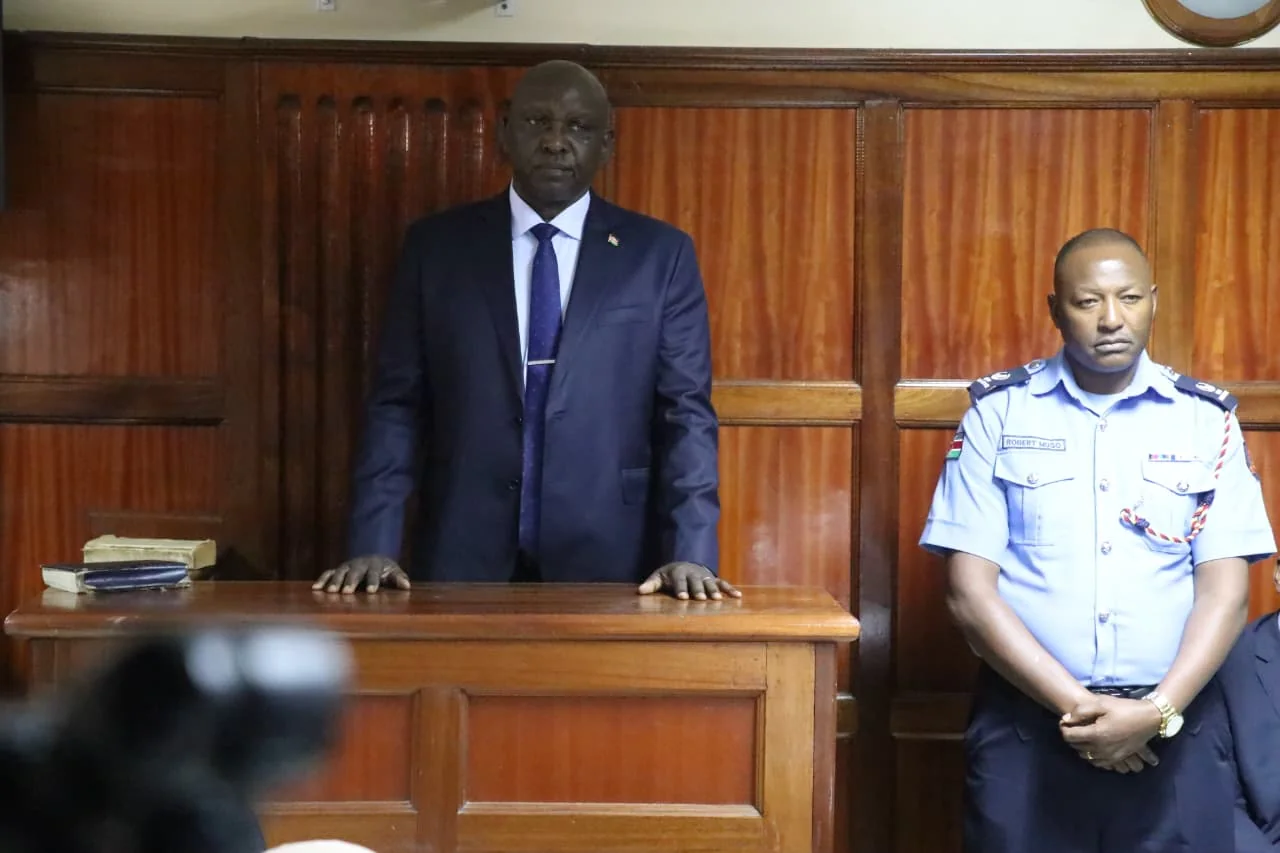
Inspector General of Police Douglas Kanja has denied claims that the National Police Service was involved in the disappearance of Tanzanian opposition activist Twaha Mwaipaya, telling the High Court that the missing youth leader has never been held in police custody.
Appearing before Justice Alexander Muteti at the Milimani High Court, Kanja distanced the police service and all units under his command from the alleged abduction of Mwaipaya, who is also a human rights defender and CHADEMA youth mobilisation coordinator. The police chief told the court that Mwaipaya was not being detained at any police station or other police facility across the country.


However, Kanja confirmed that a missing person’s report had been filed at Ruai Police Station and that investigations into his disappearance were ongoing.
His appearance followed a habeas corpus application filed by Vocal Africa, represented by Senior Counsel Martha Karua, seeking the court’s intervention to establish Mwaipaya’s whereabouts. Justice Muteti had directed the Inspector General to personally appear before the court and account for the whereabouts of the Tanzanian national following concerns over his reported disappearance.
Mwaipaya was reportedly abducted on Sunday, October 25, 2026, by unidentified individuals in Kamulu, Machakos County, under circumstances that have raised concern among human rights organisations and opposition leaders.
His disappearance has intensified calls for accountability from Kenyan security agencies, with civil society organisations, the Kenya National Commission on Human Rights (KNCHR) and officials from Tanzania’s opposition party CHADEMA expressing concern over the safety of political dissidents seeking refuge in Kenya.
The groups have raised alarm over what they describe as a growing pattern of cross-border abductions and the targeting of opposition figures and government critics within Kenya. The habeas corpus proceedings seek to establish whether Mwaipaya is being held by state agencies or any other persons and, if so, compel those responsible to produce him before the court.
The case places renewed focus on the constitutional responsibility of security agencies to protect the right to life, liberty and personal security, as well as the duty to account for individuals suspected to have been unlawfully deprived of their freedom.
The court is expected to continue examining the circumstances surrounding Mwaipaya’s disappearance as efforts to establish his whereabouts continue.